About This Project
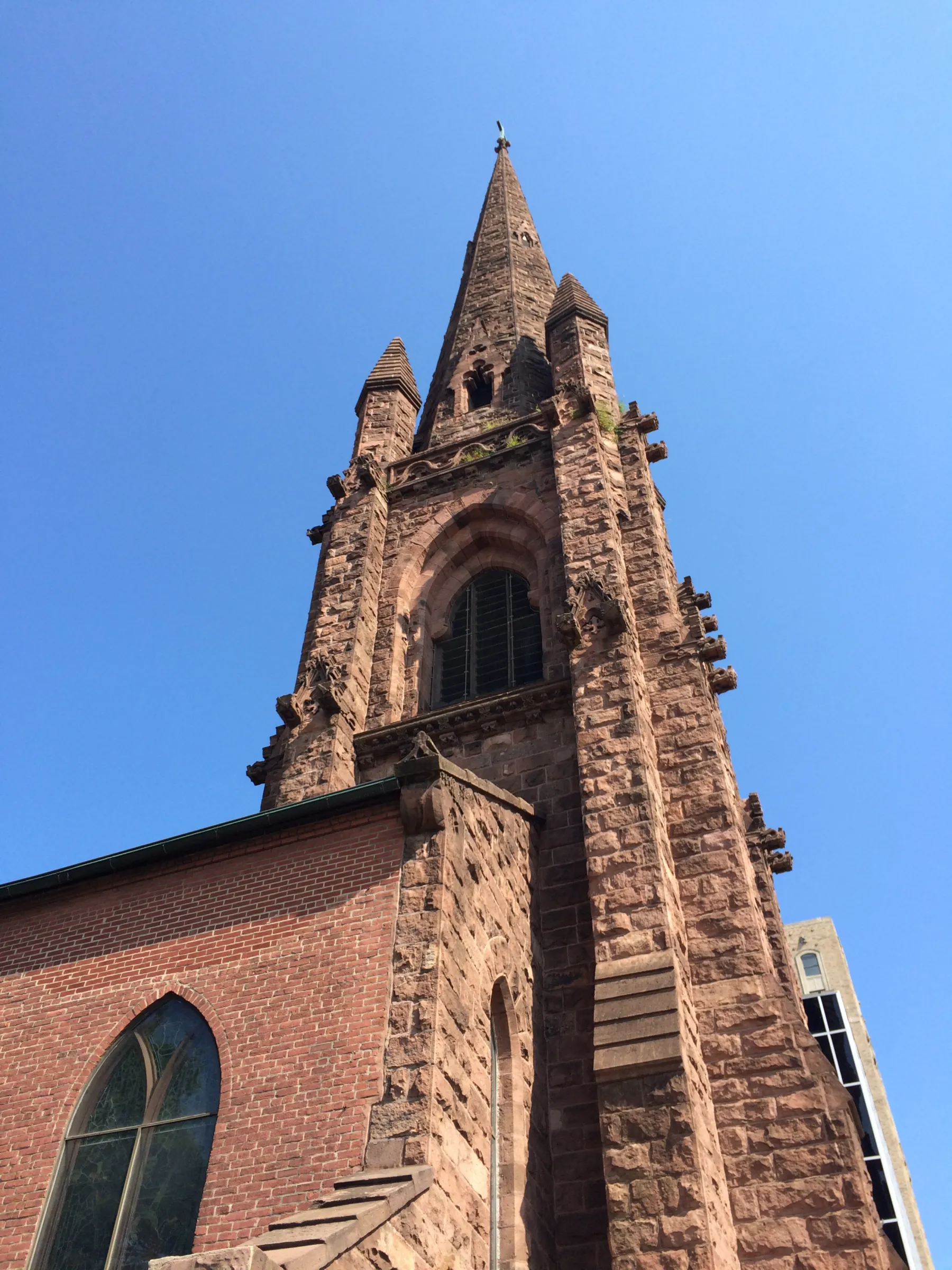
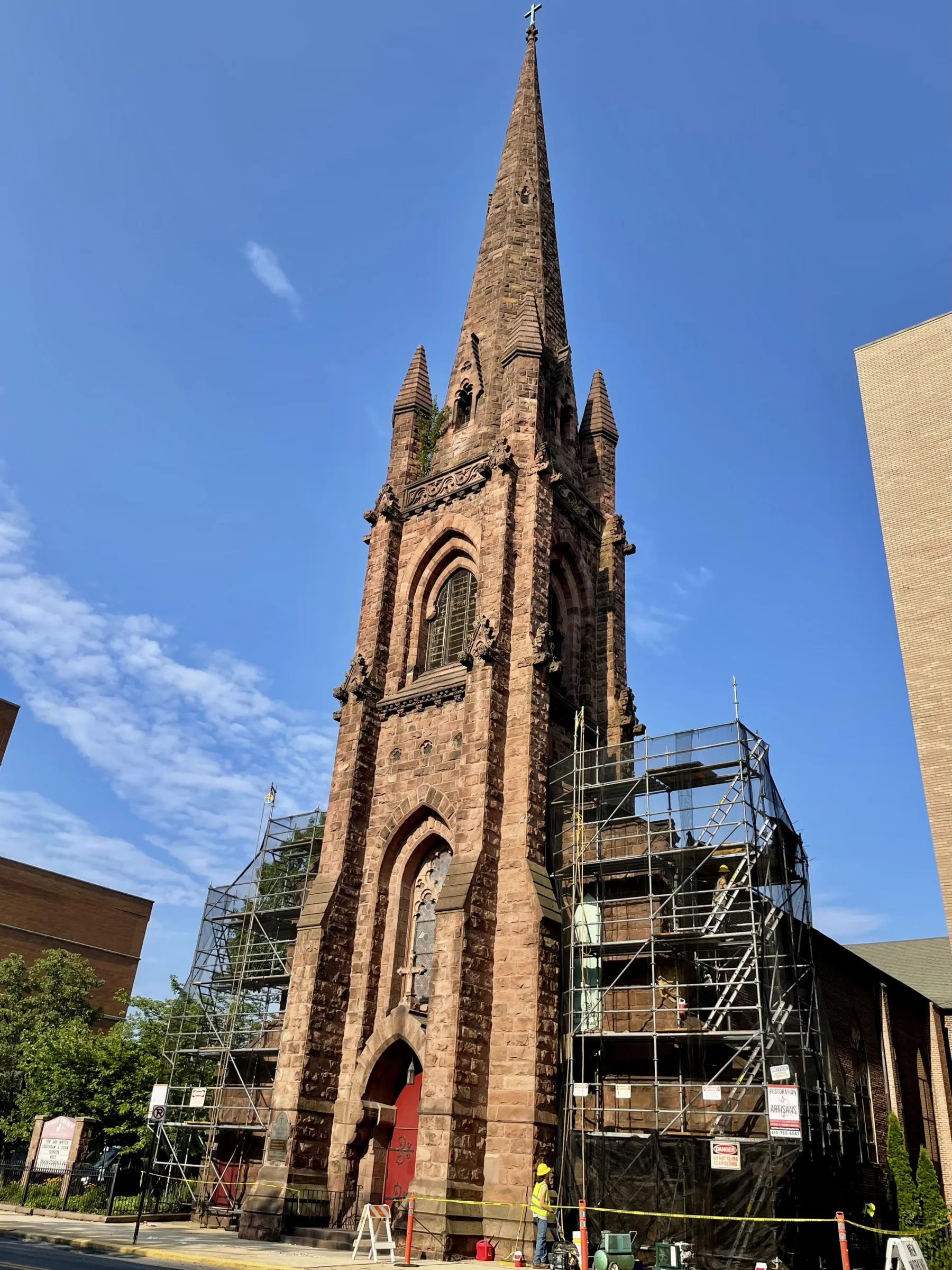
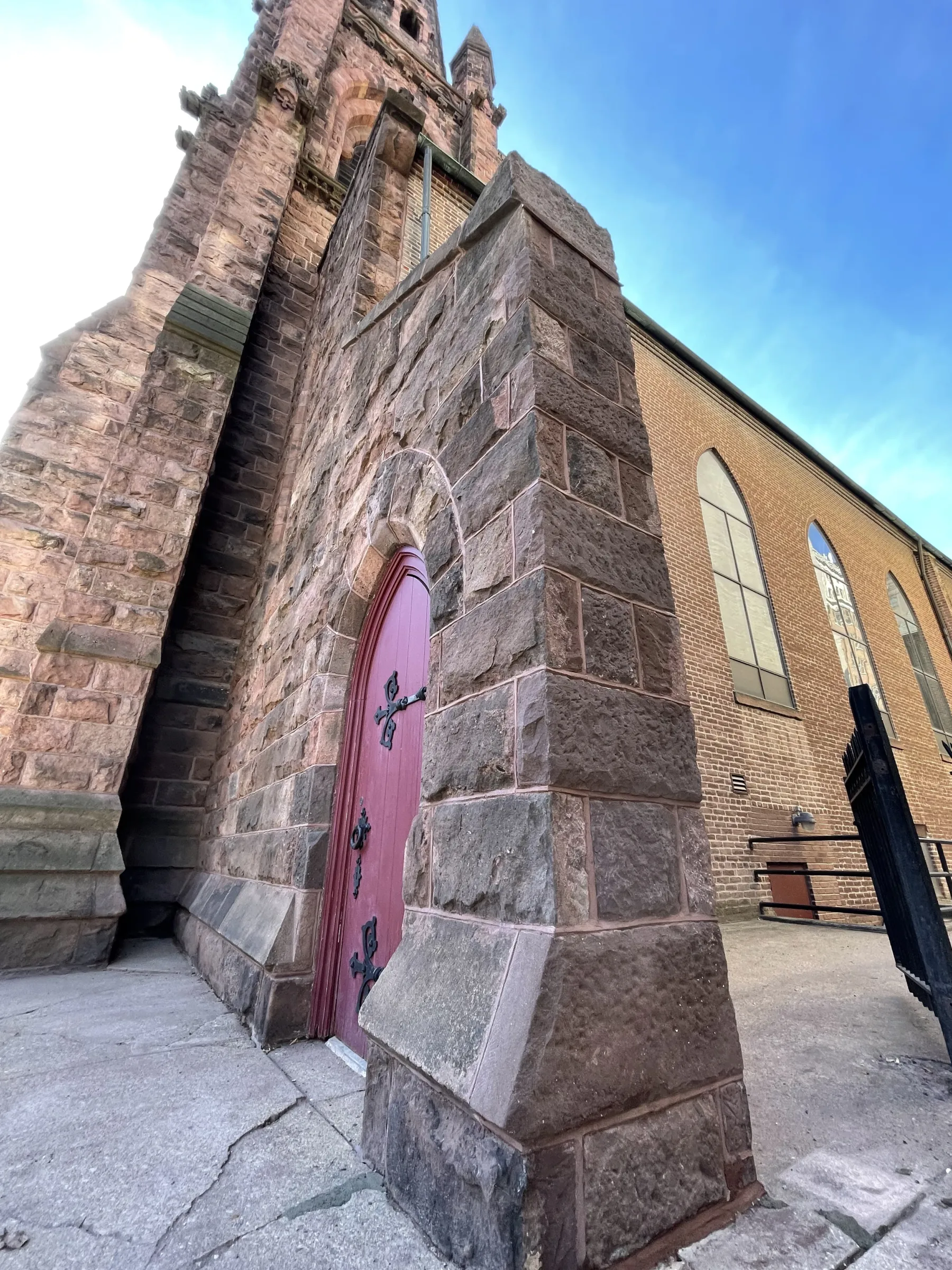
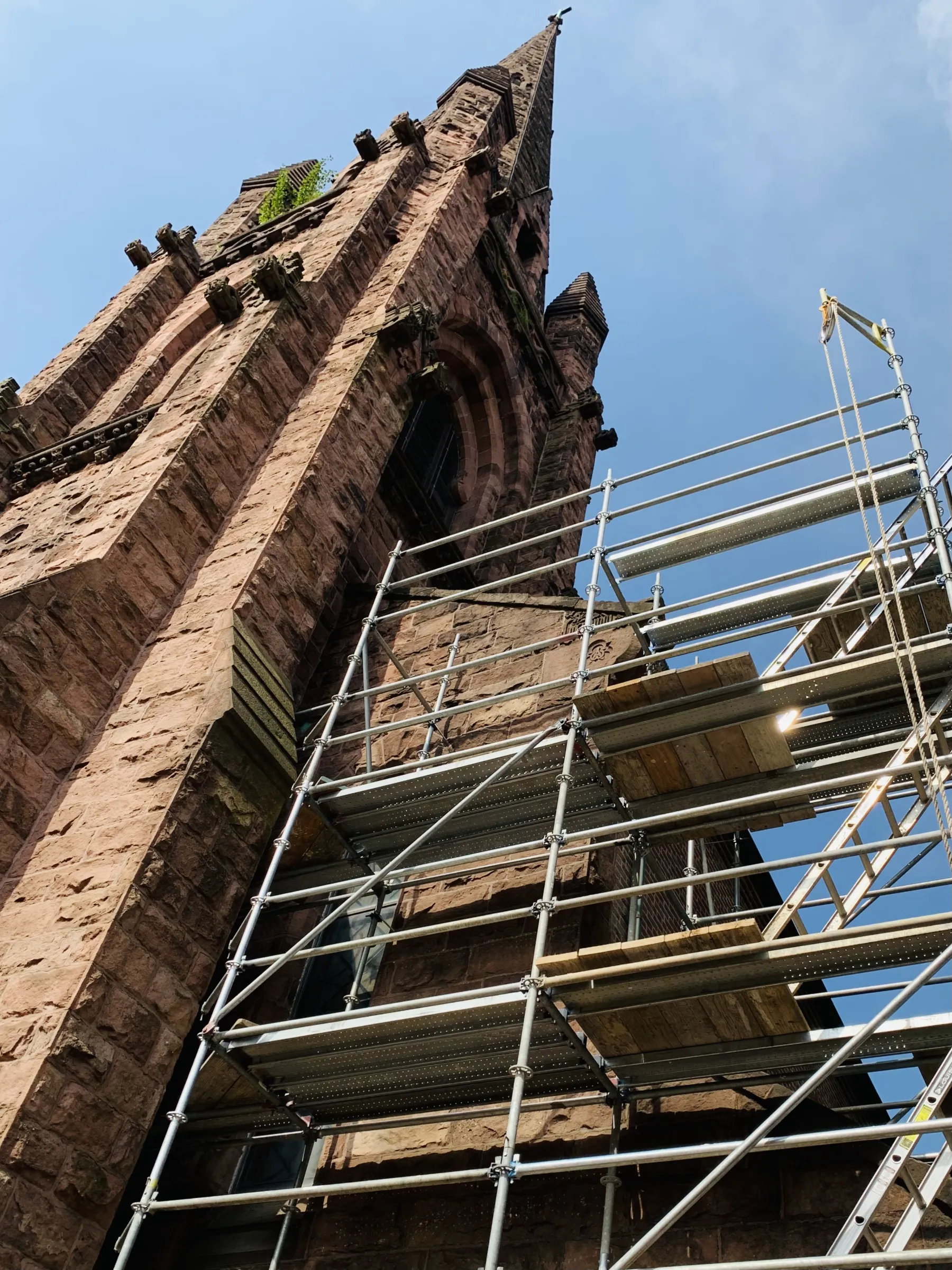
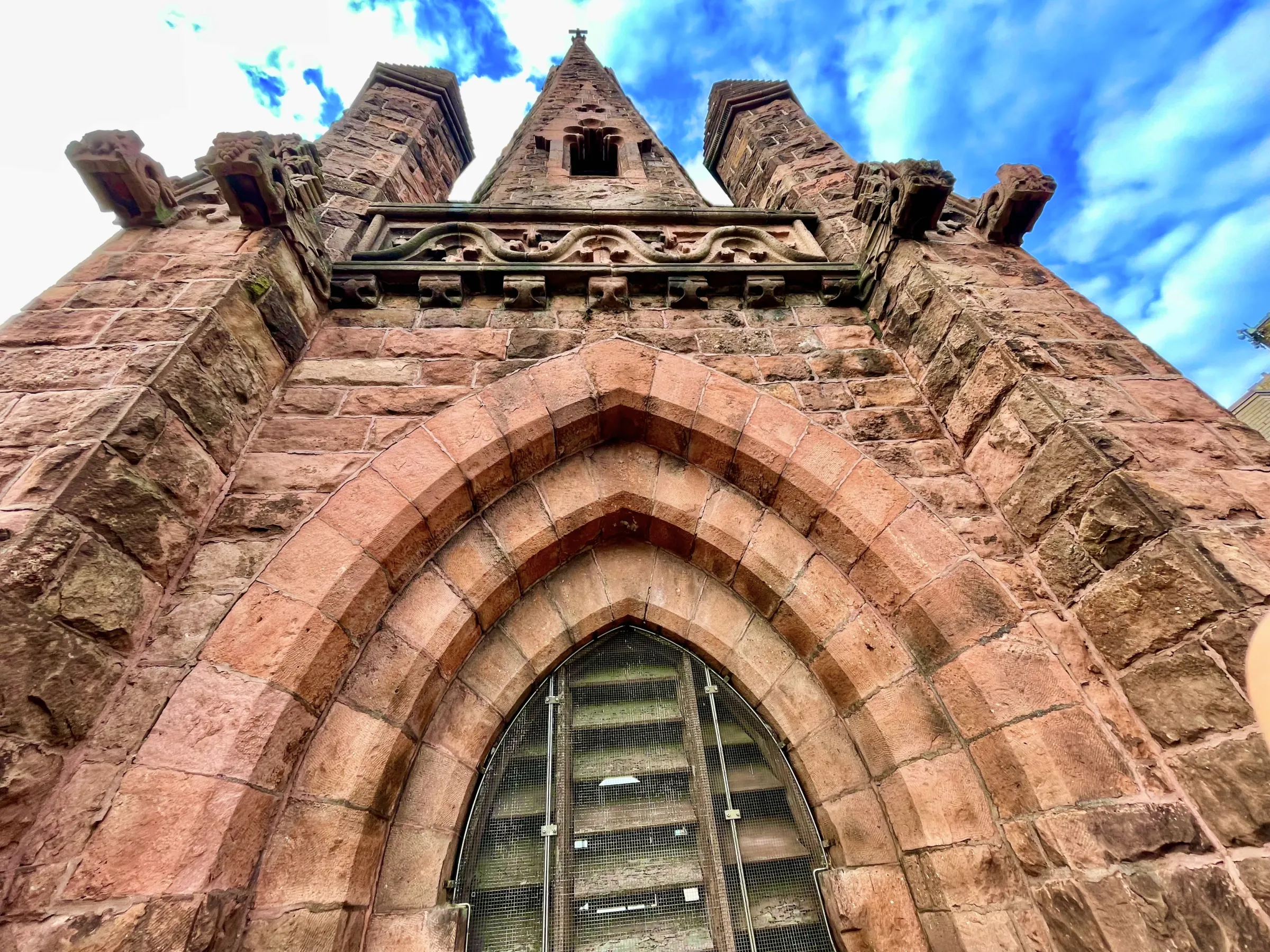
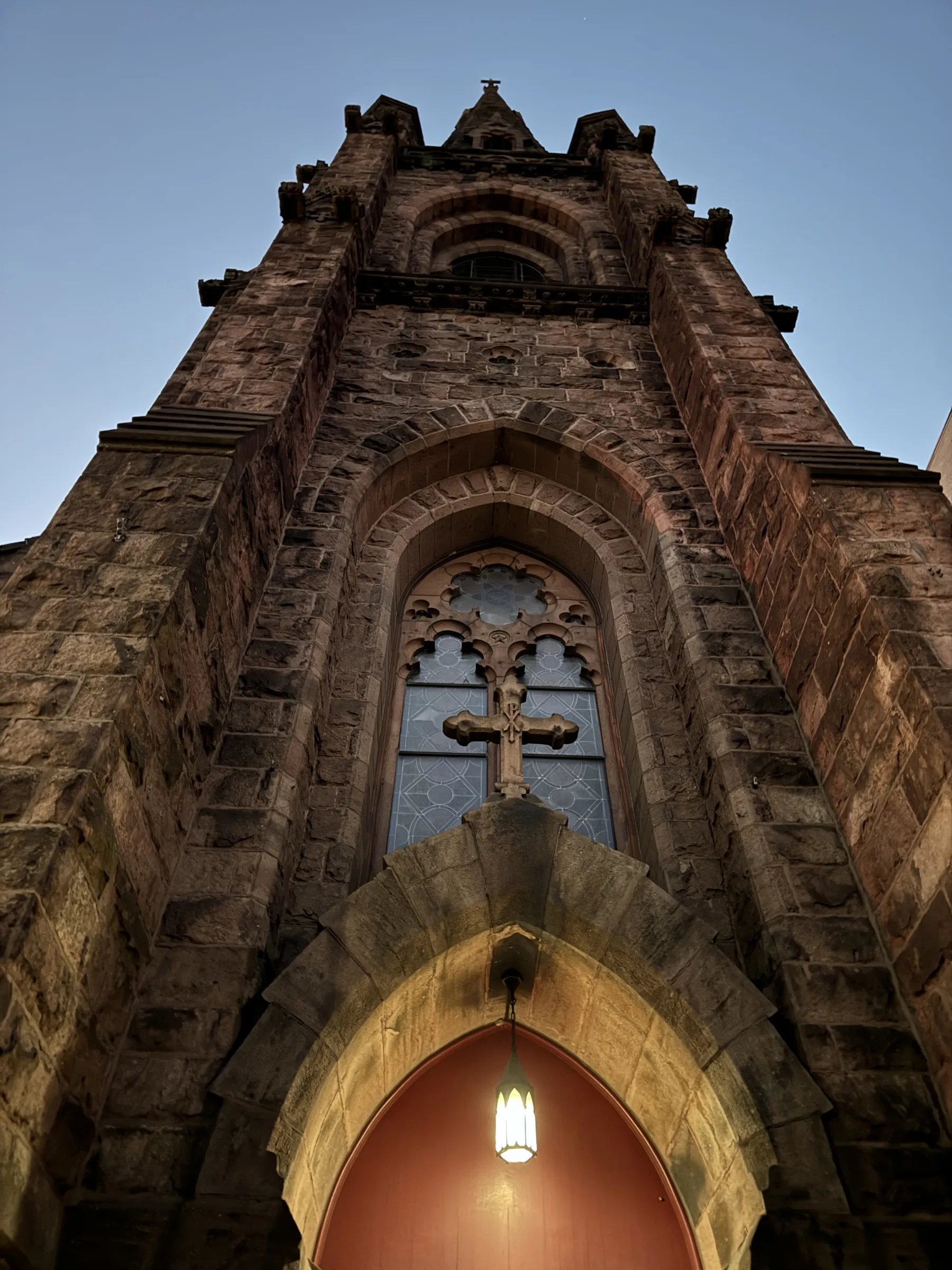
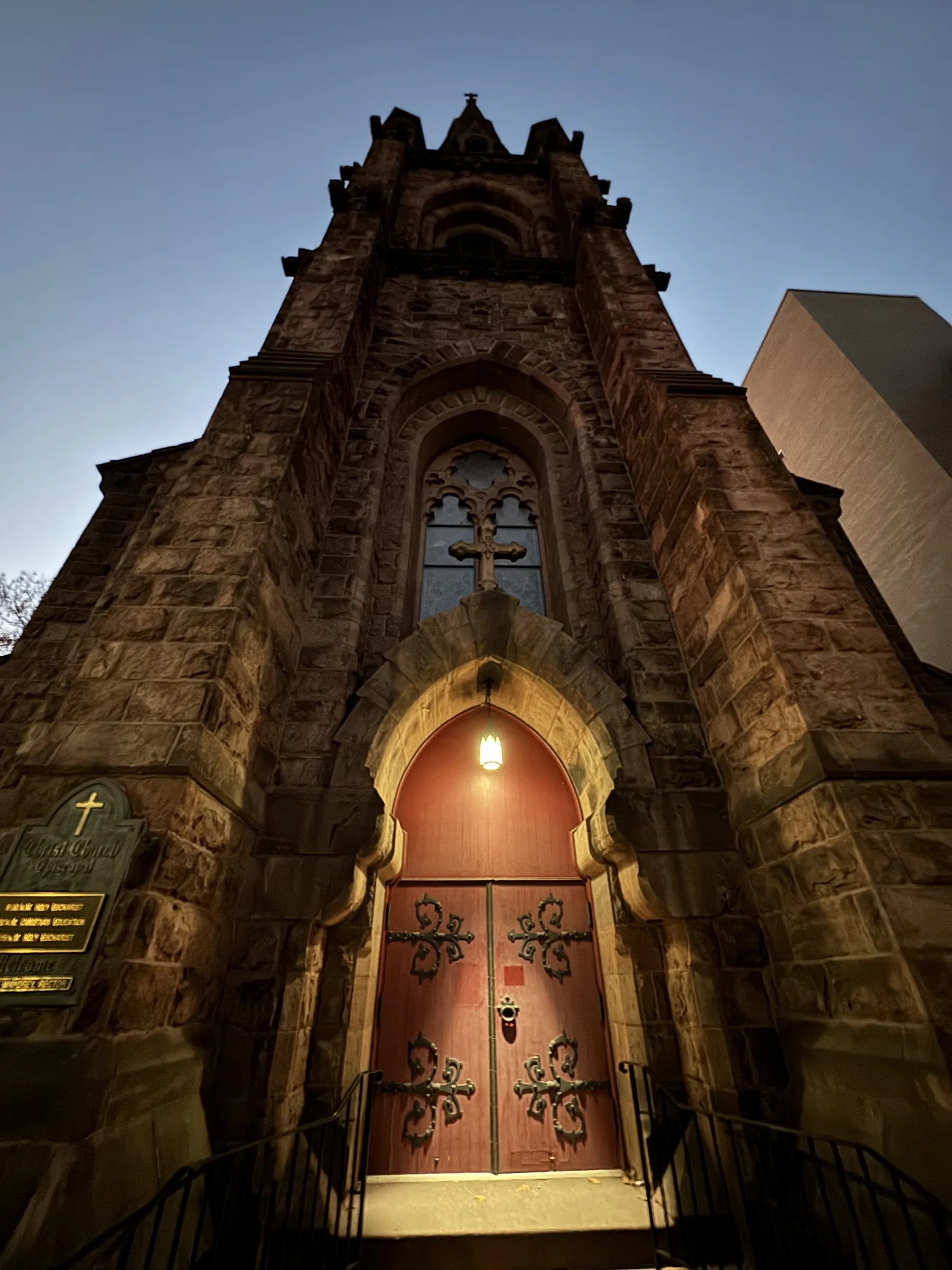
Beginning in 2015, Restoration Artisans initiated a long-term restoration partnership with Christ Episcopal Church of Reading, one of the city’s most historically significant congregations and the first English-speaking church established in Reading, Pennsylvania. Founded in the mid-18th century, the church has undergone numerous improvements throughout its history, most notably during the Civil War era, when a Neo-Gothic spire and the Fifth Street façade were added. This architectural transformation was designed by renowned ecclesiastical architect Edward Tuckerman Potter, best known for designing Mark Twain’s residence.
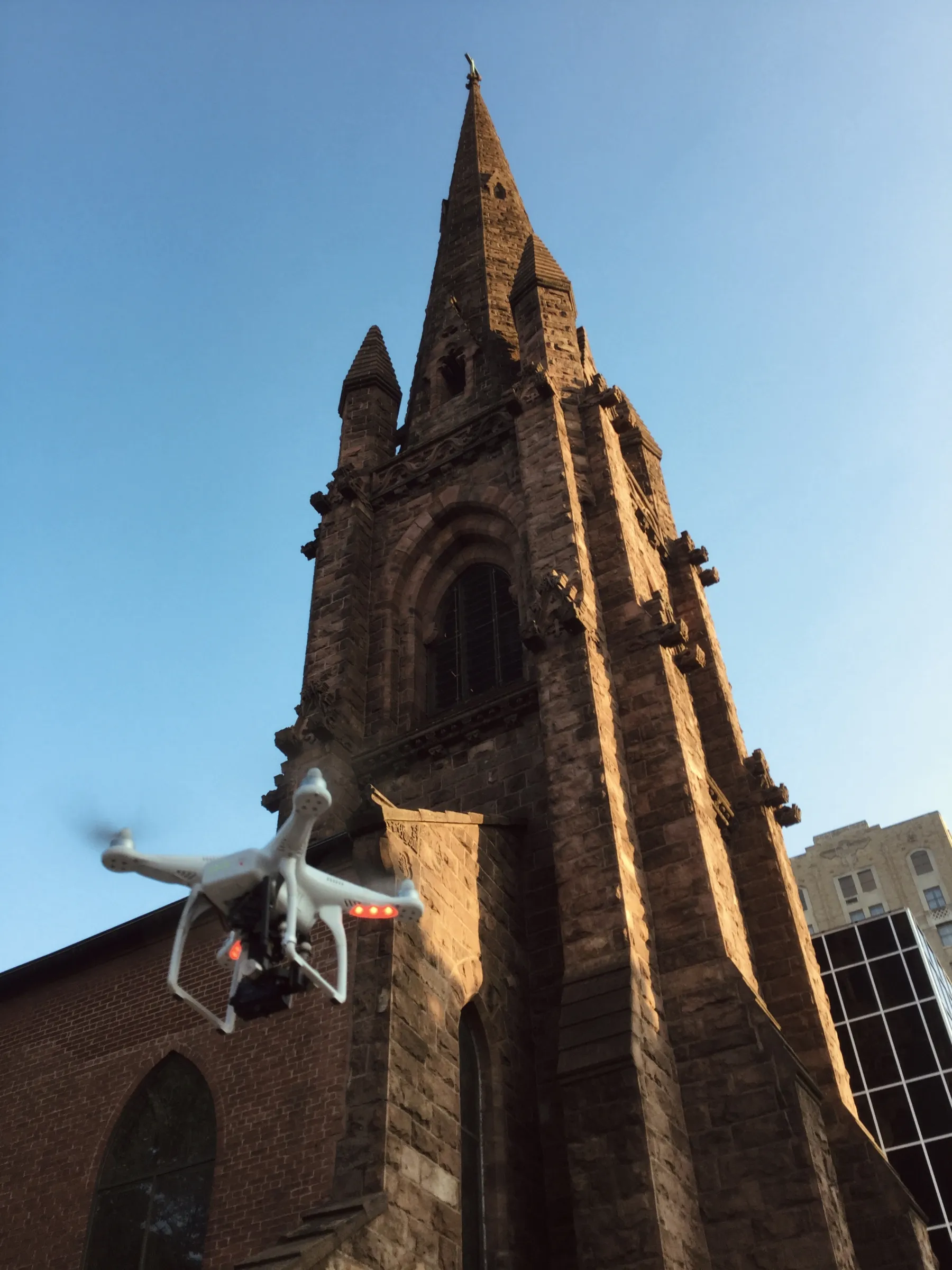
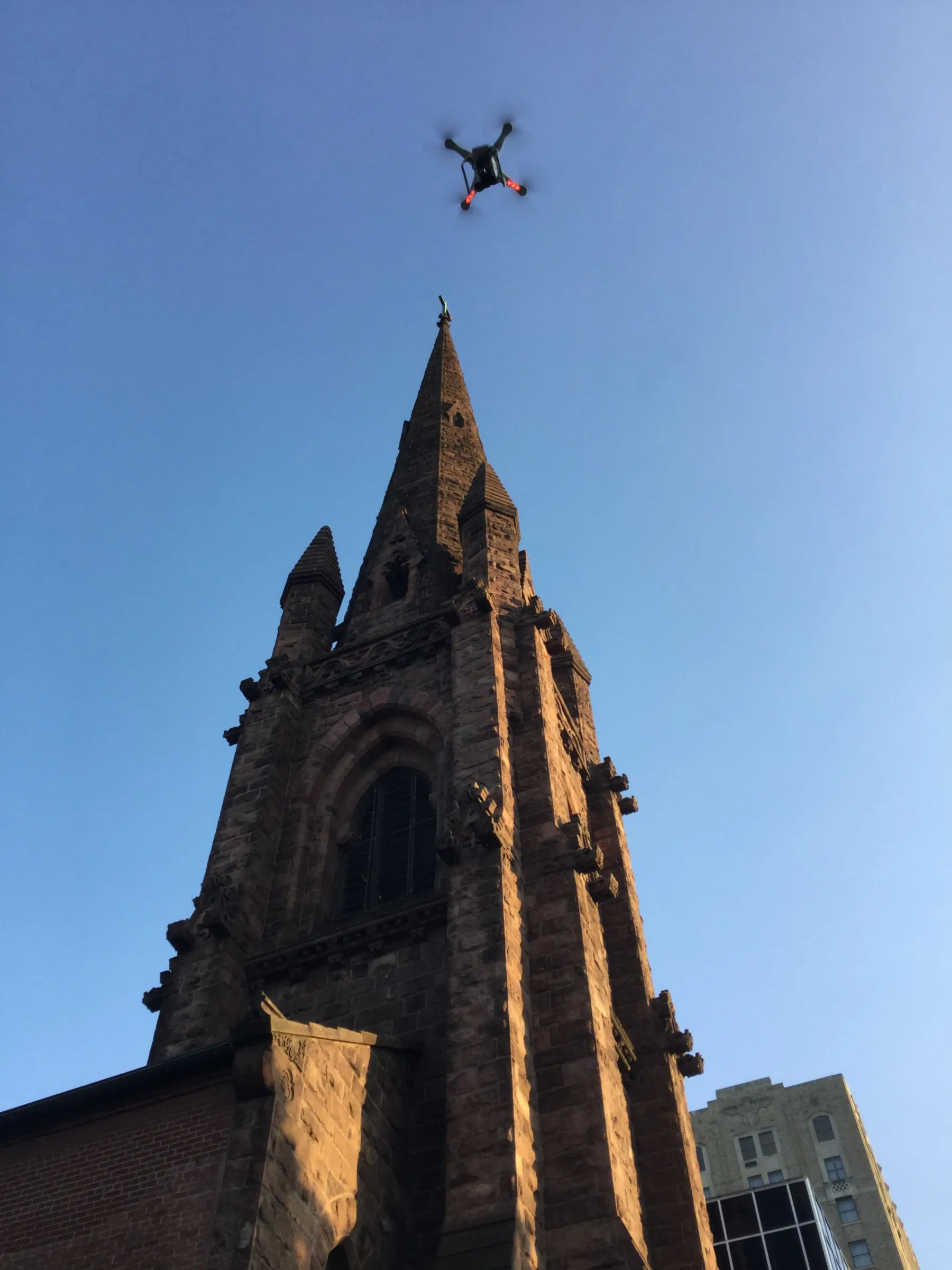
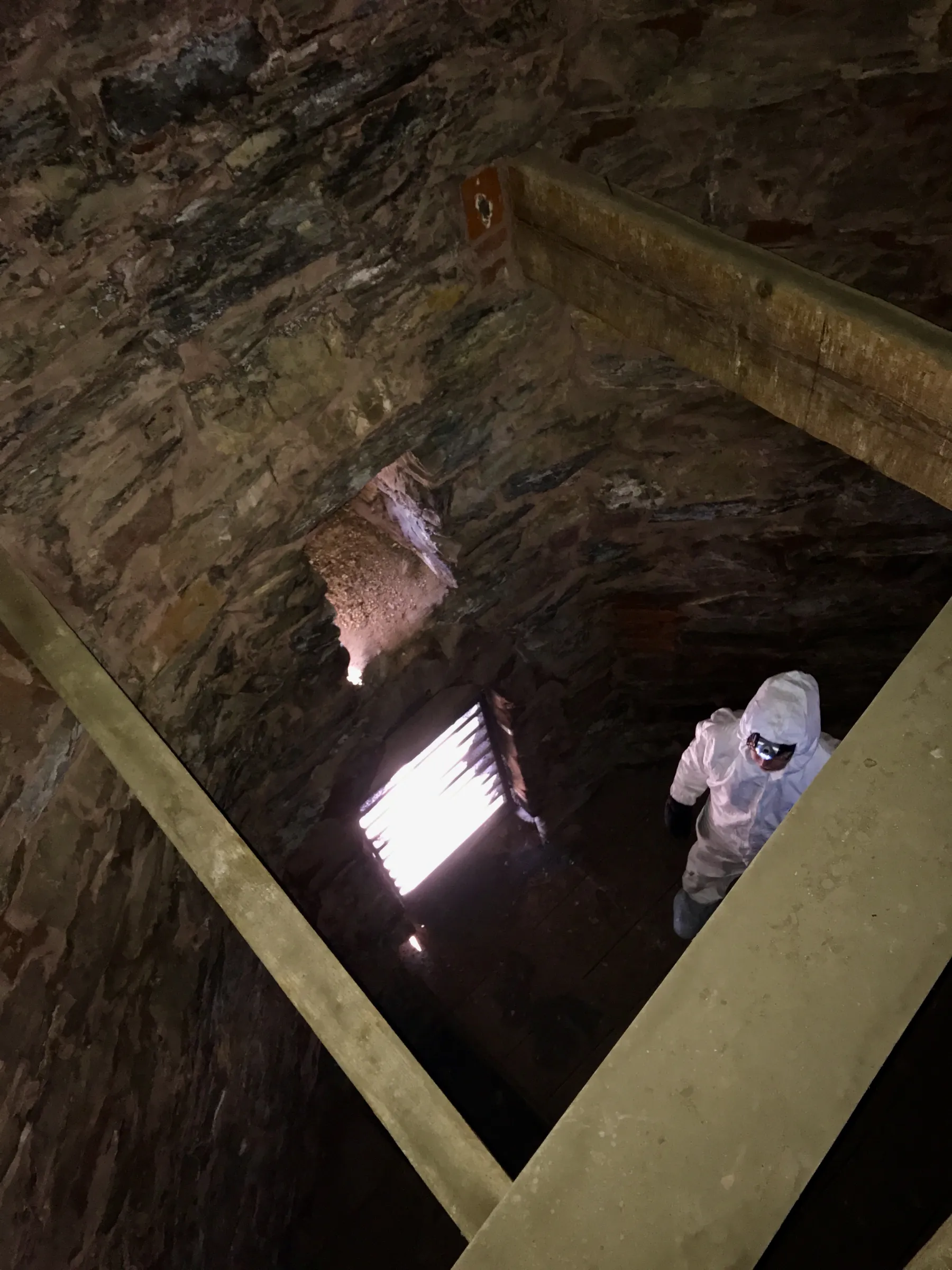
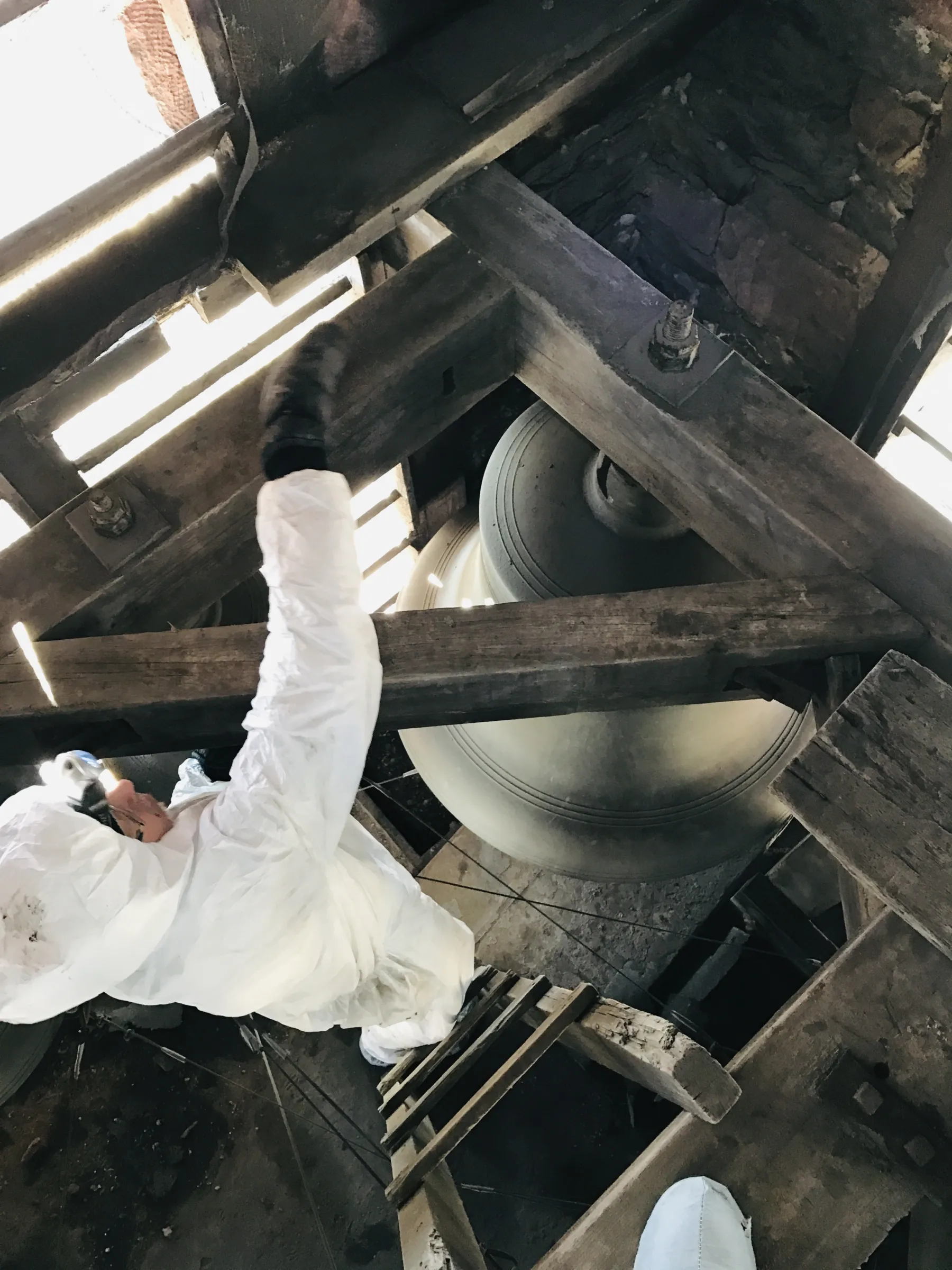
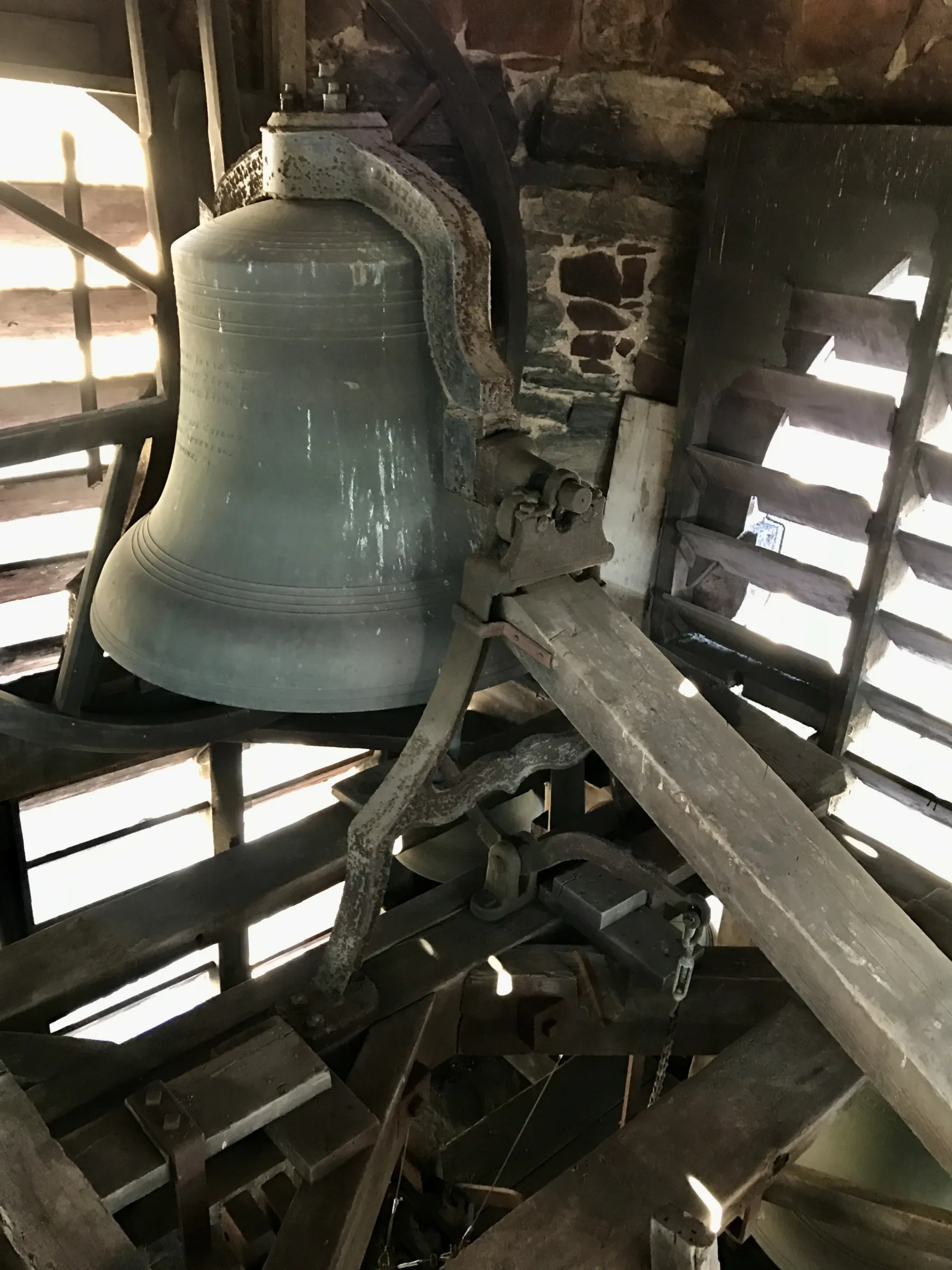
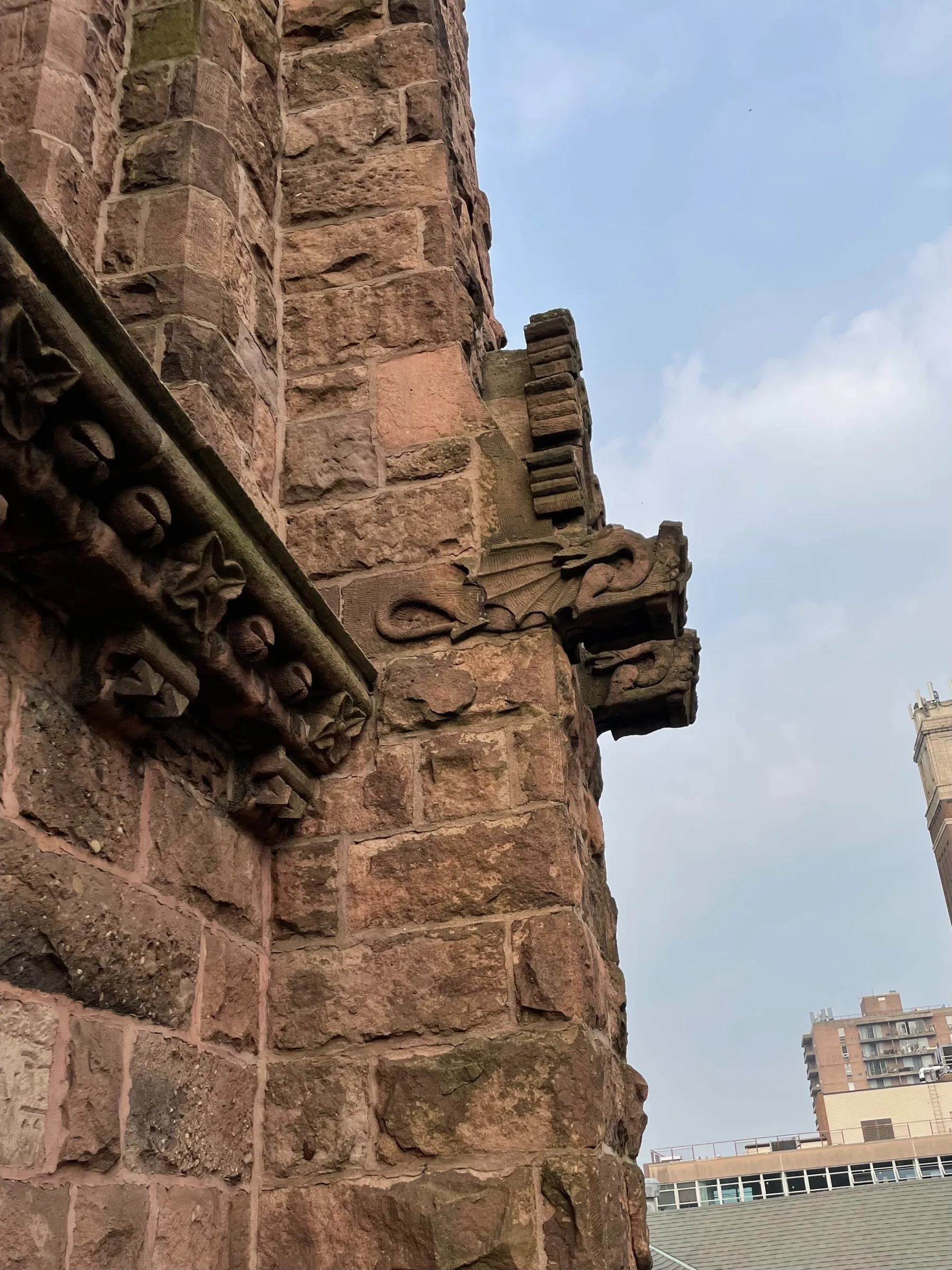
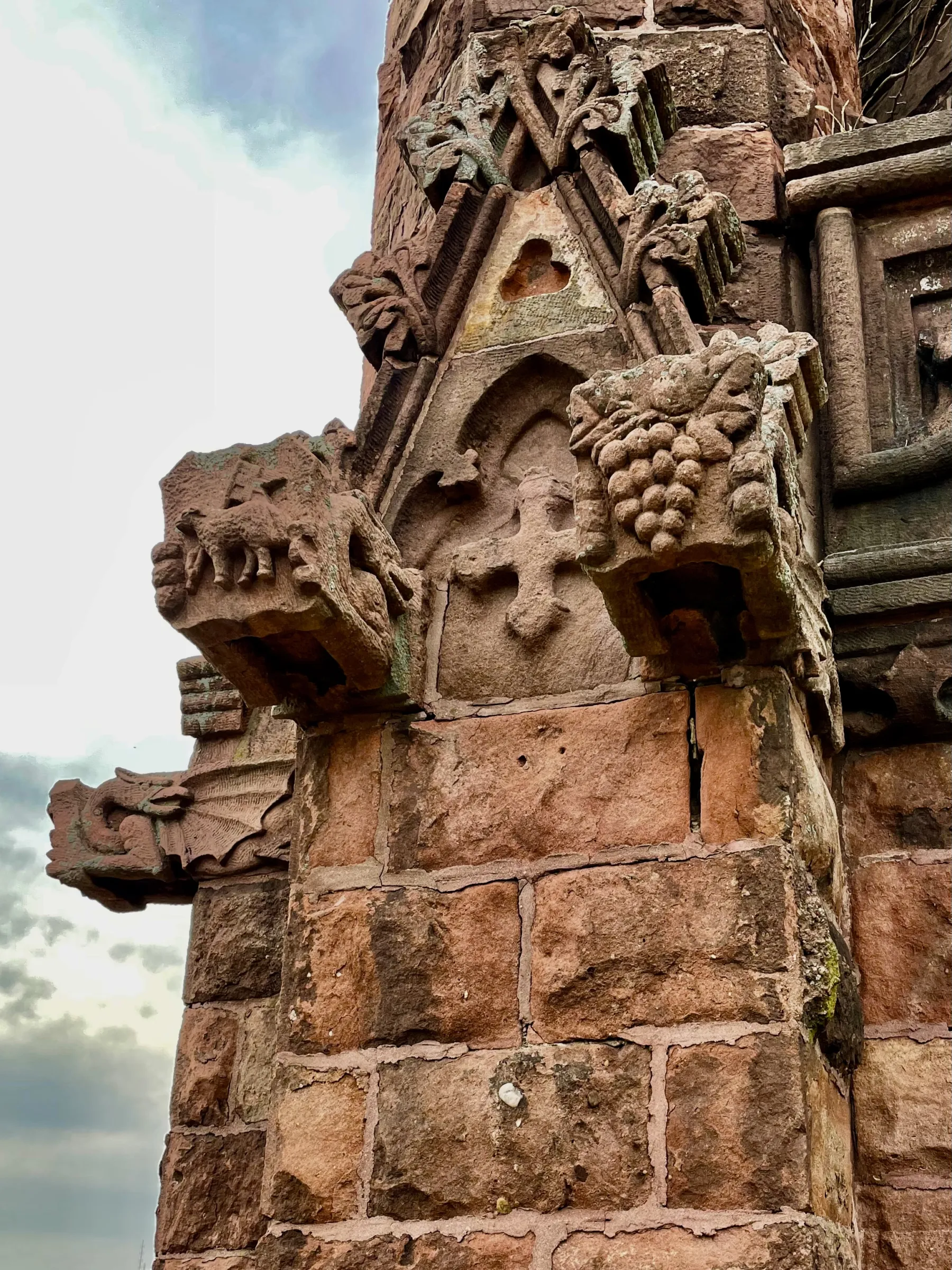
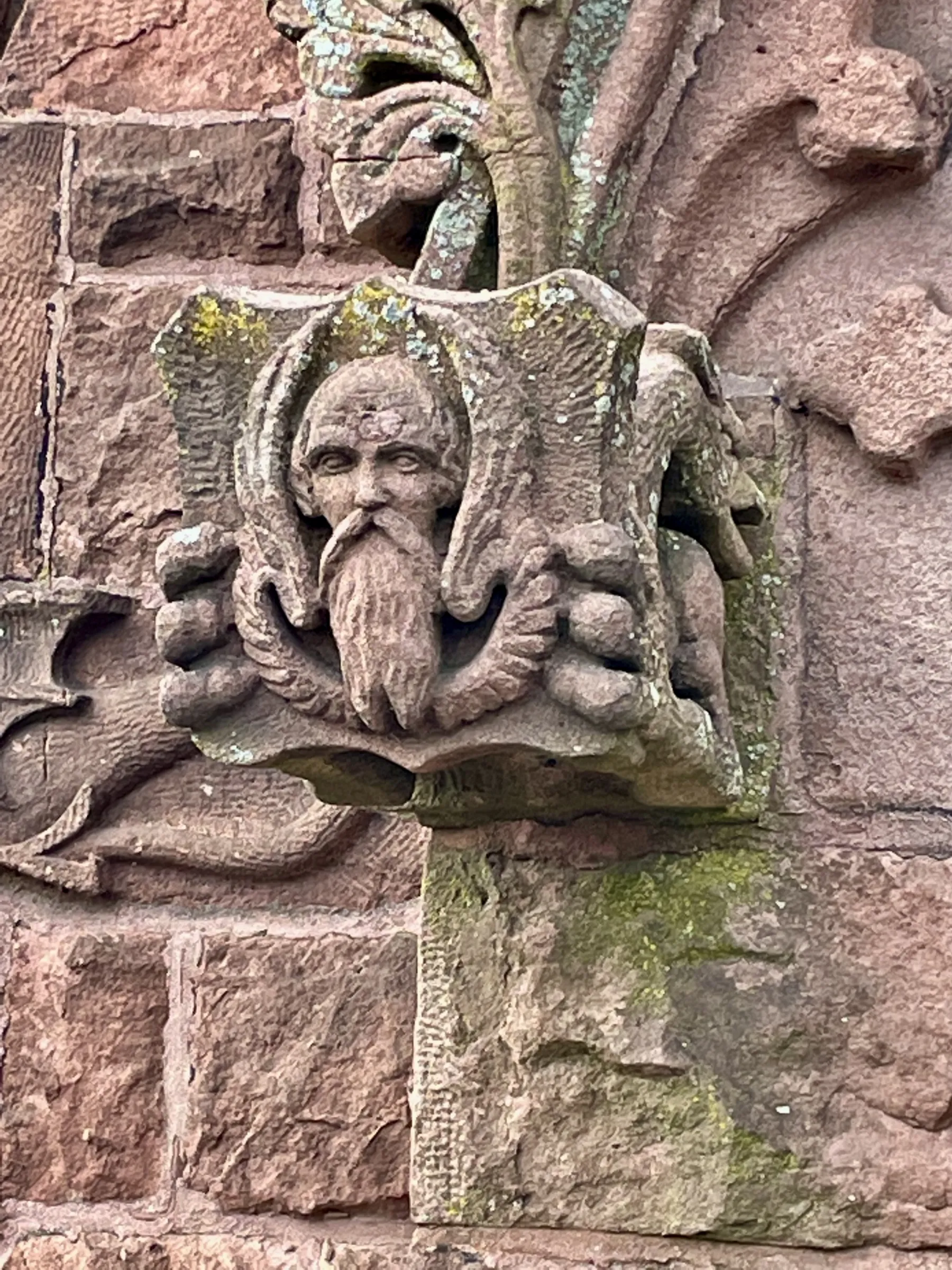
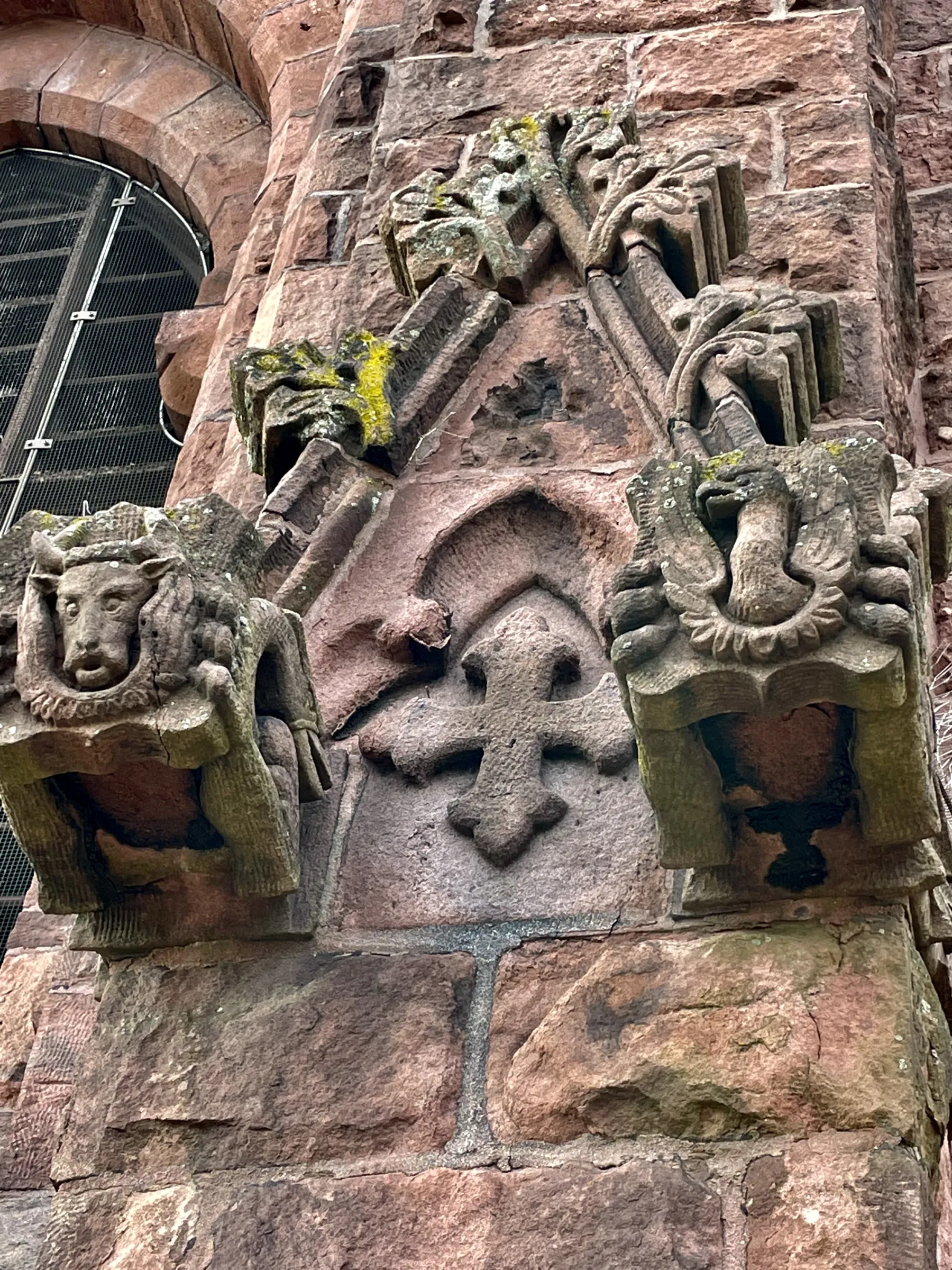
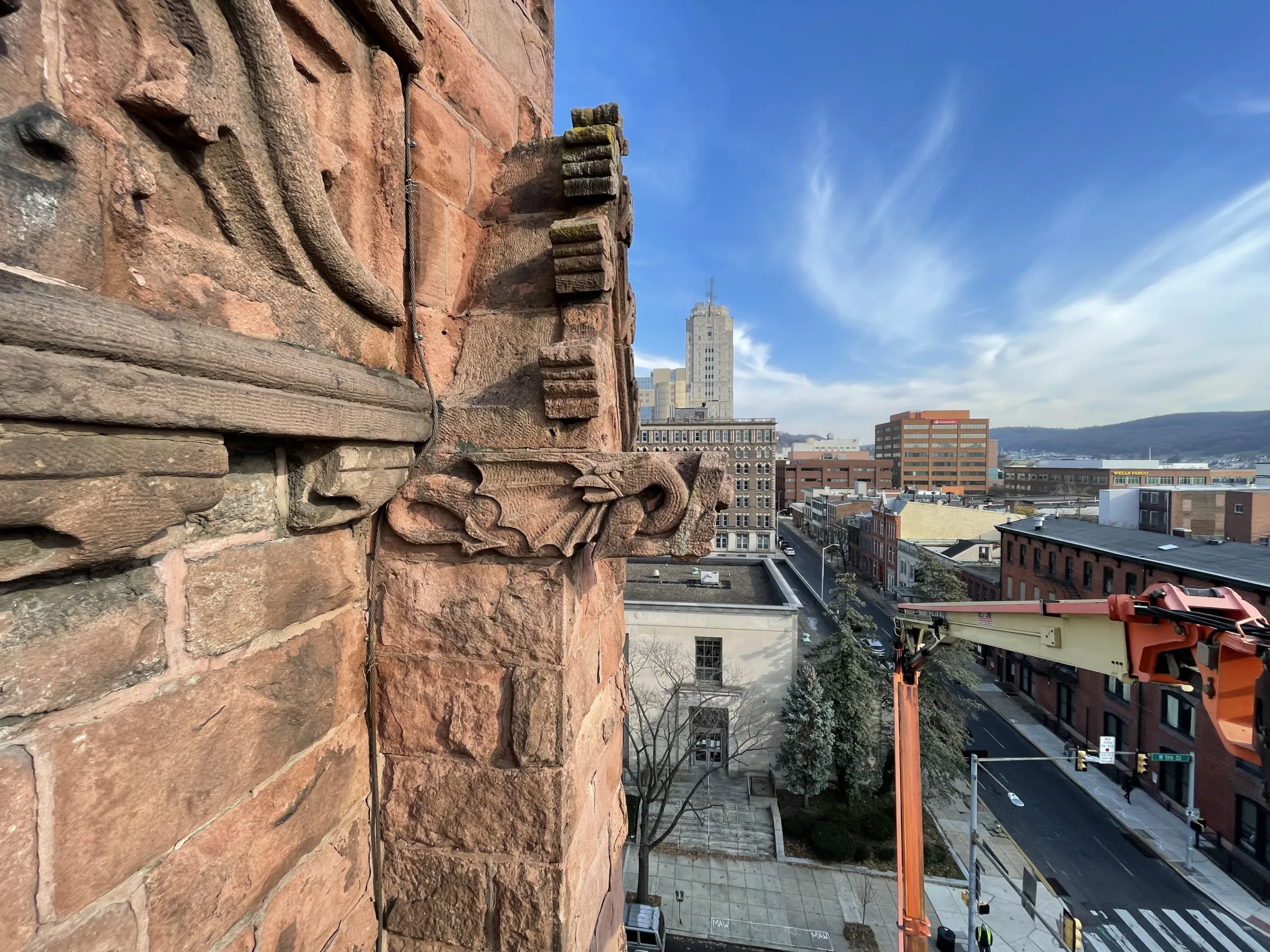
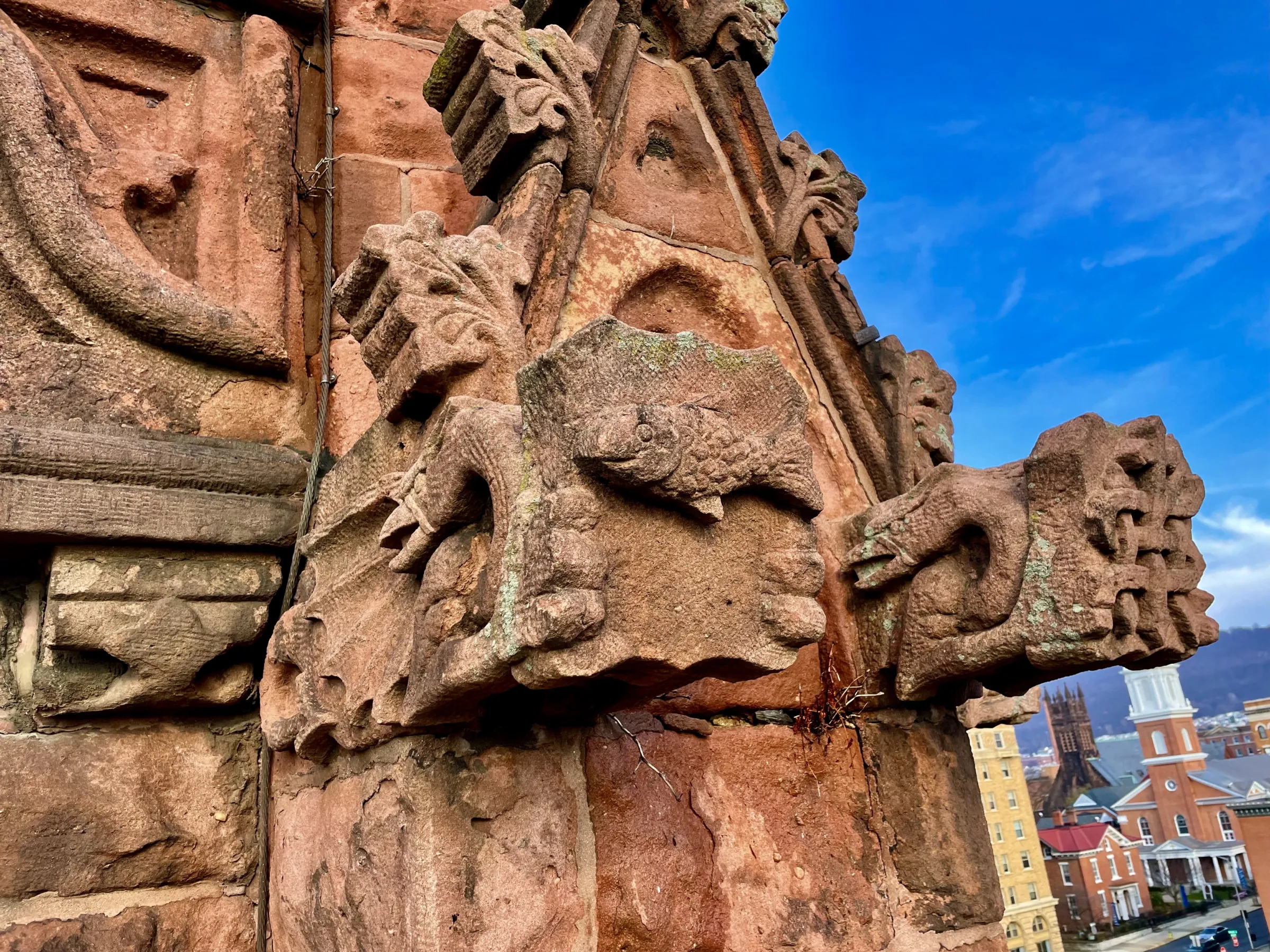
From 2015–2016, Restoration Artisans, in collaboration with a structural engineer, conducted comprehensive inspections of the exterior masonry walls and the nearly 200-foot brownstone steeple. The work included drone documentation, aerial lift surveys, and historical research of the ornate brownstone spire, culminating in a detailed report addressing both masonry conditions and the symbolic and theological significance of the church’s 32 gargoyles and grotesques. Findings were presented to the congregation through a public lecture.
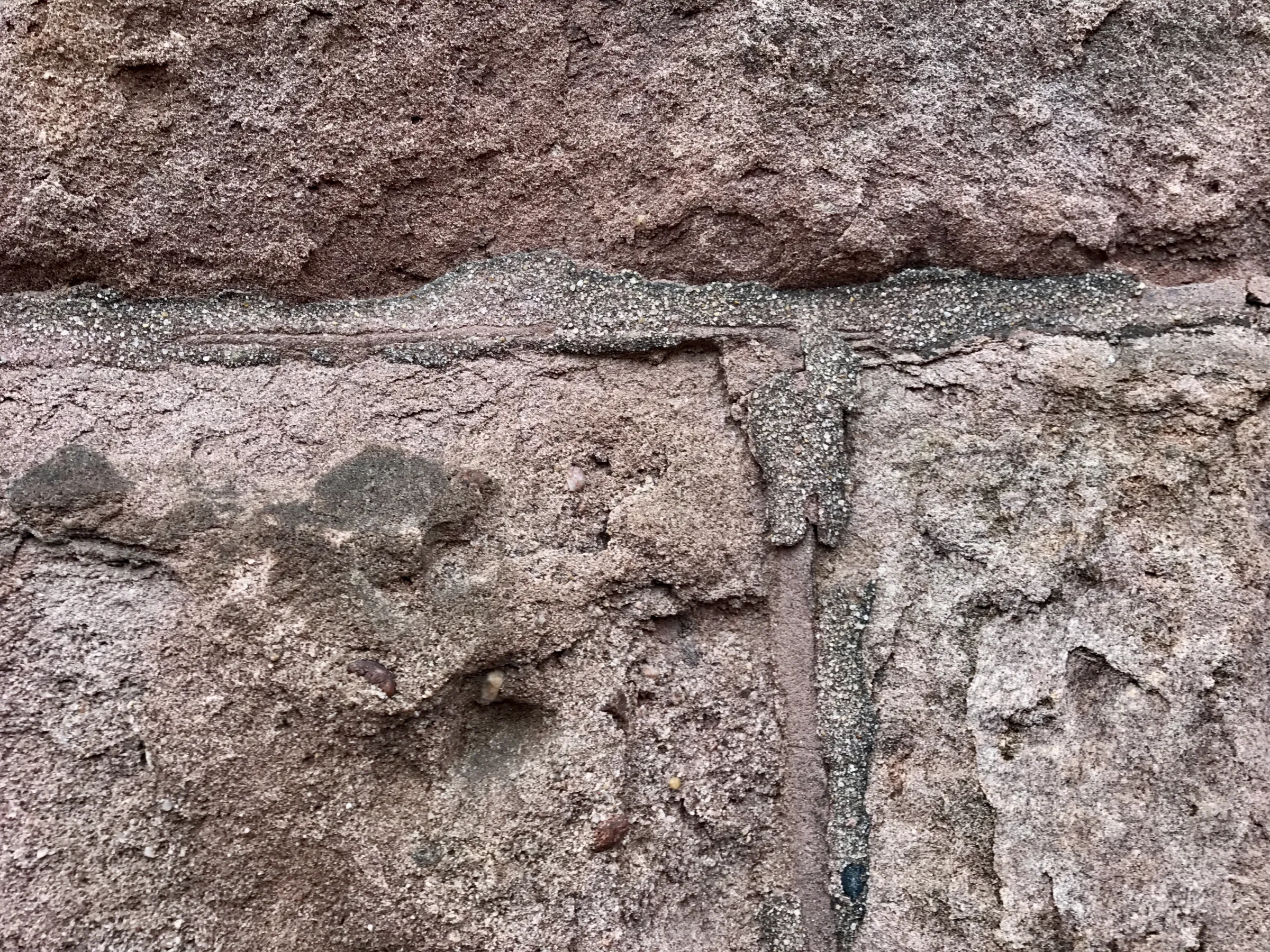
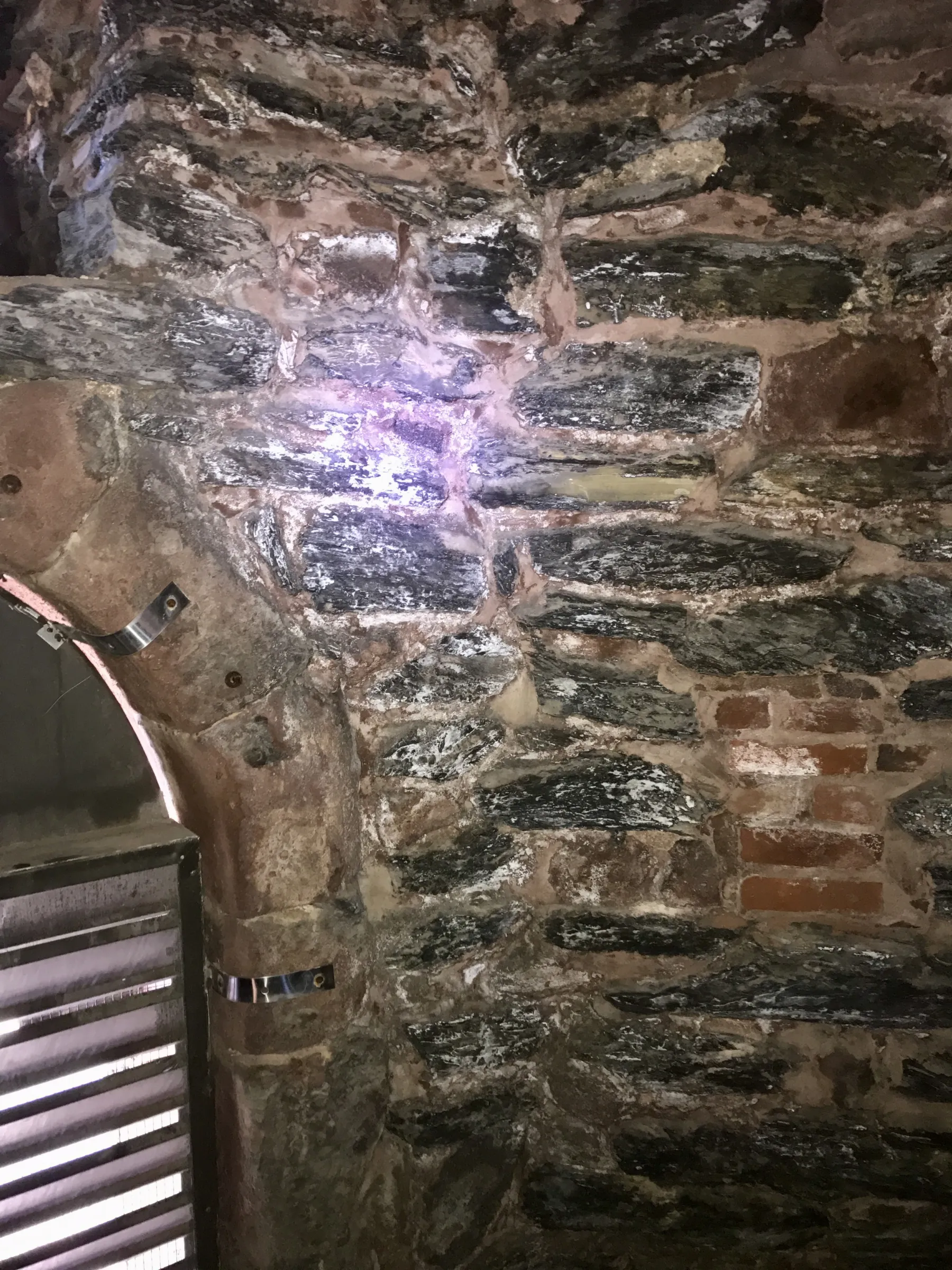
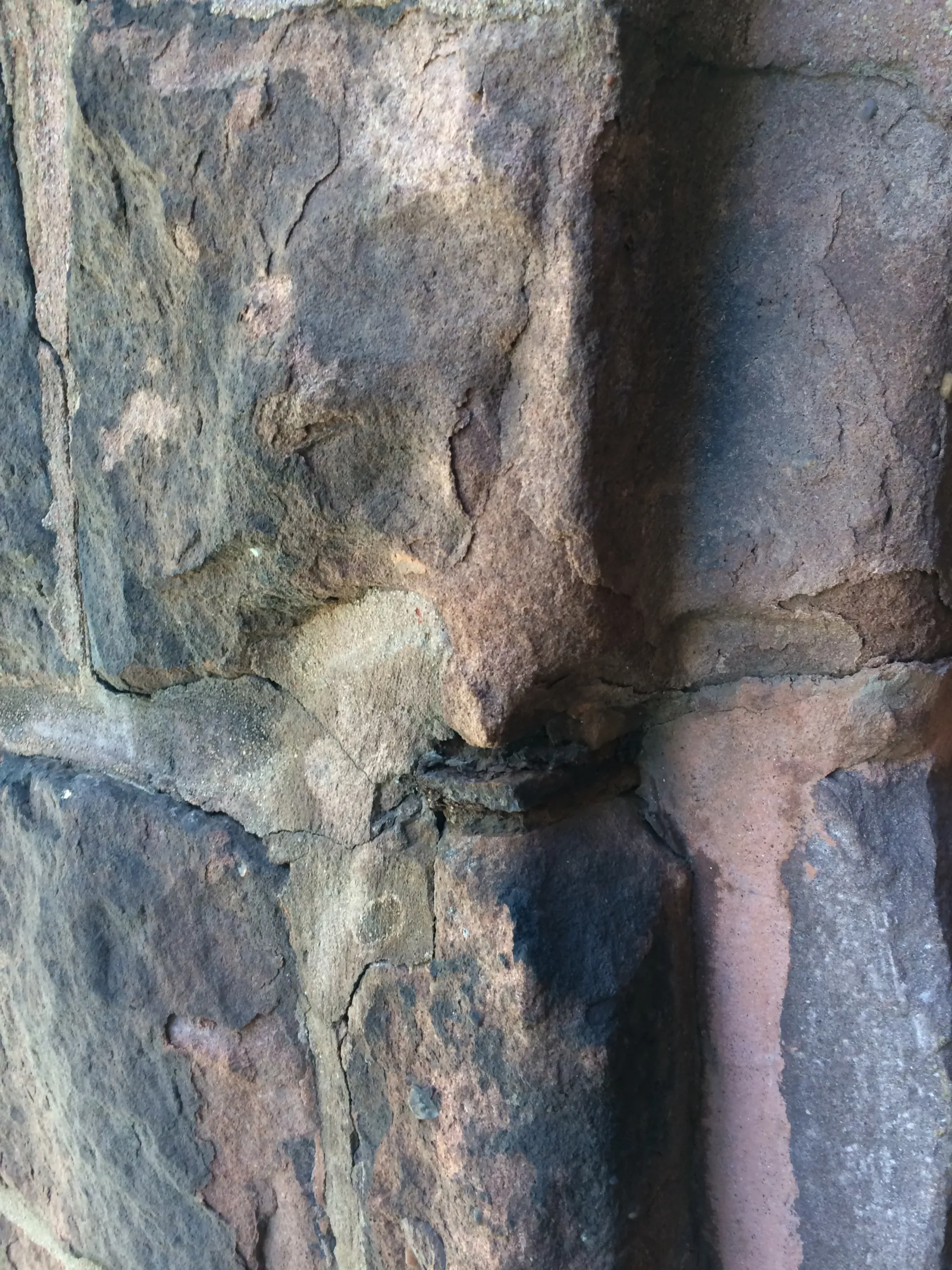
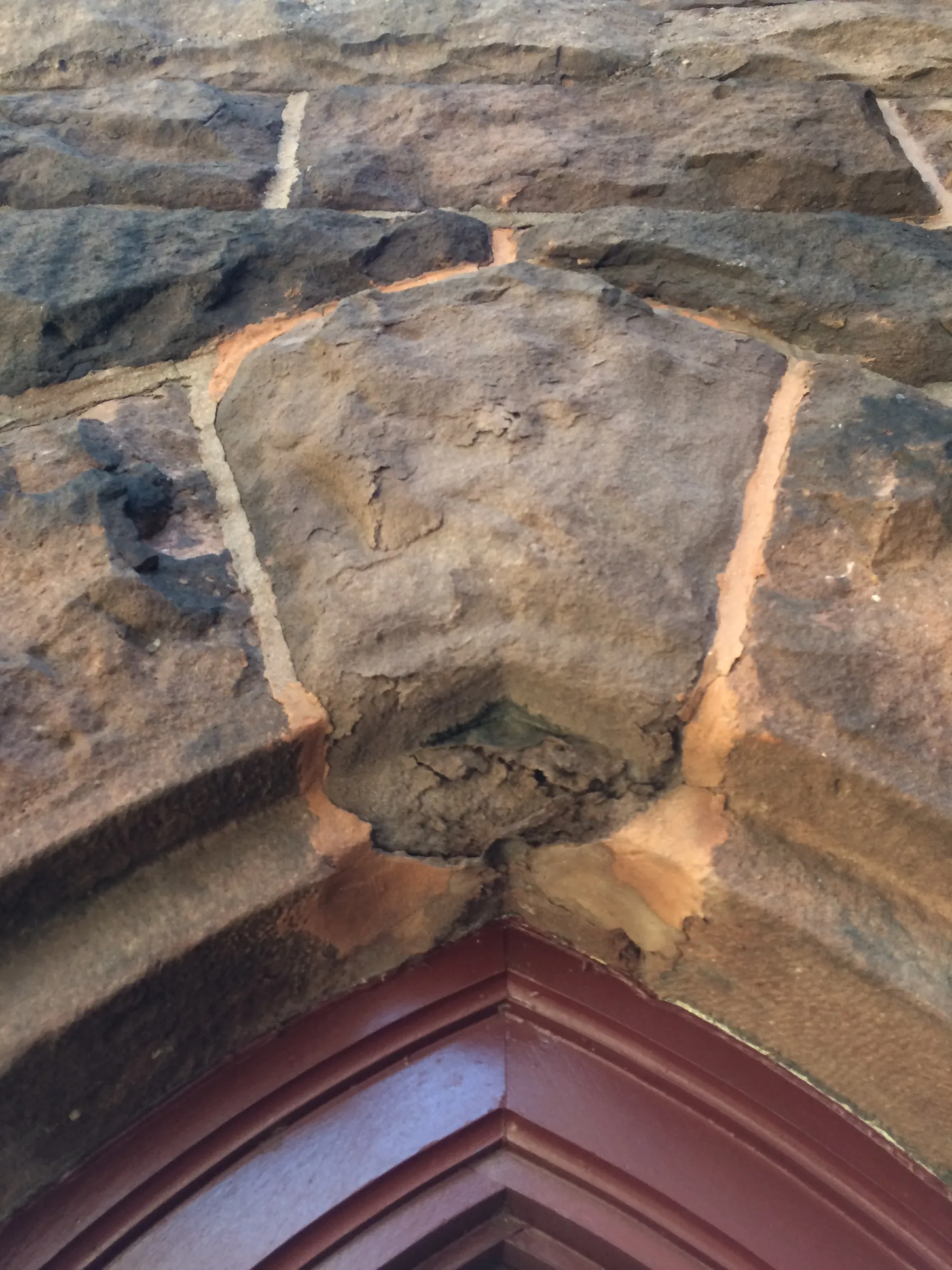
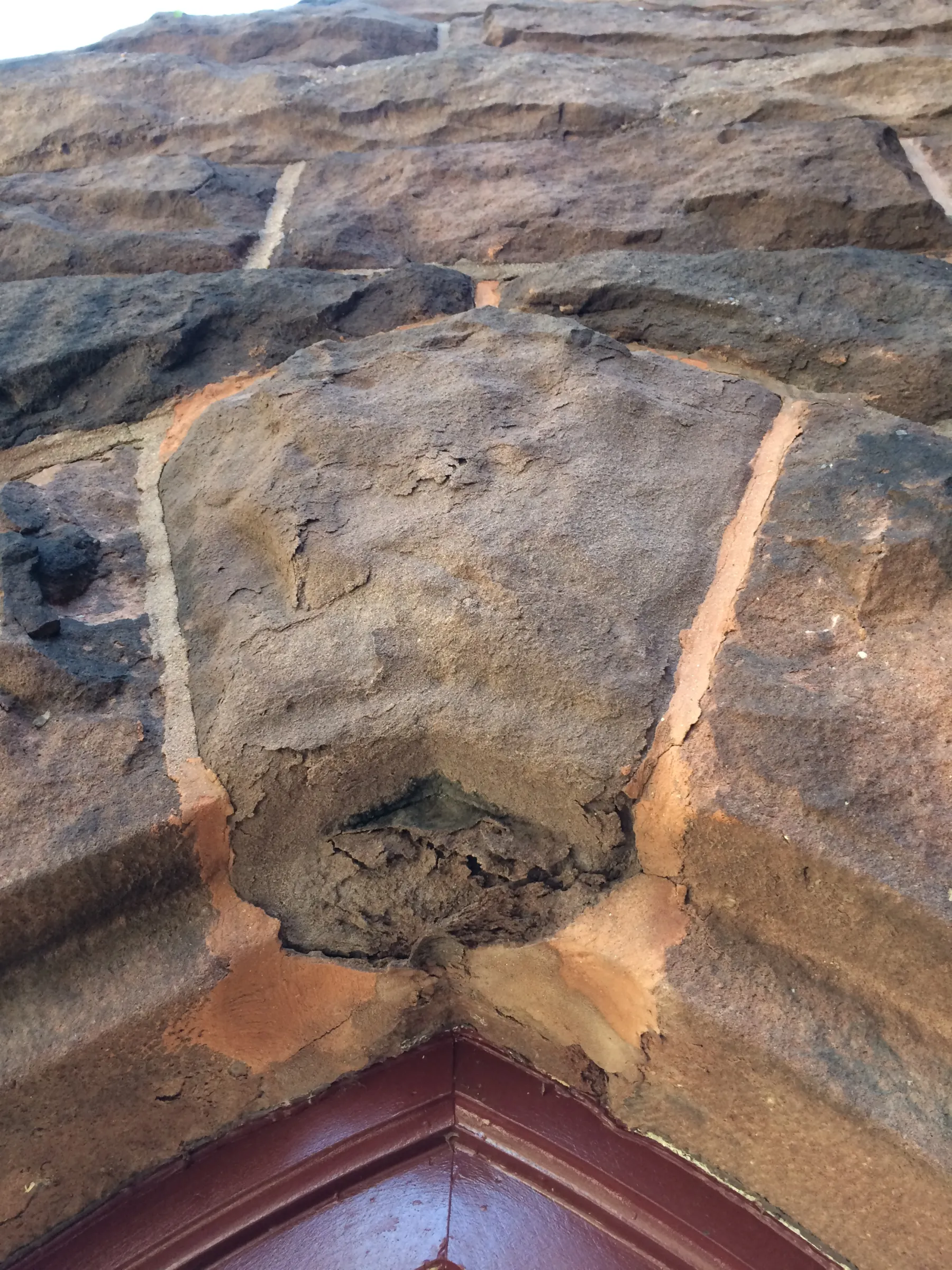
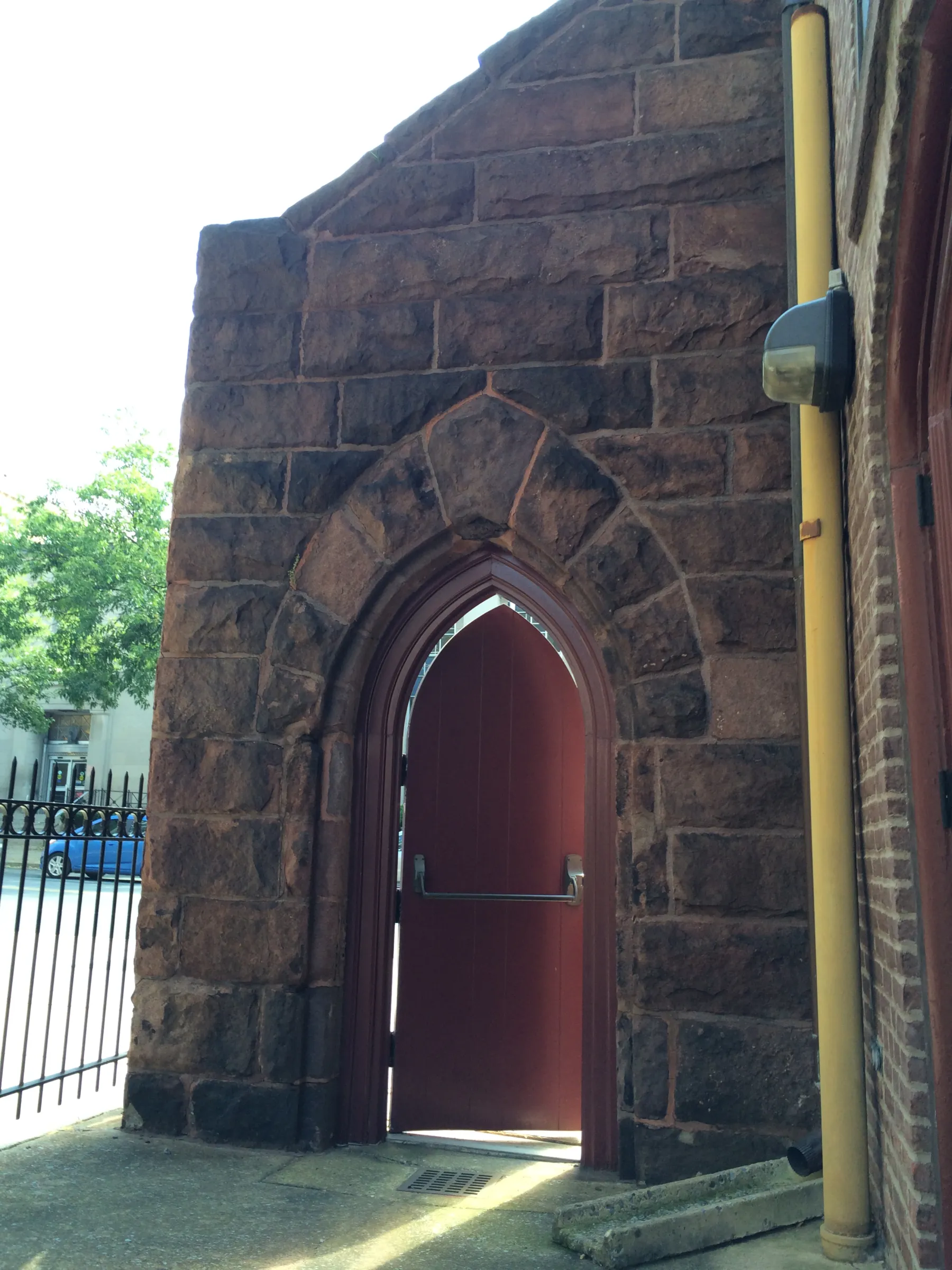
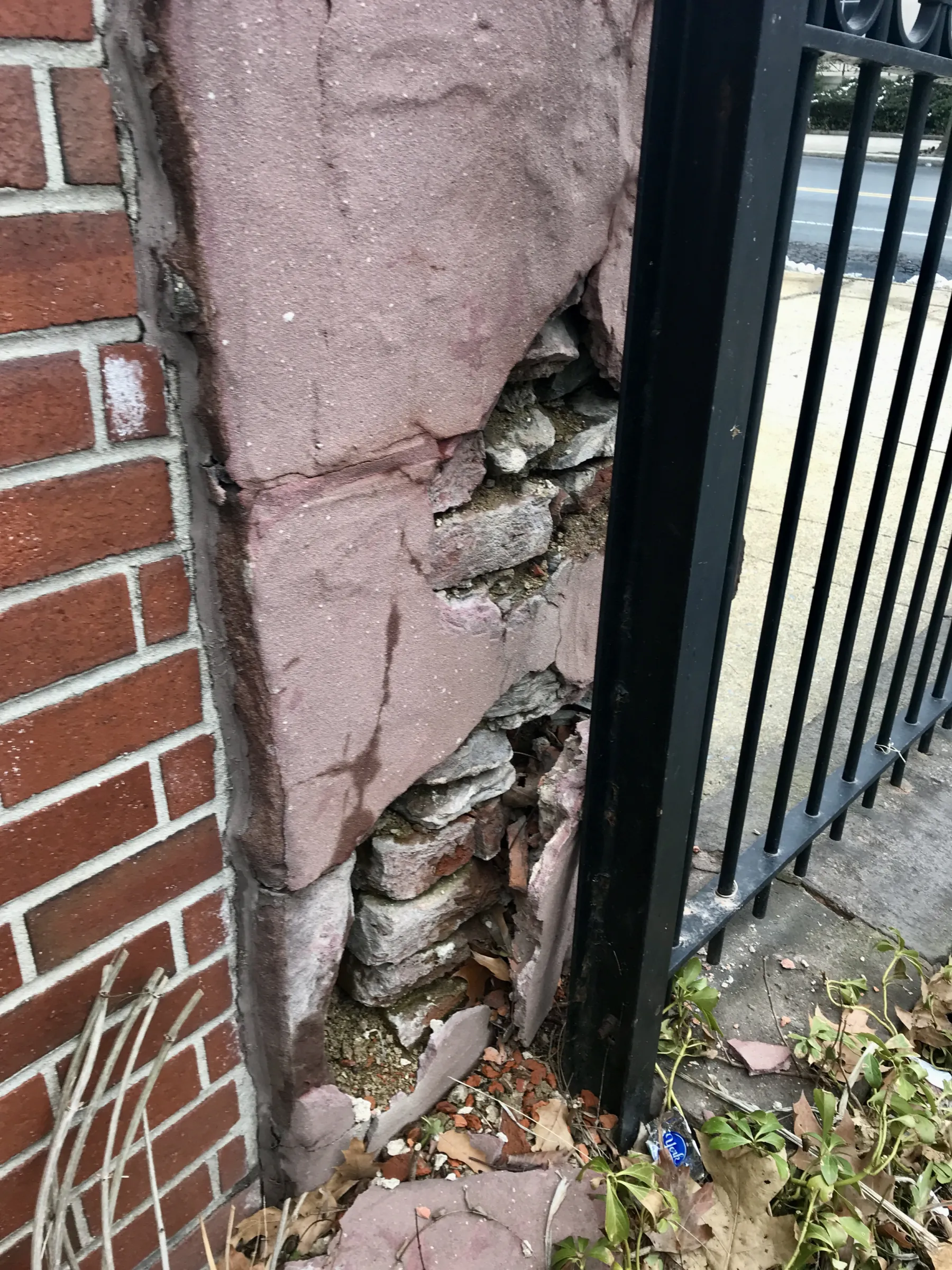
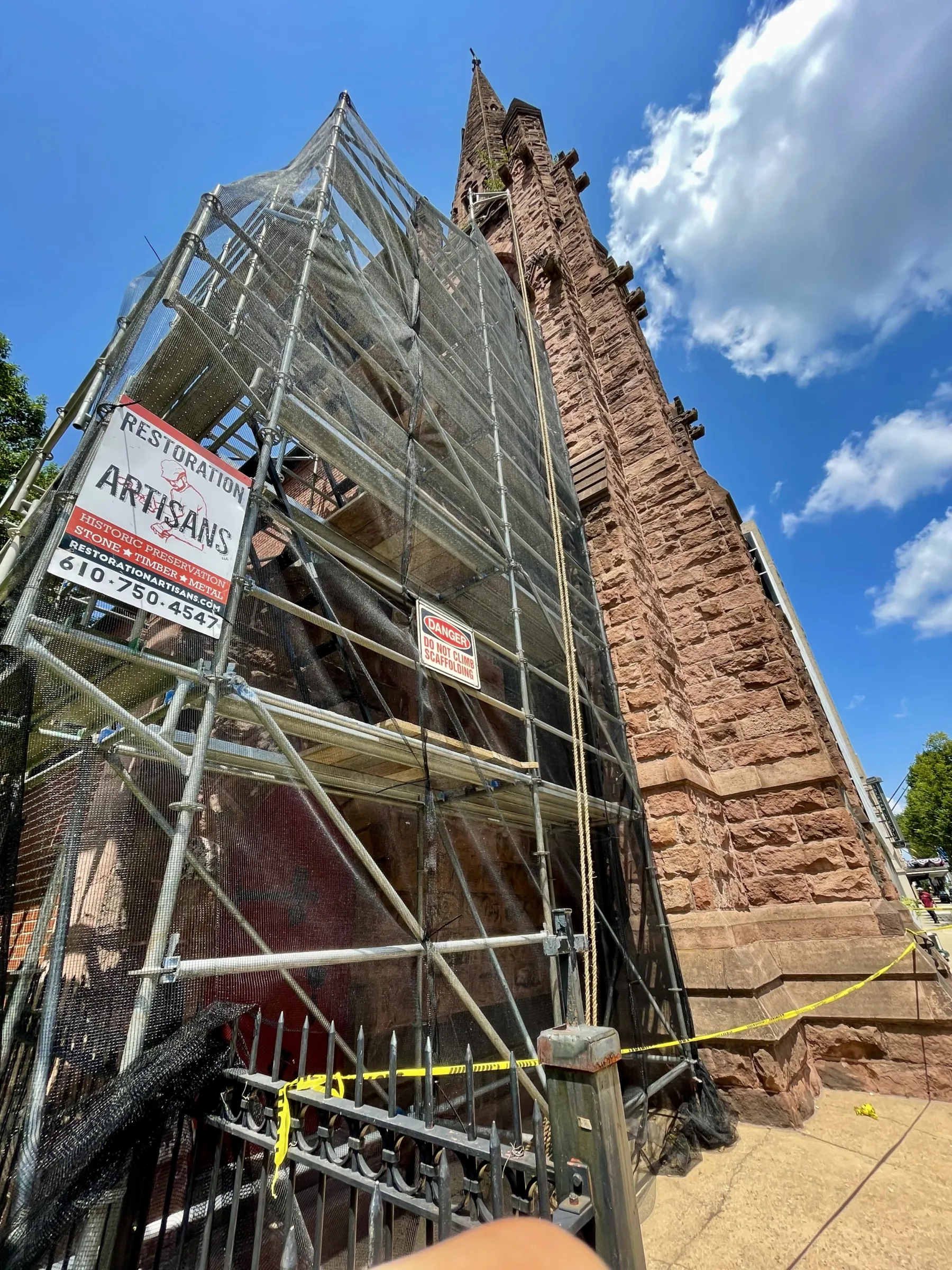
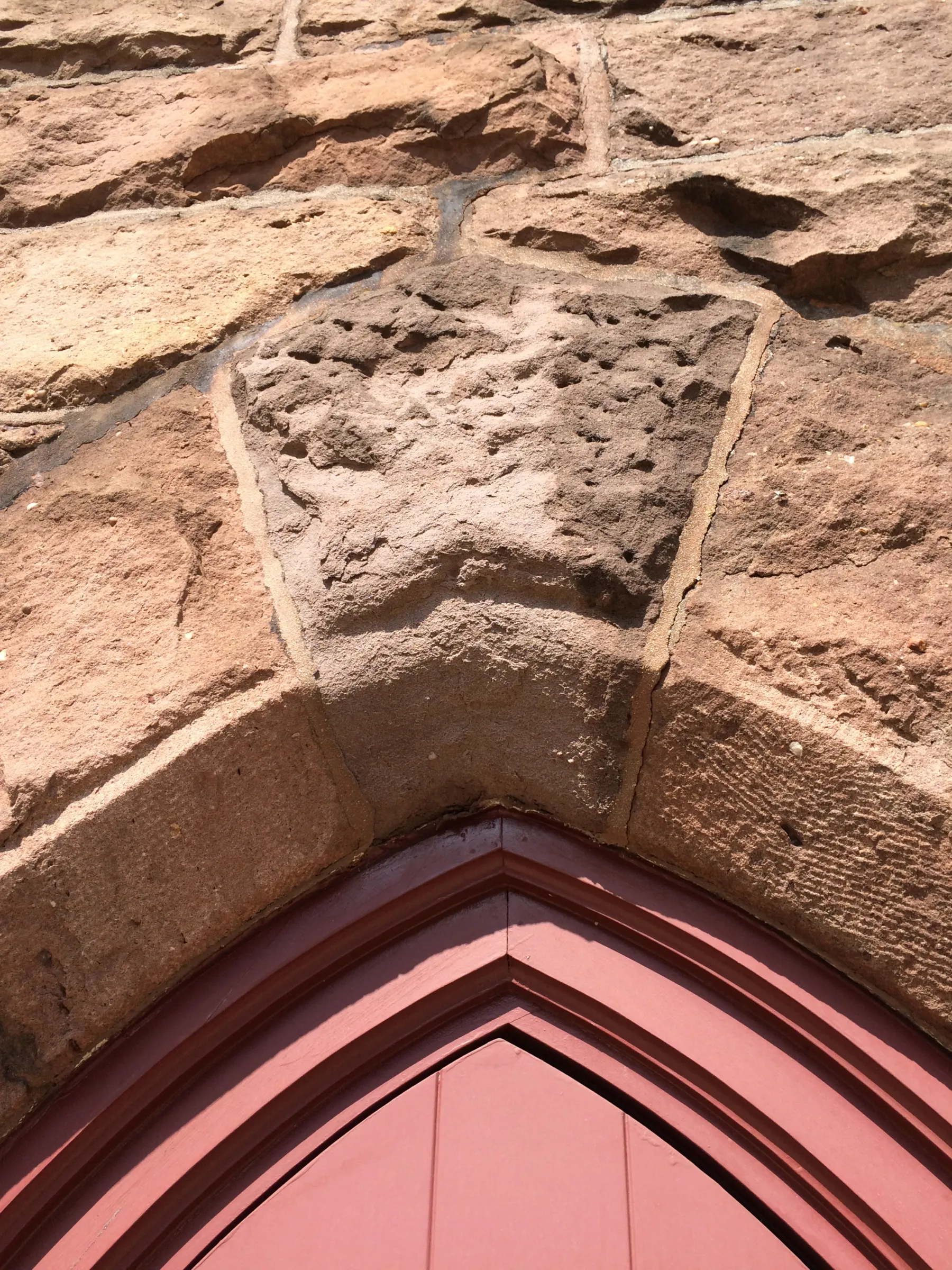
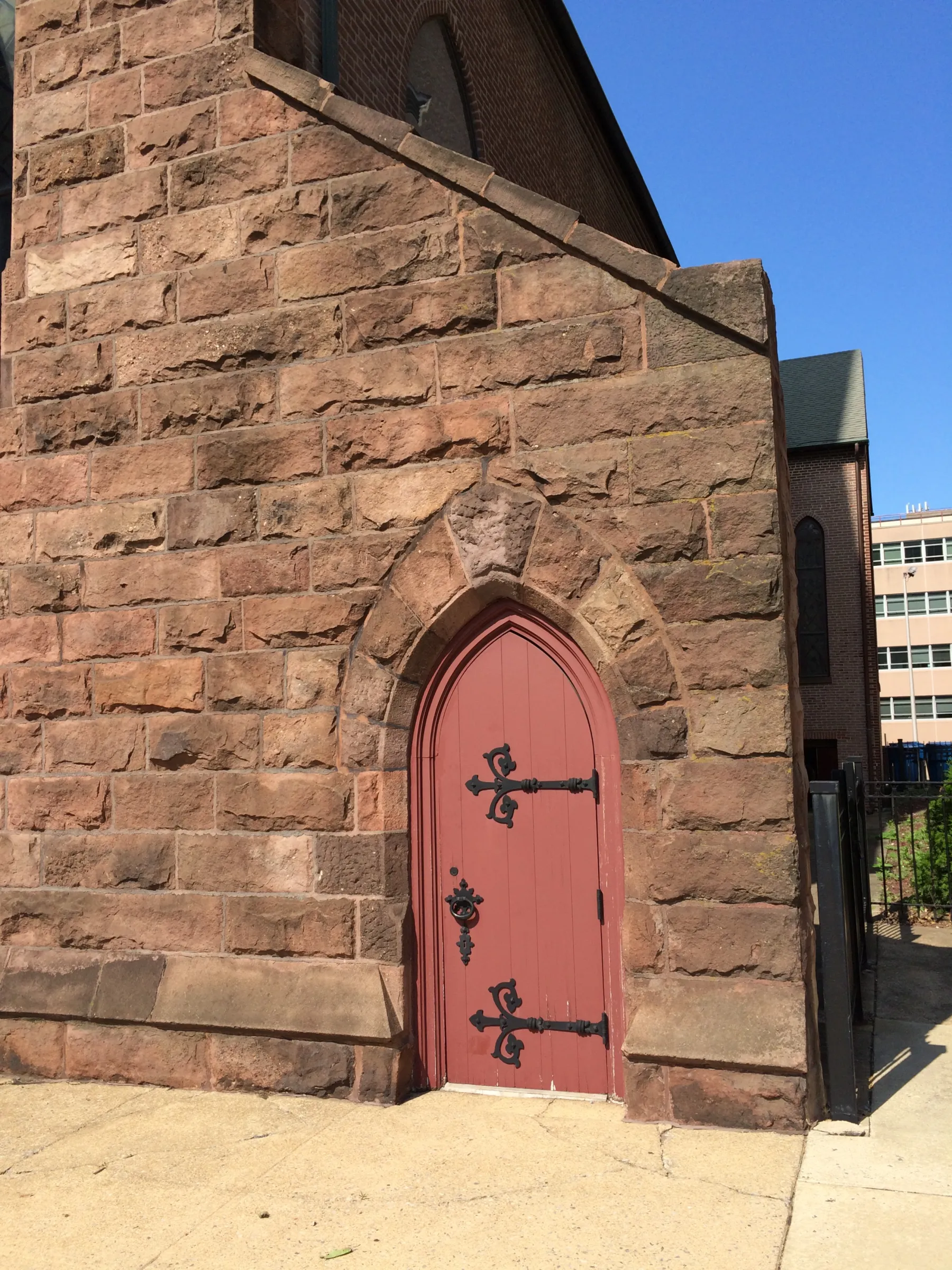
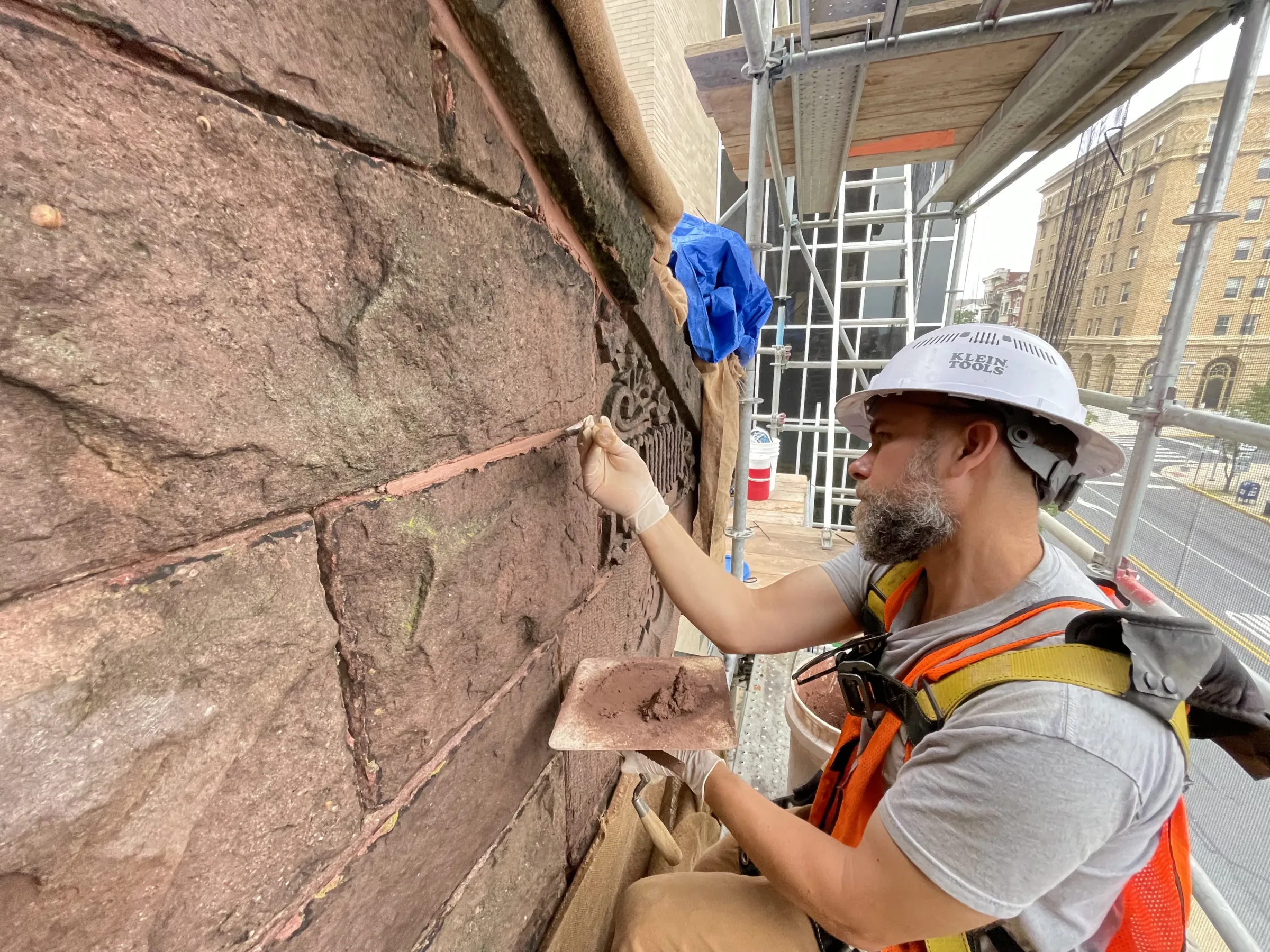
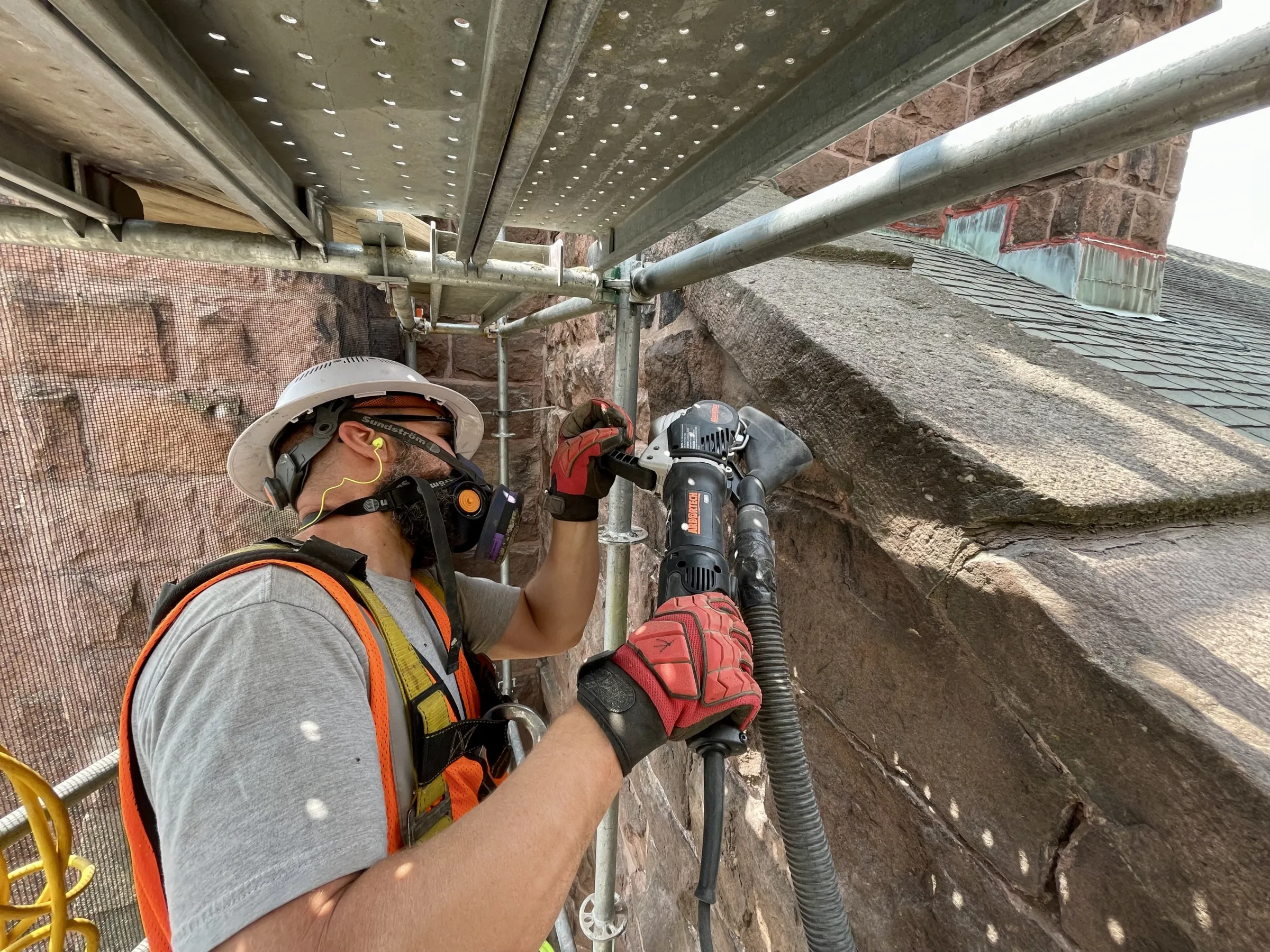
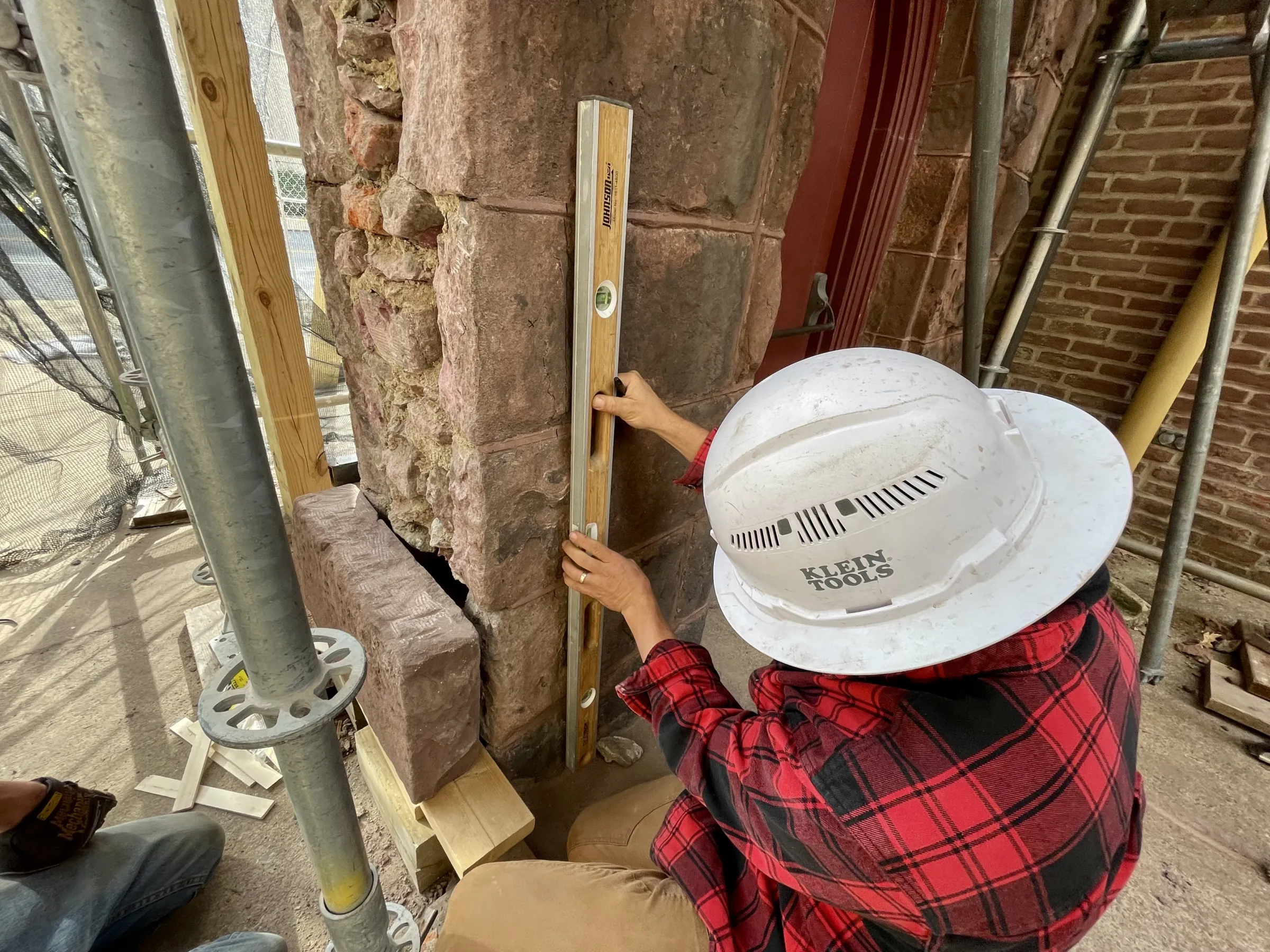
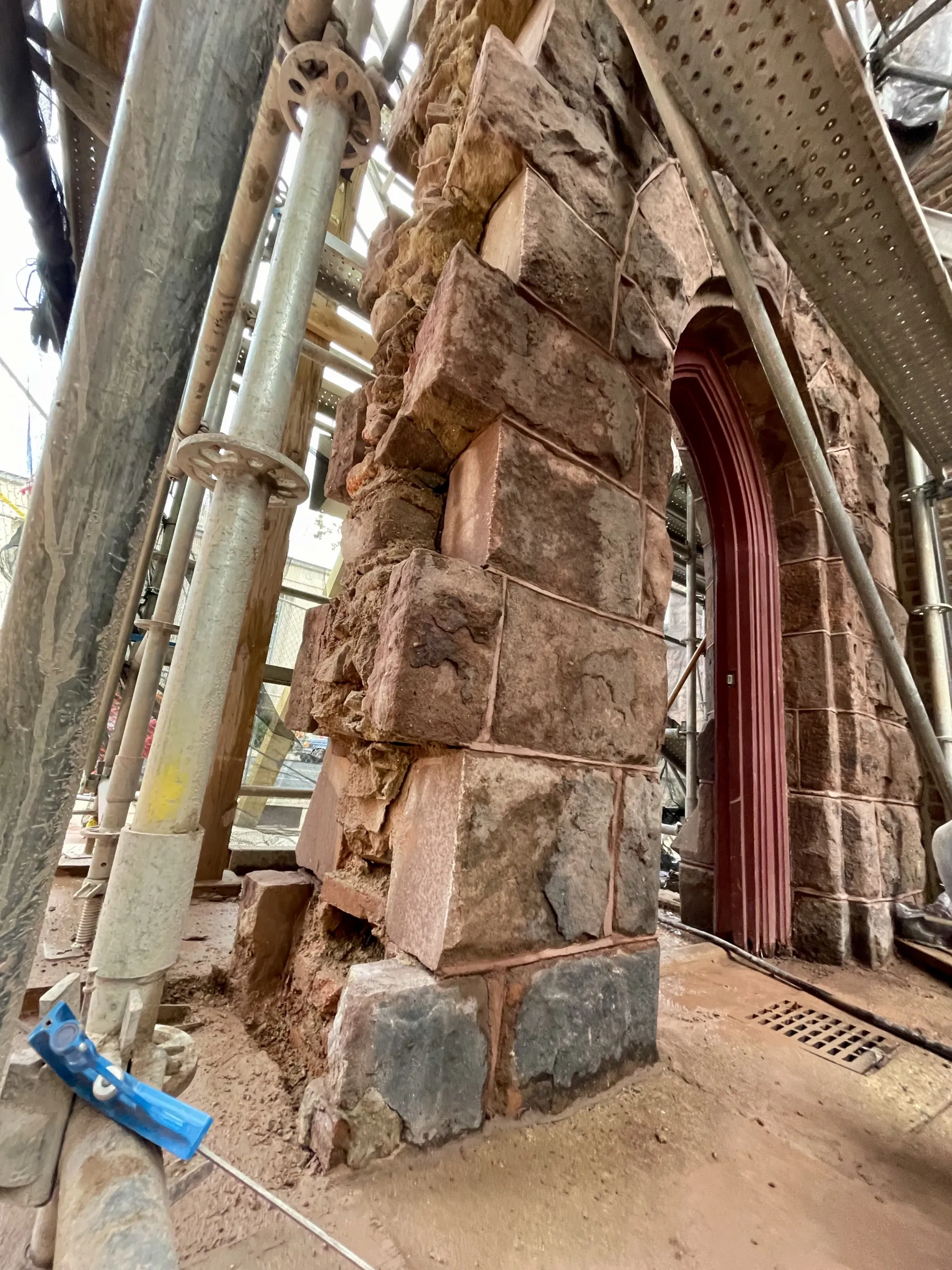
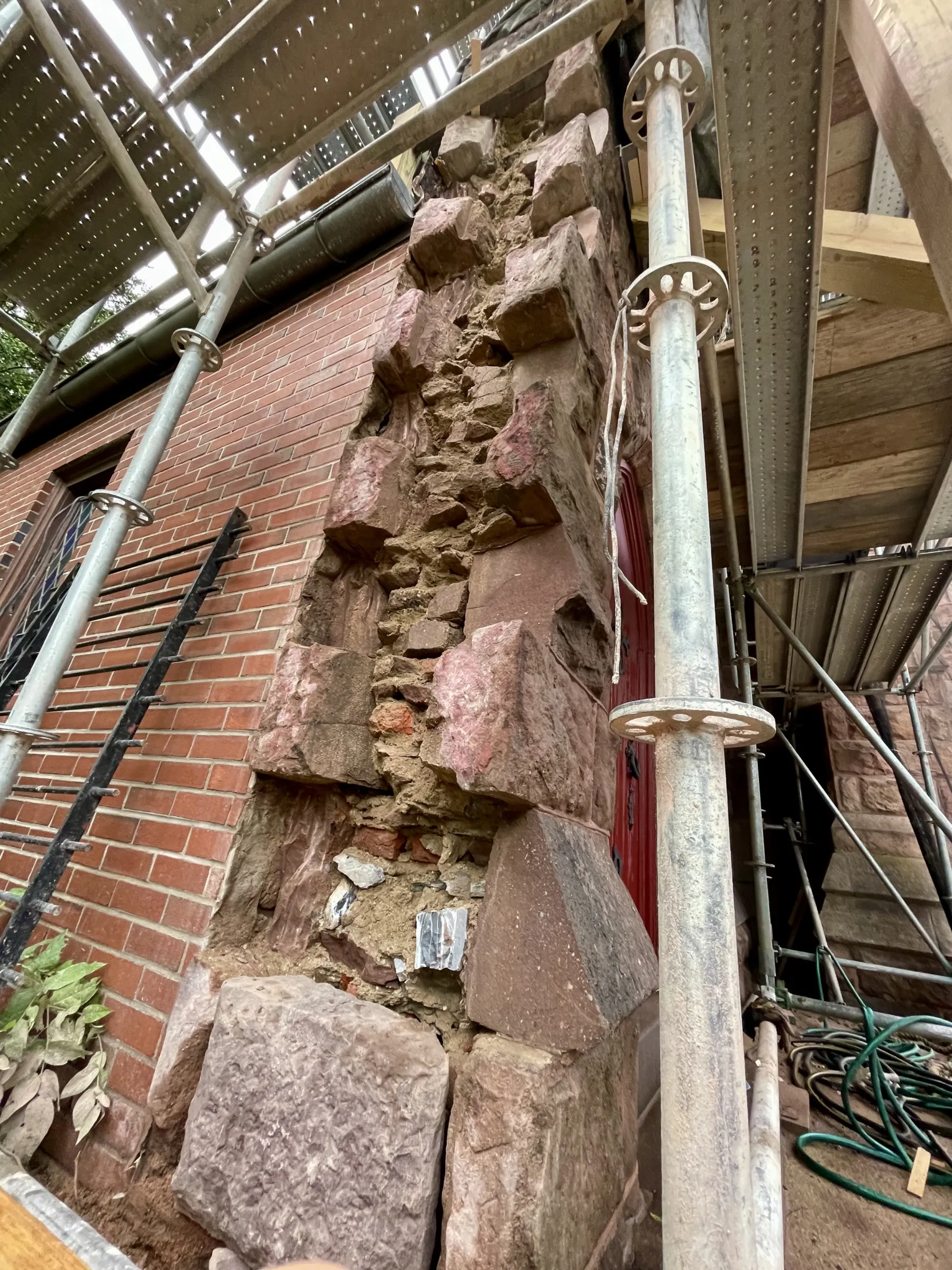
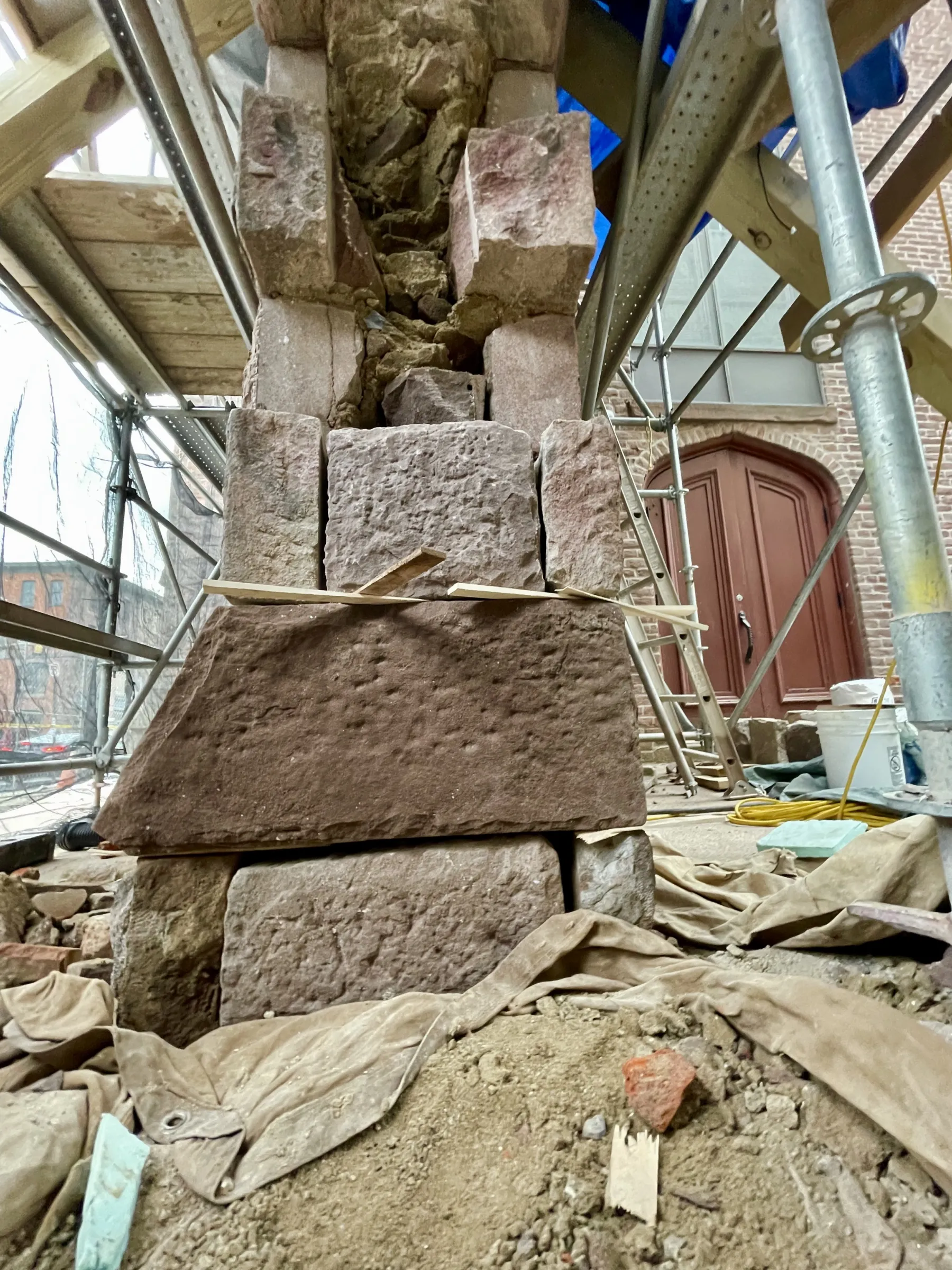
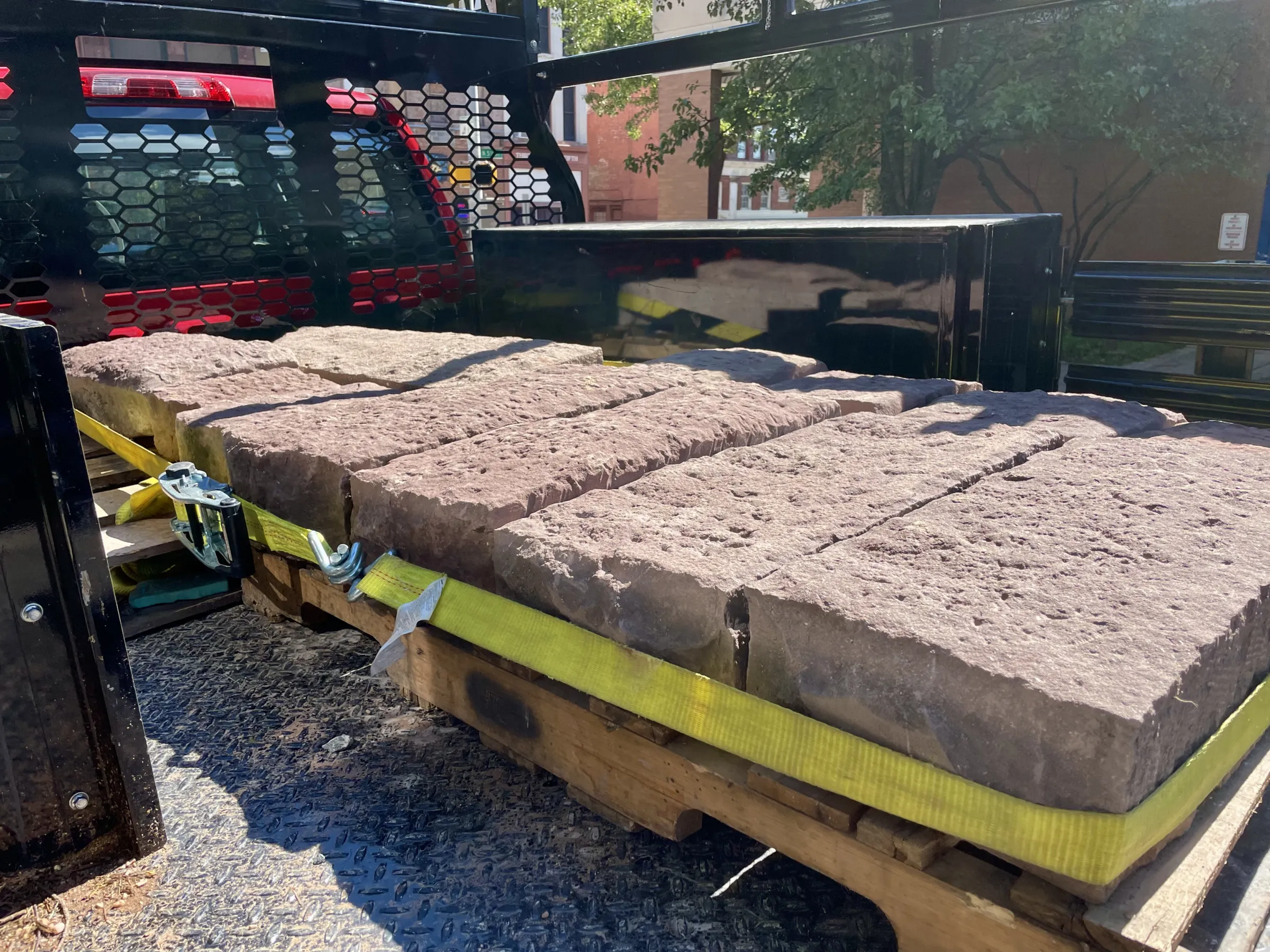
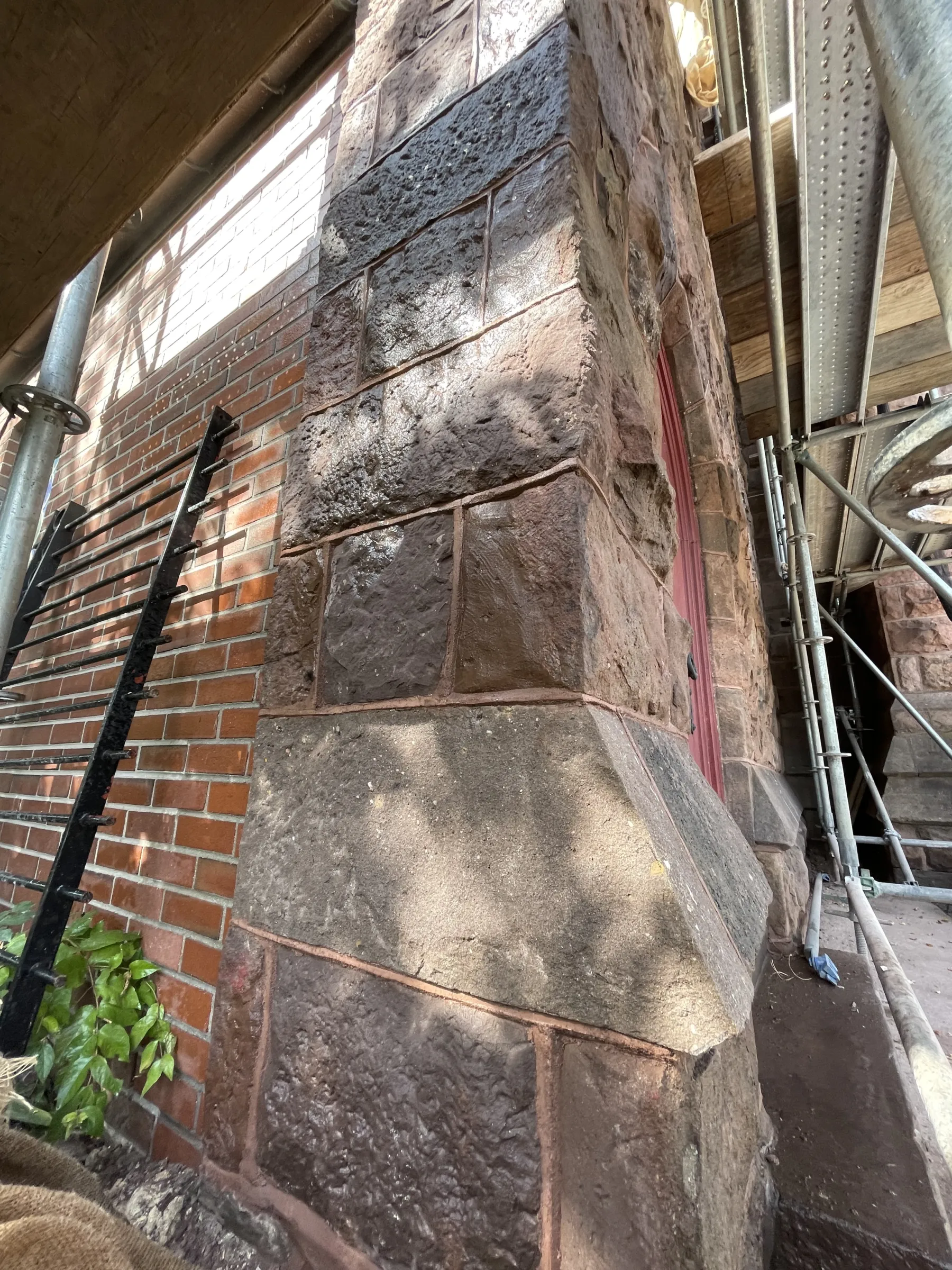
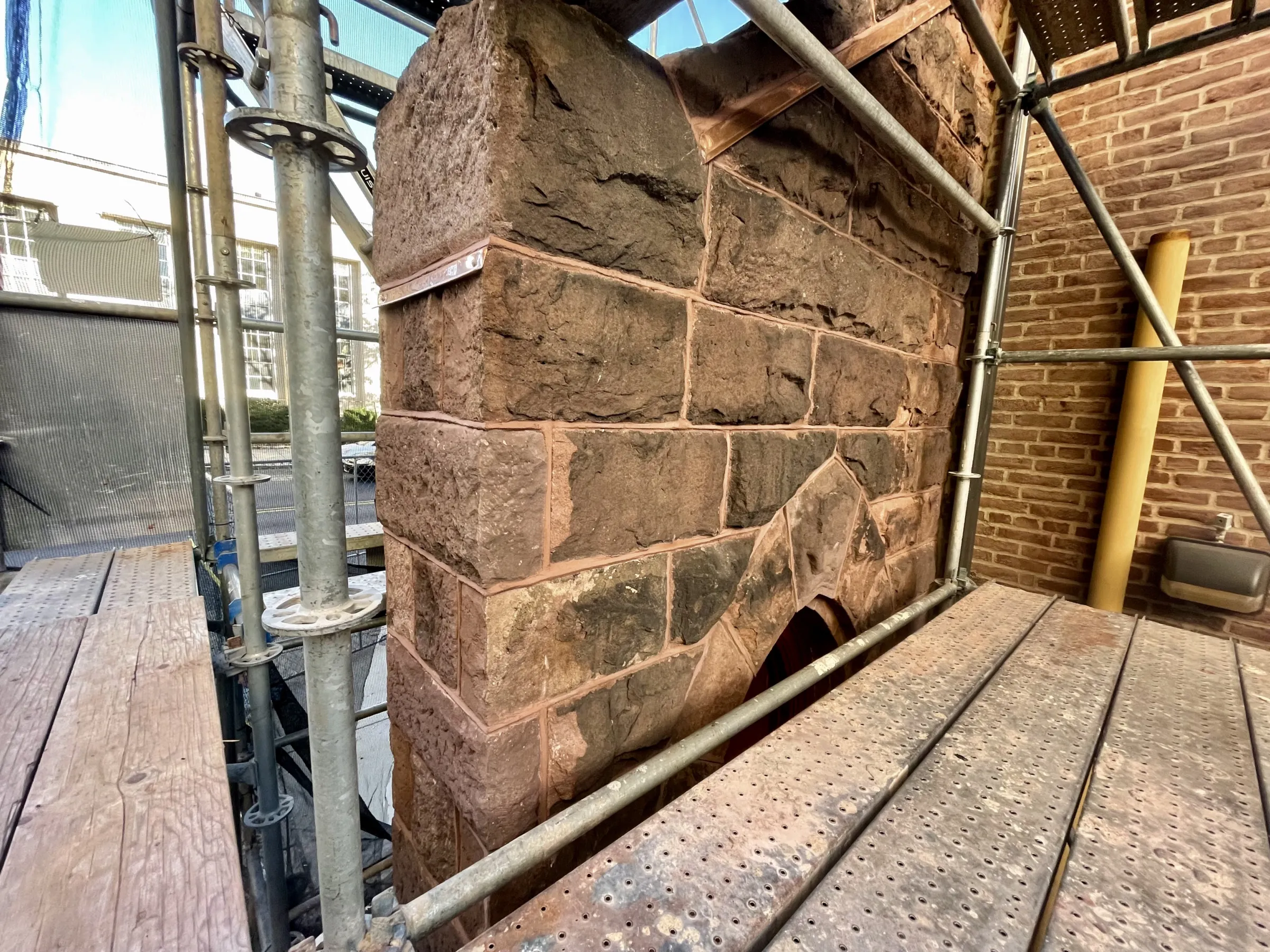
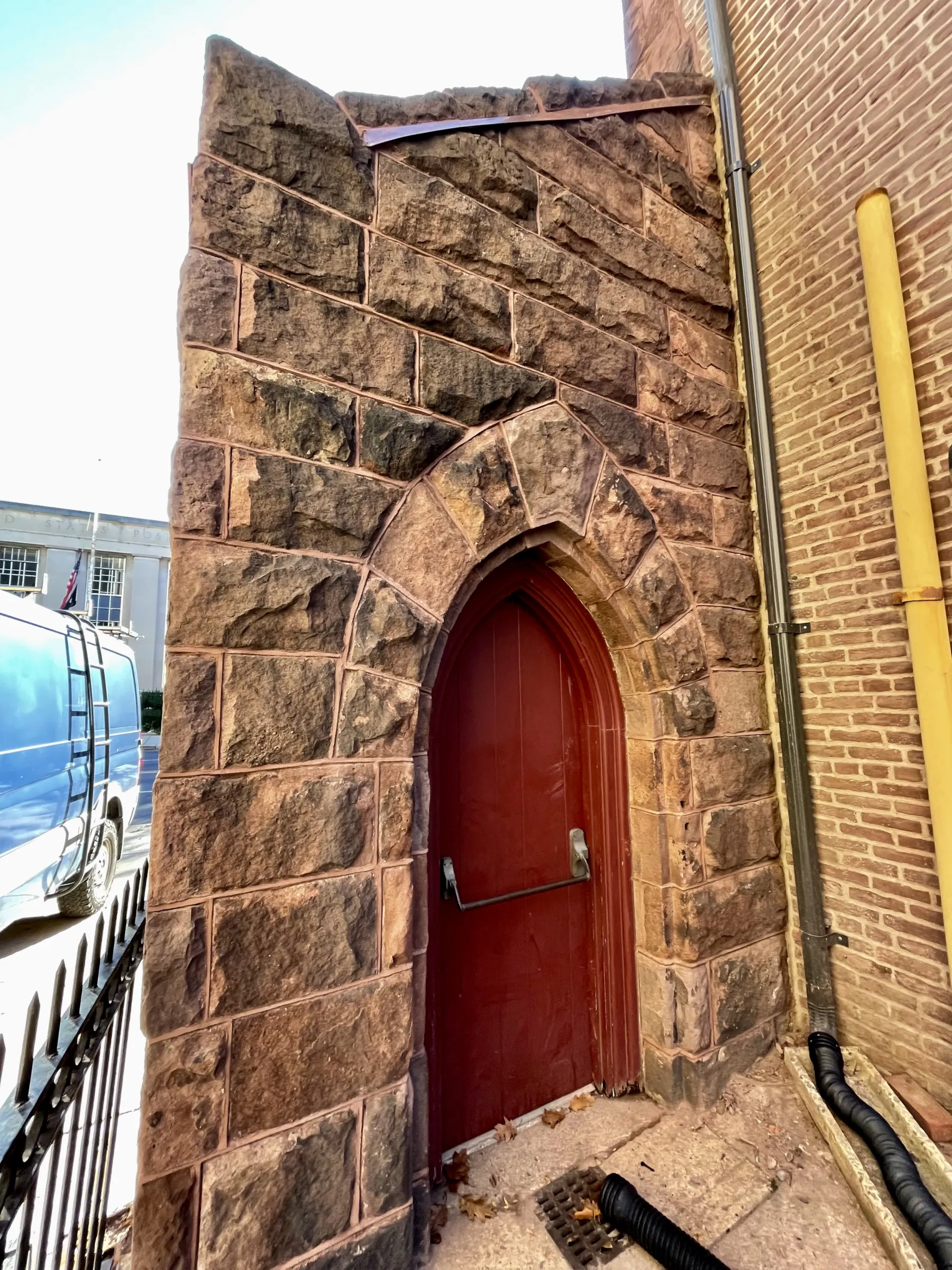
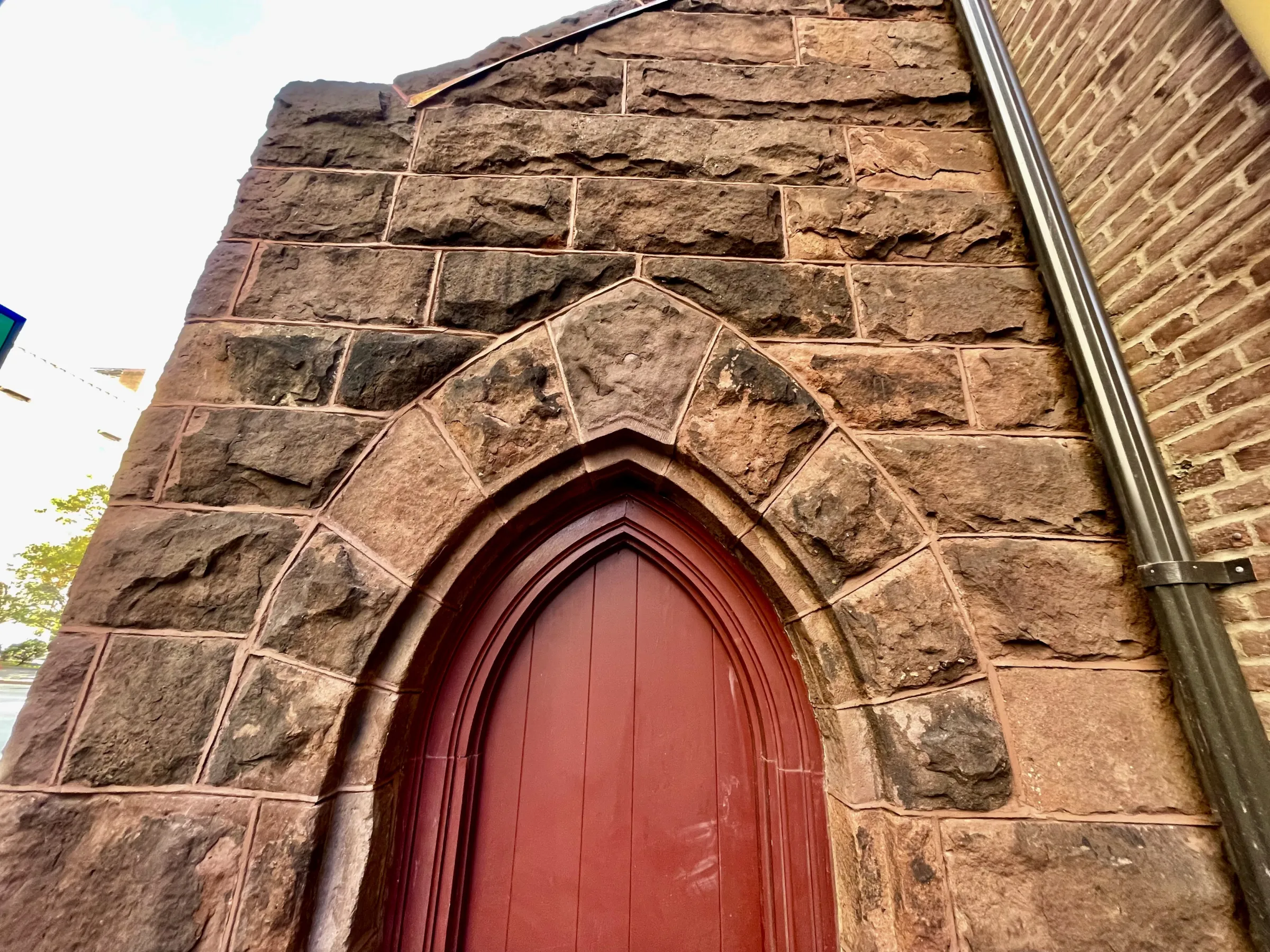
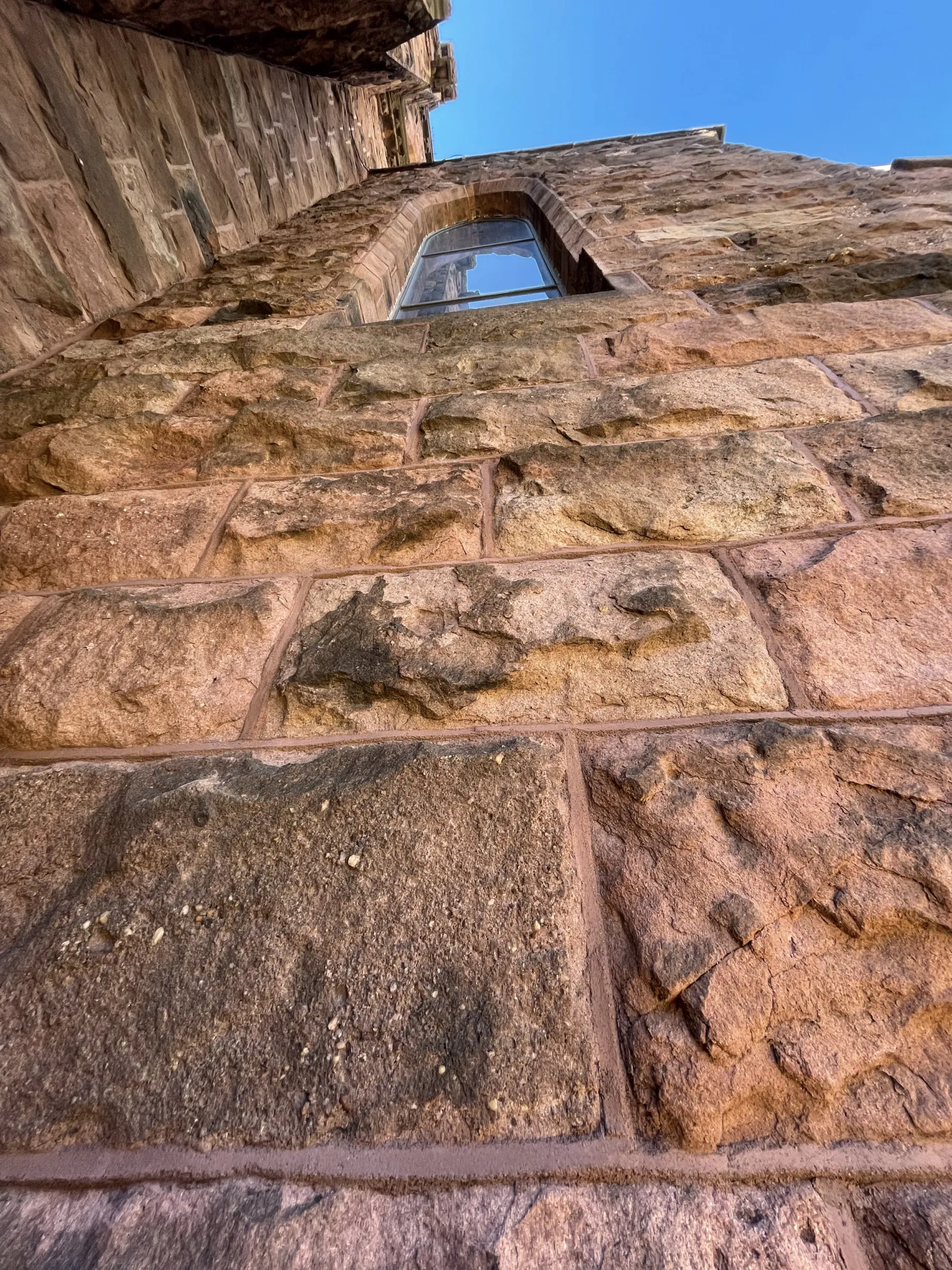
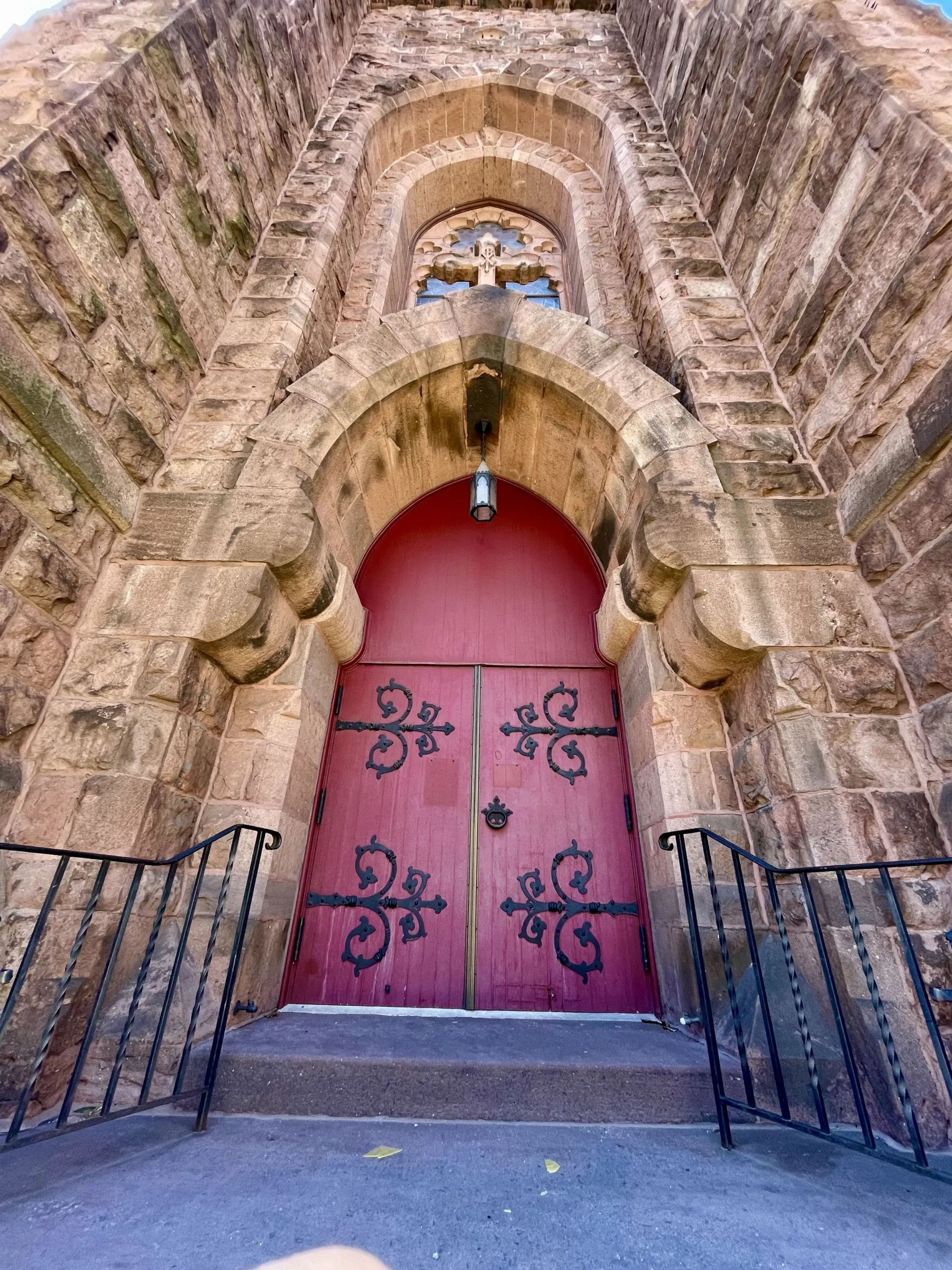
In 2021, the Pennsylvania Historical and Museum Commission awarded a Keystone Grant supporting restoration of the front façade. Restoration Artisans performed mortar analysis to replicate the original lime mortar composition and joint profiles envisioned by the architect. The project included removal of incompatible Portland cement mortar, careful cleaning of the brownstone masonry, repointing with custom-colored Saint Astier hydraulic lime mortar supplied by Limeworks of Telford, Pennsylvania, structural repairs to the brownstone columns, selective replacement using reclaimed Hummelstown brownstone, installation of copper flashing for water management, and conservation of the brownstone archway using Lithomex repair materials.
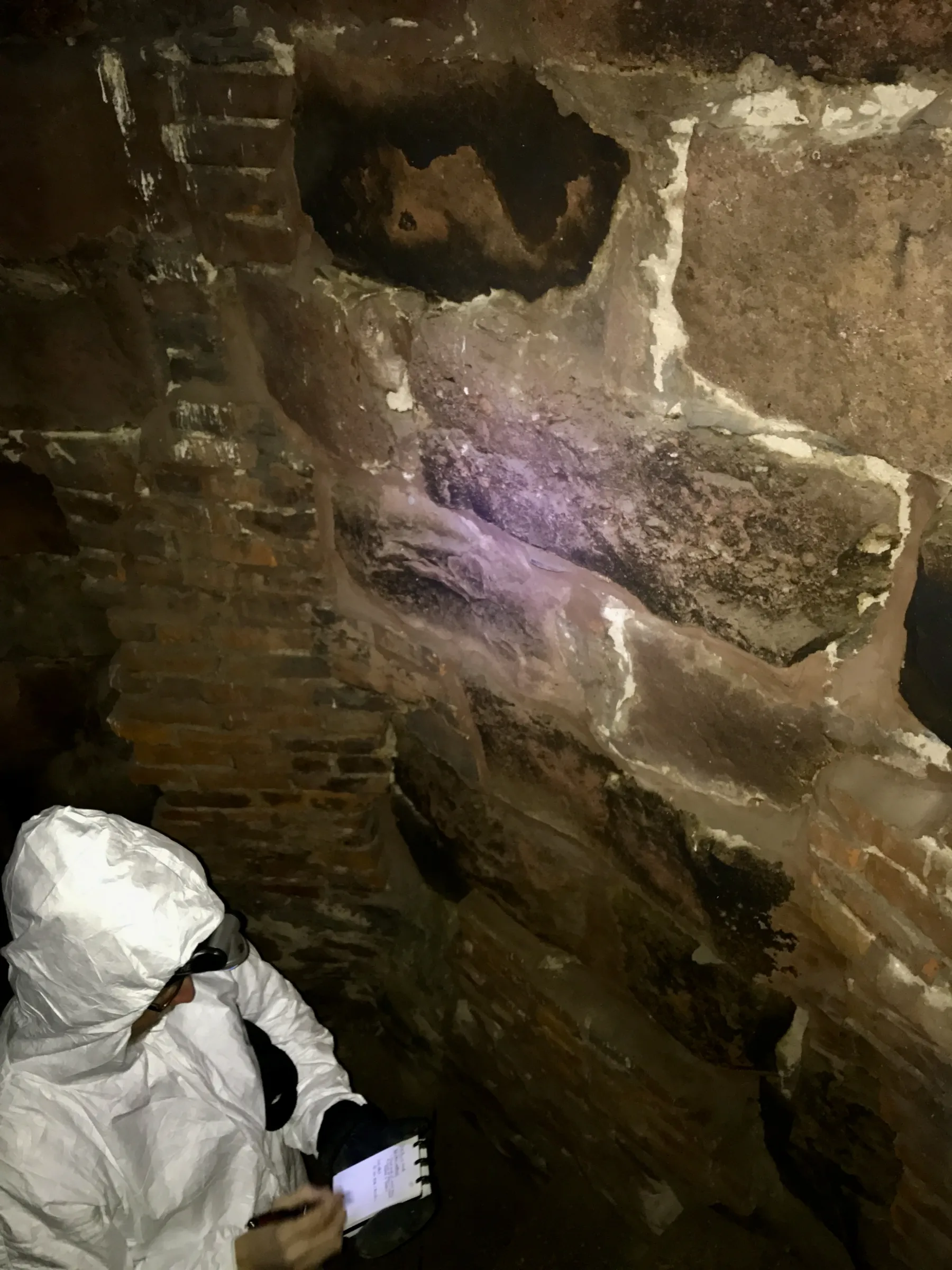
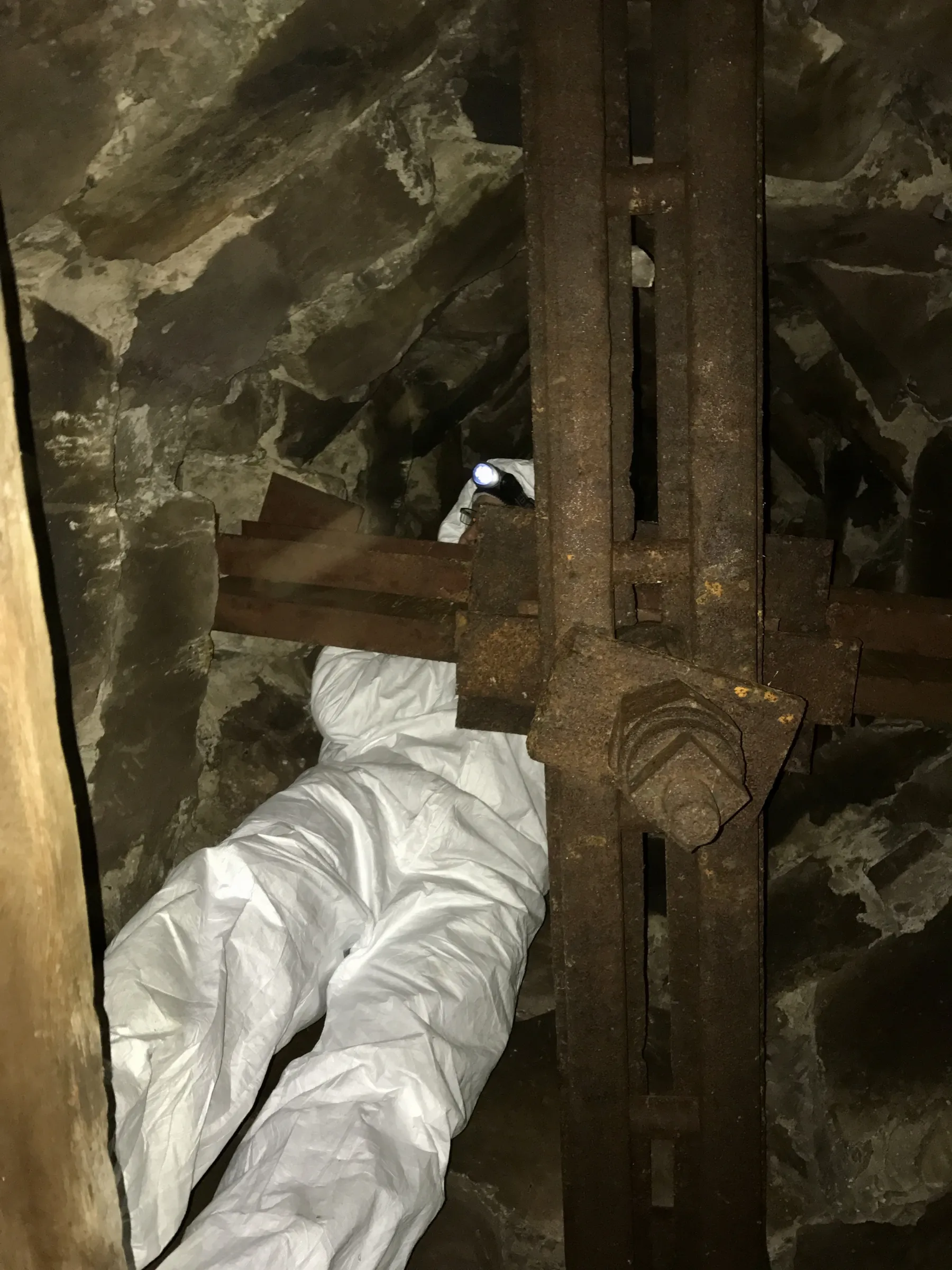
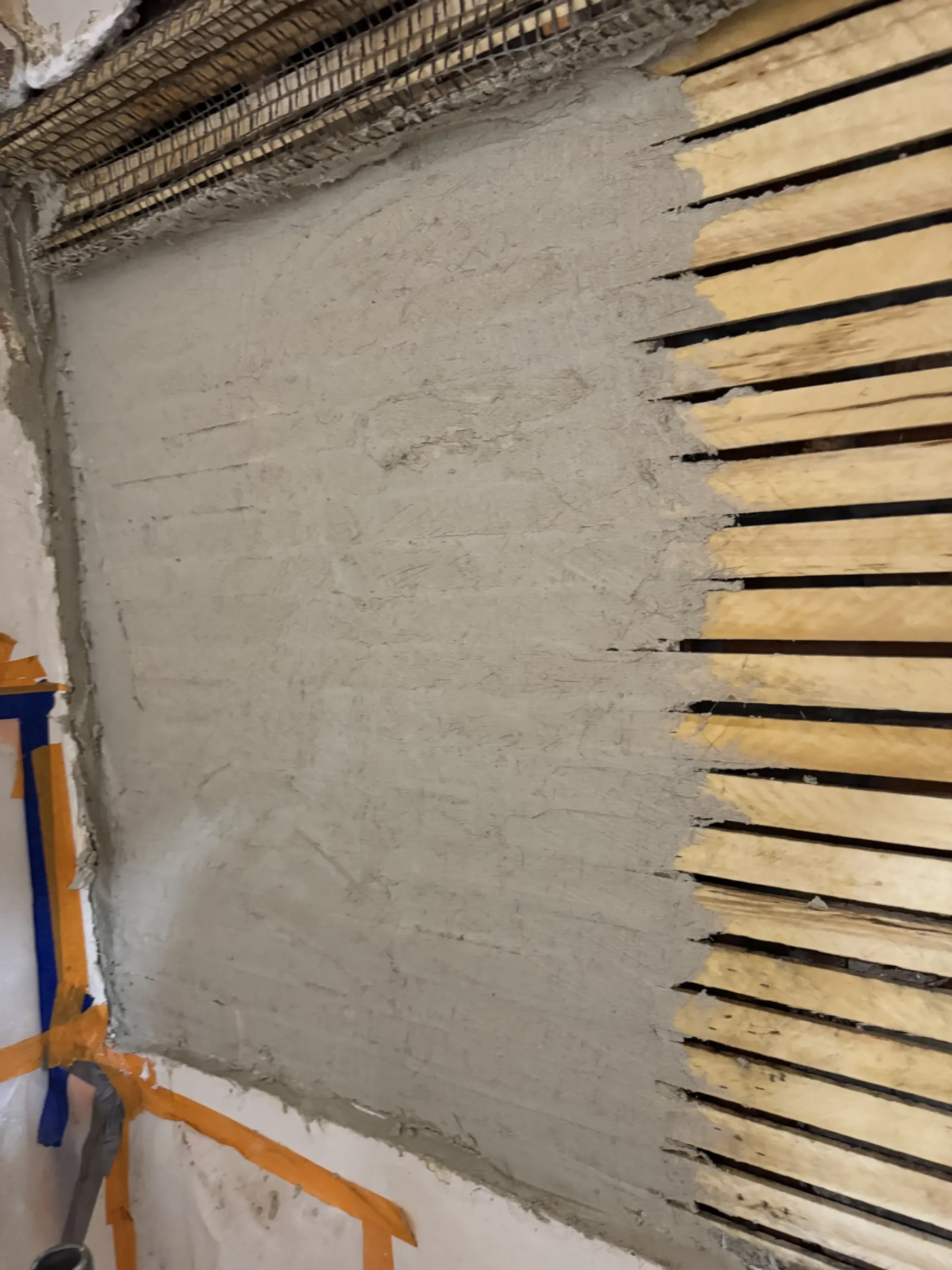
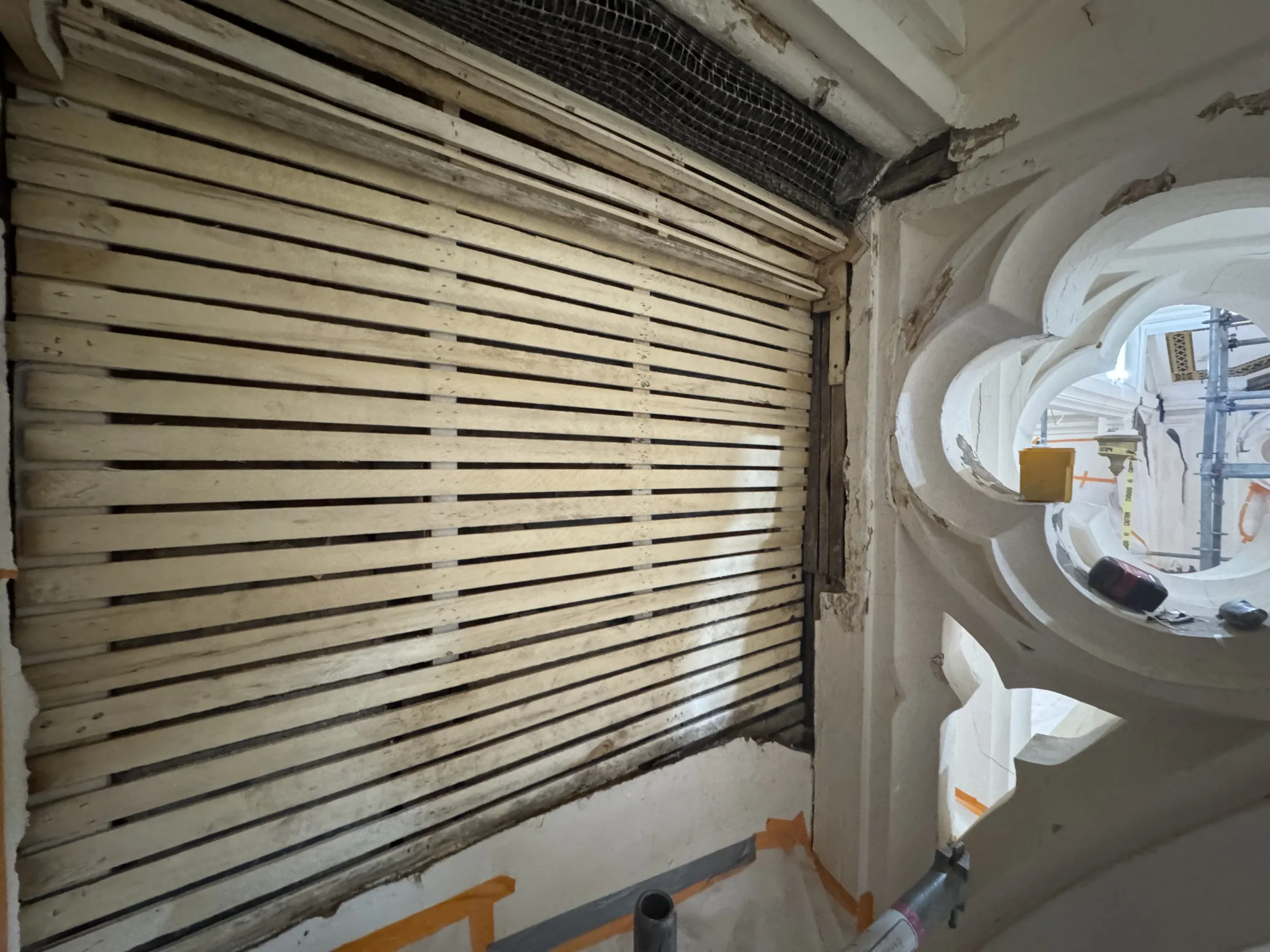
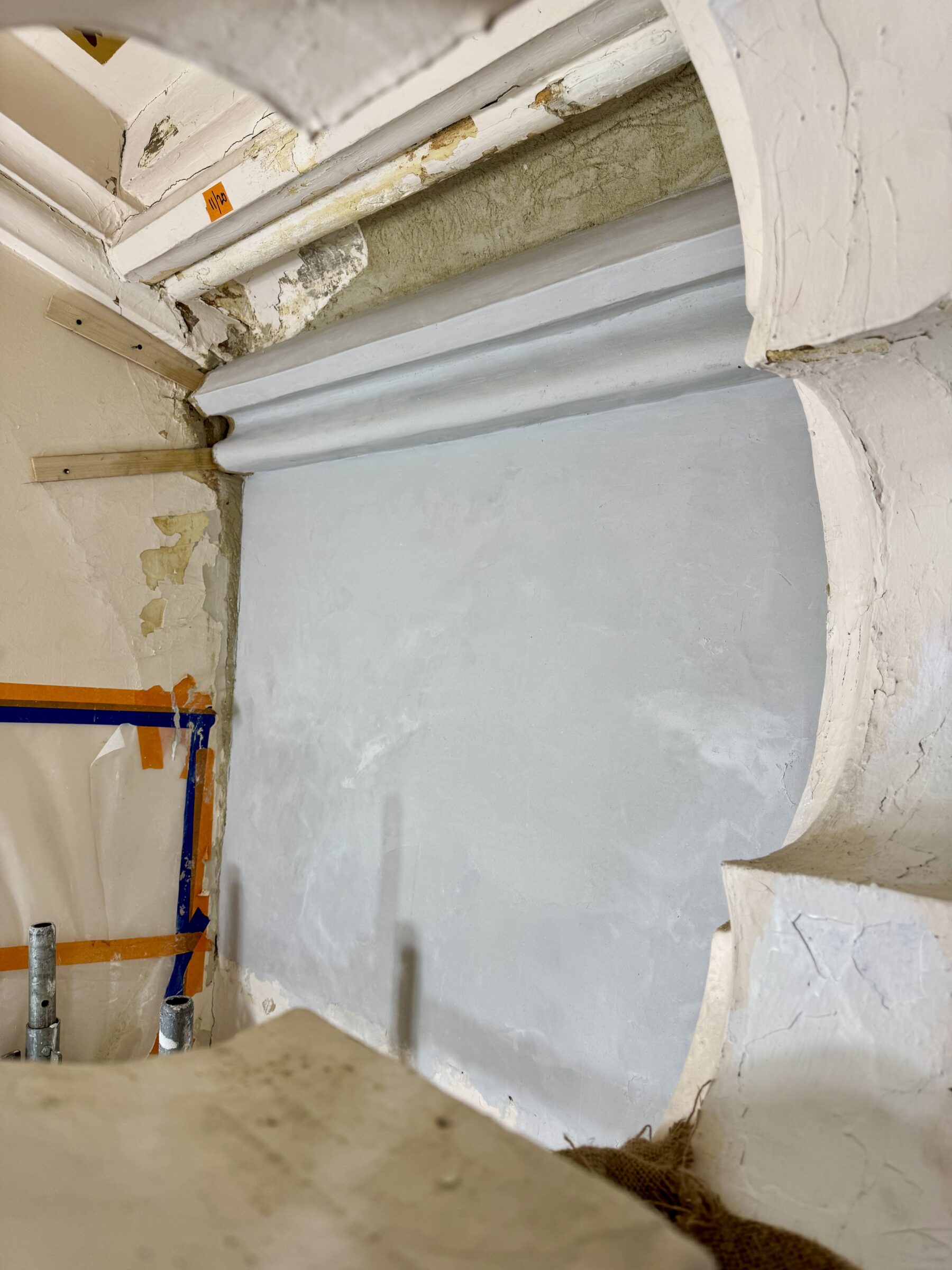
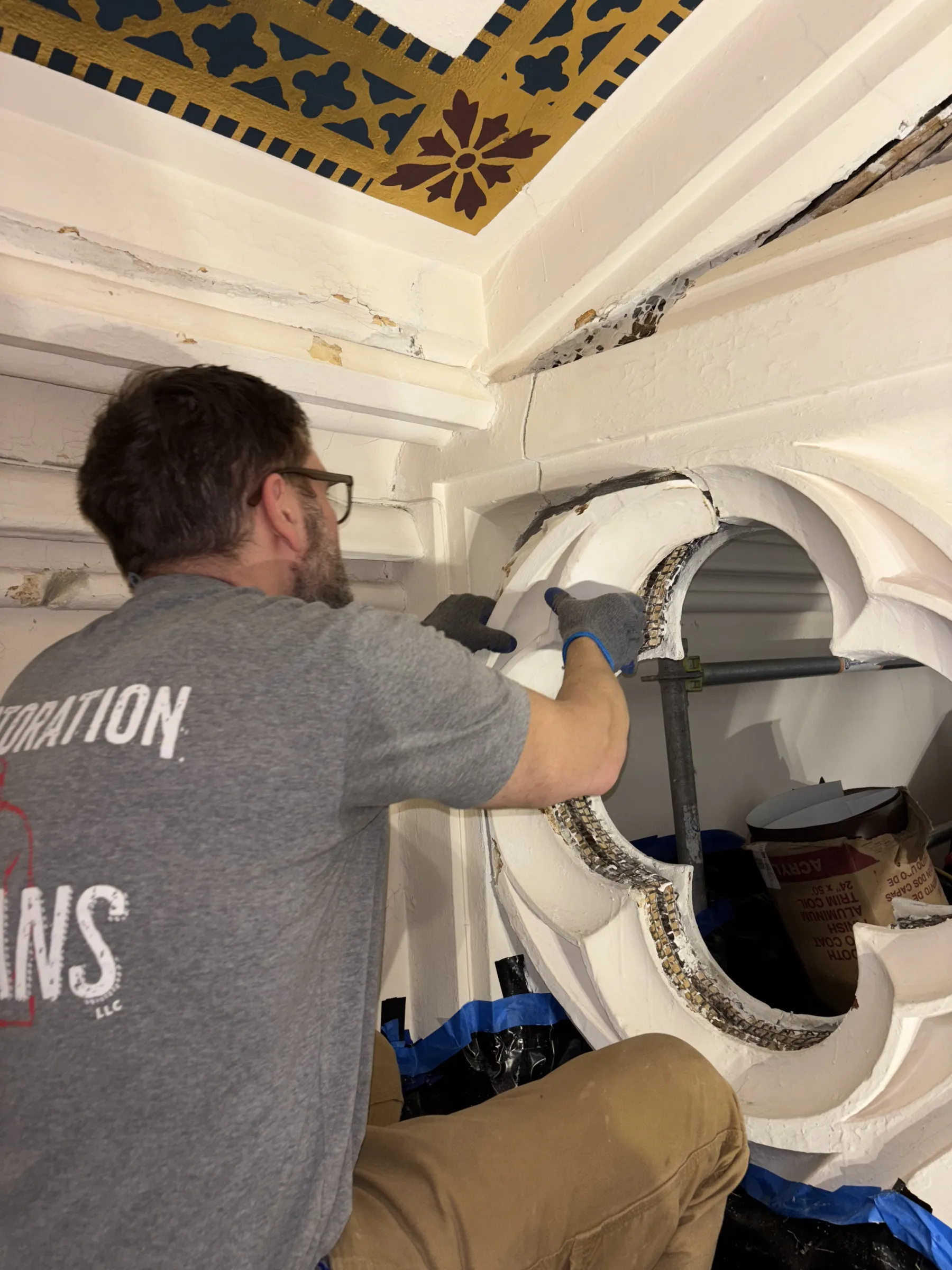
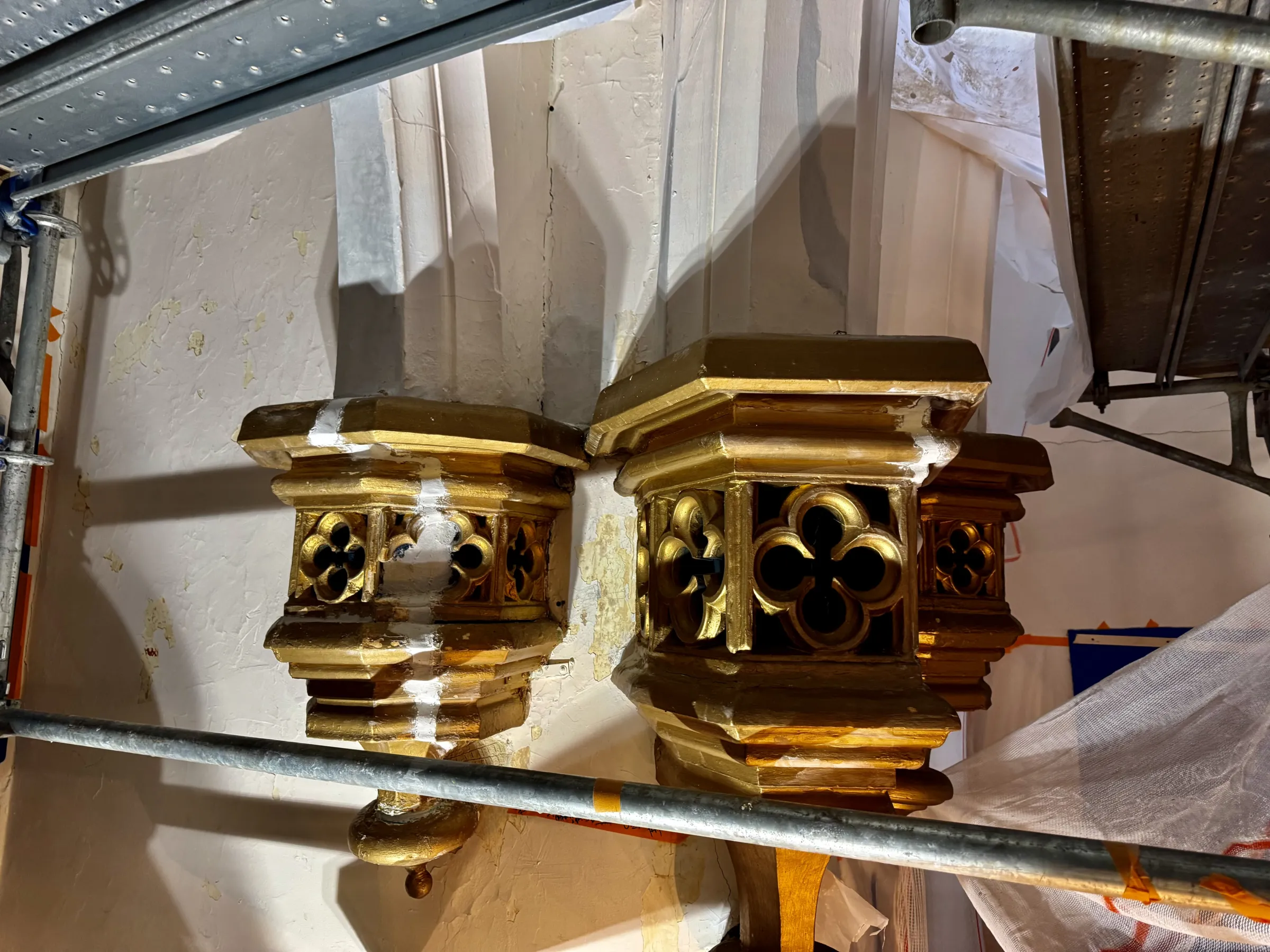
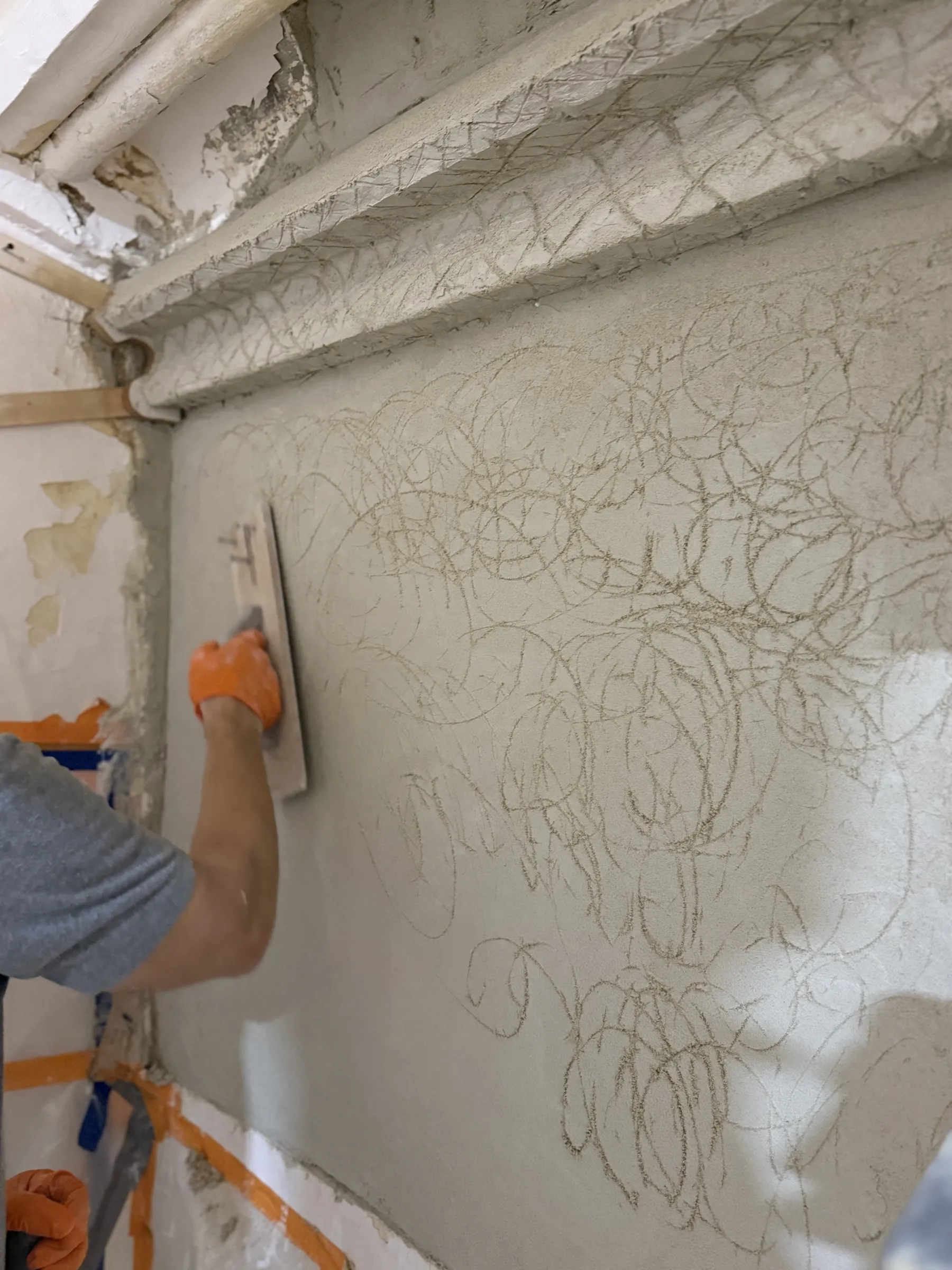
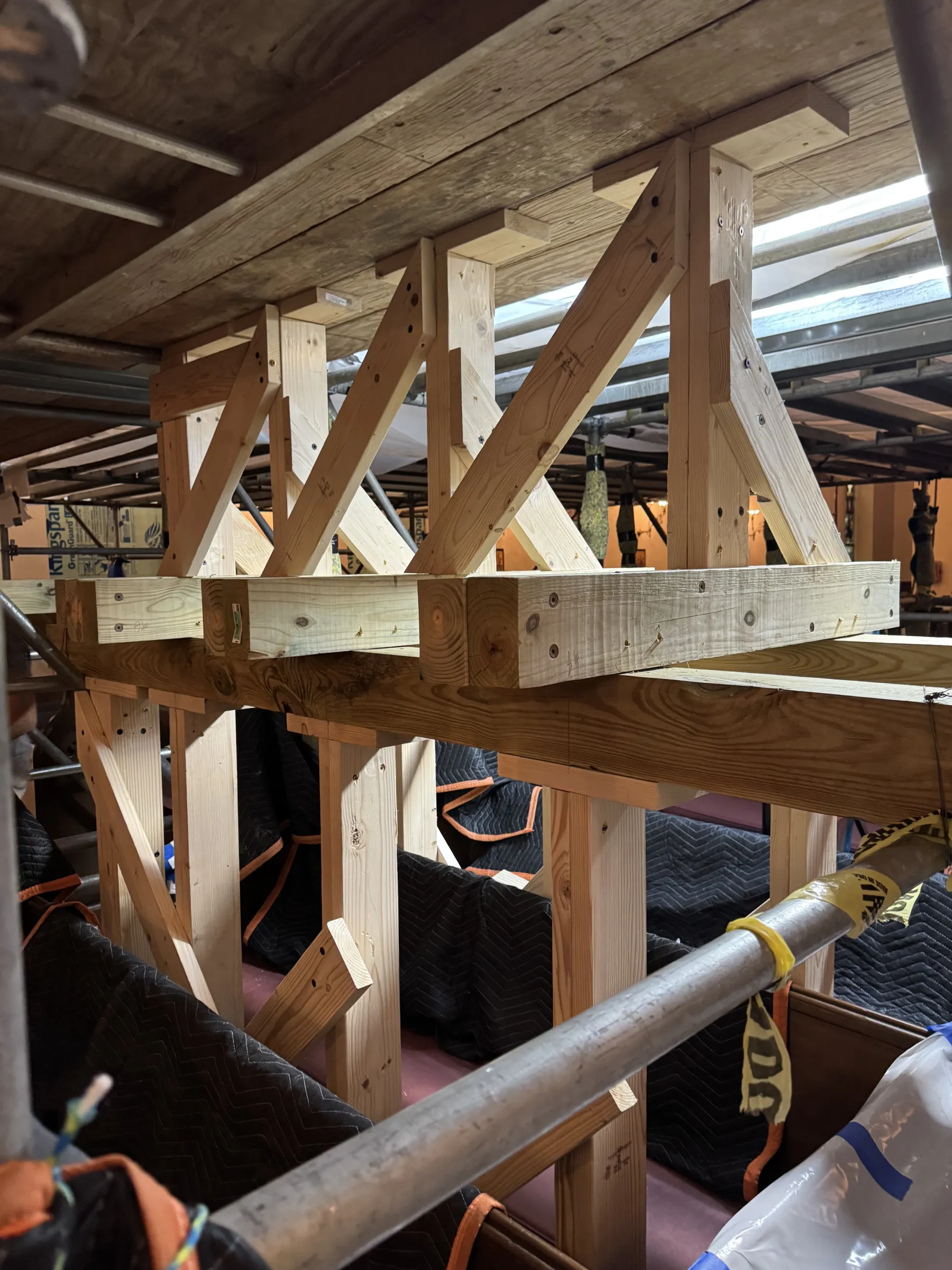
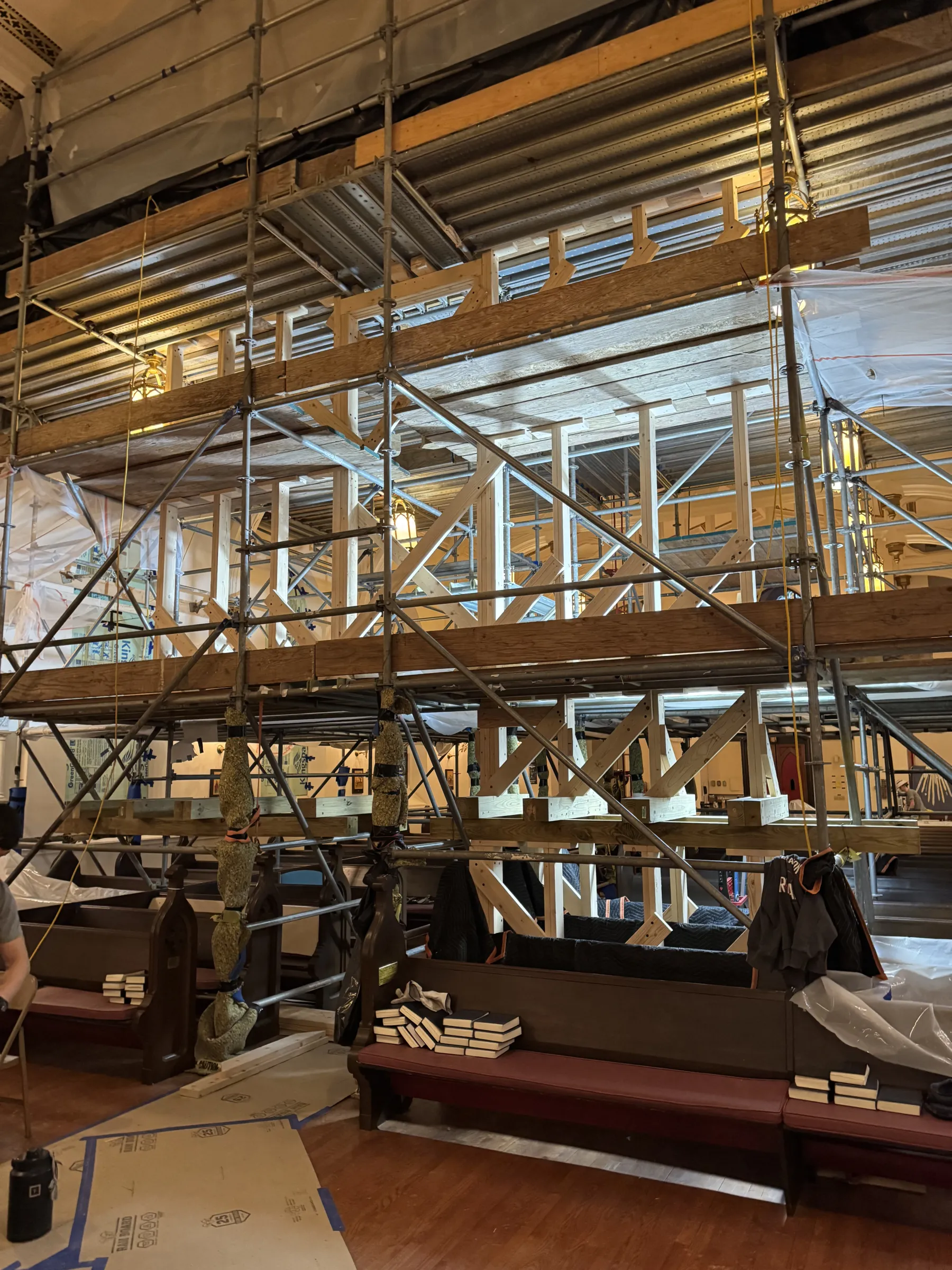
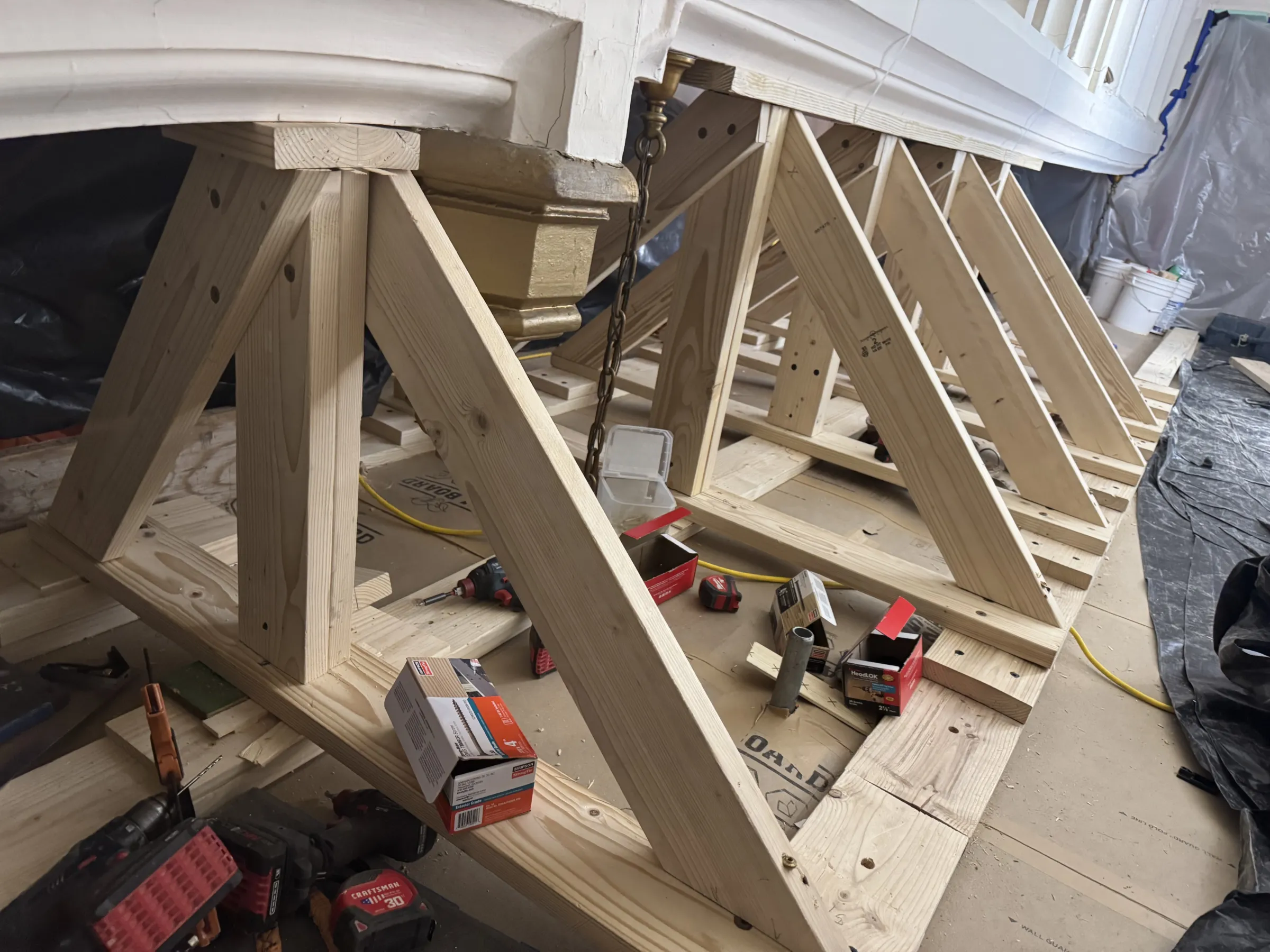
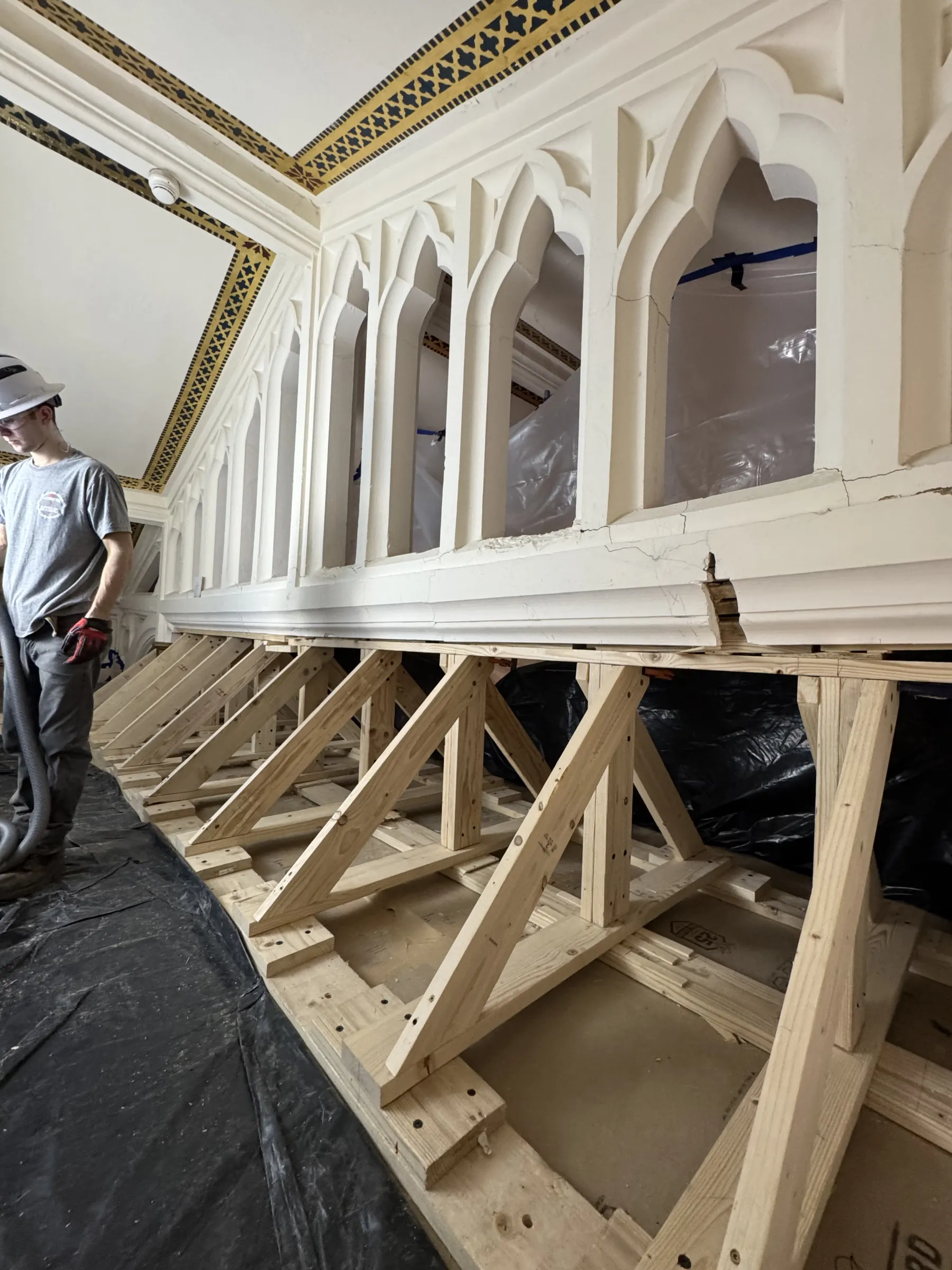
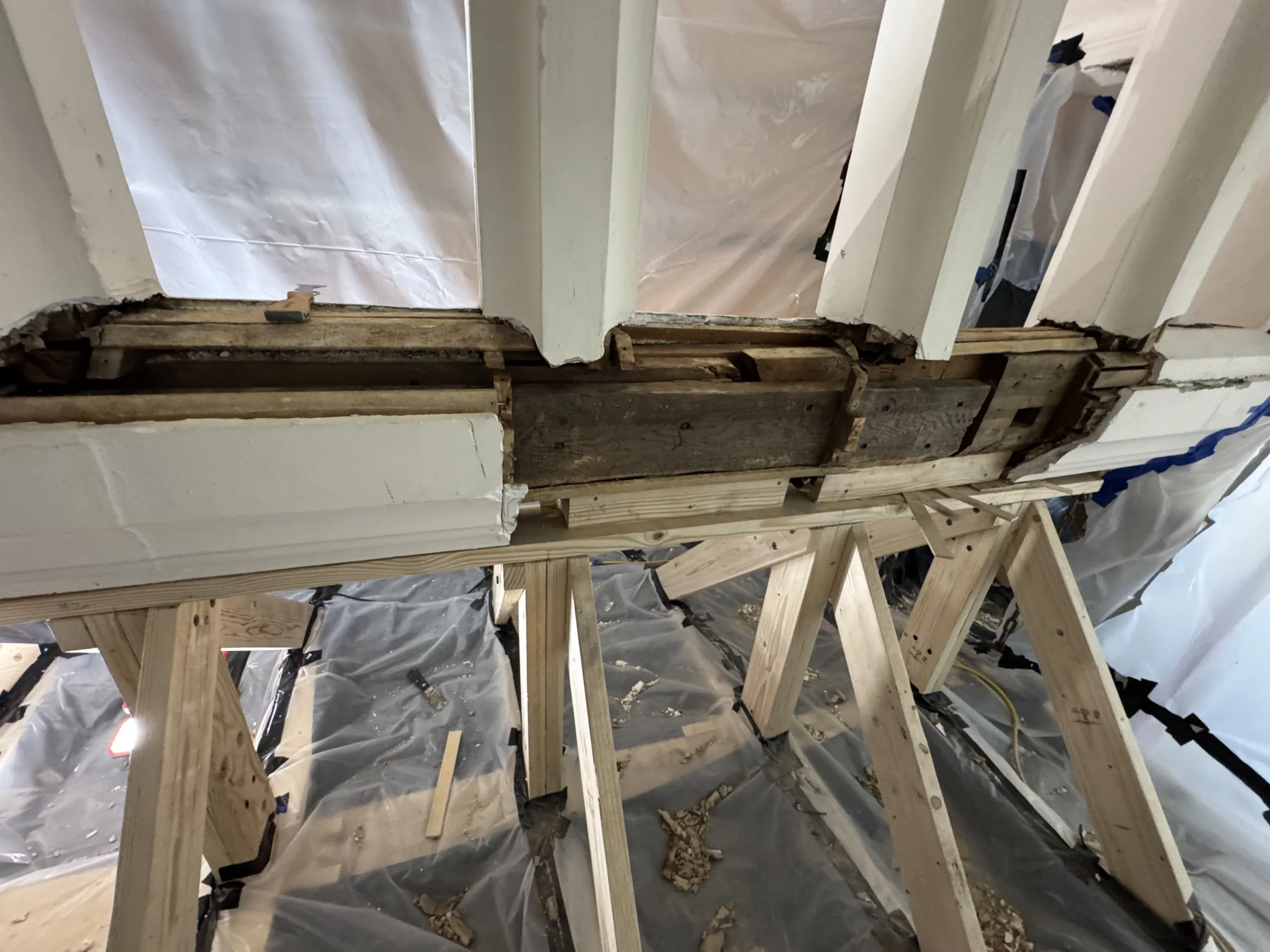
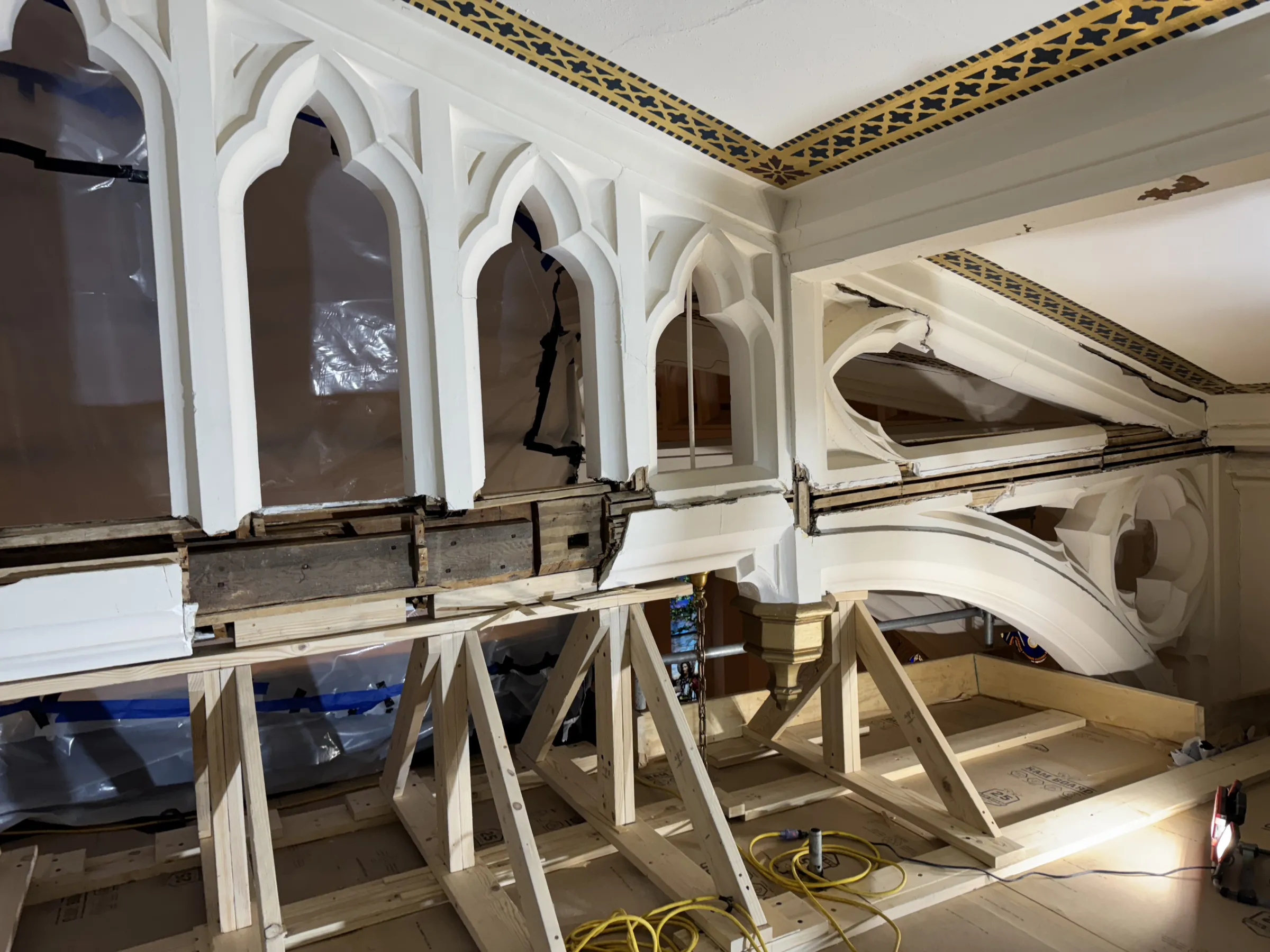
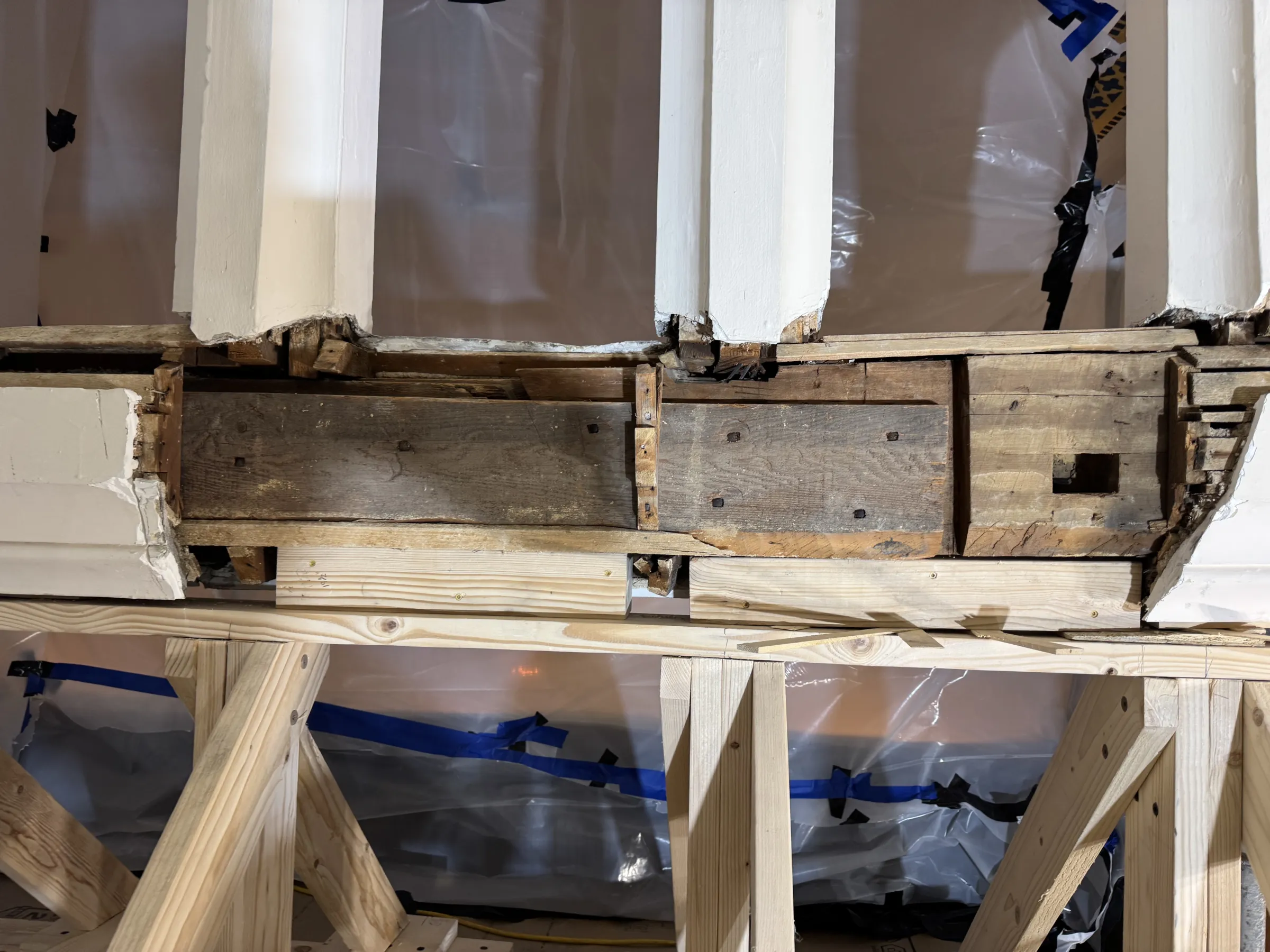
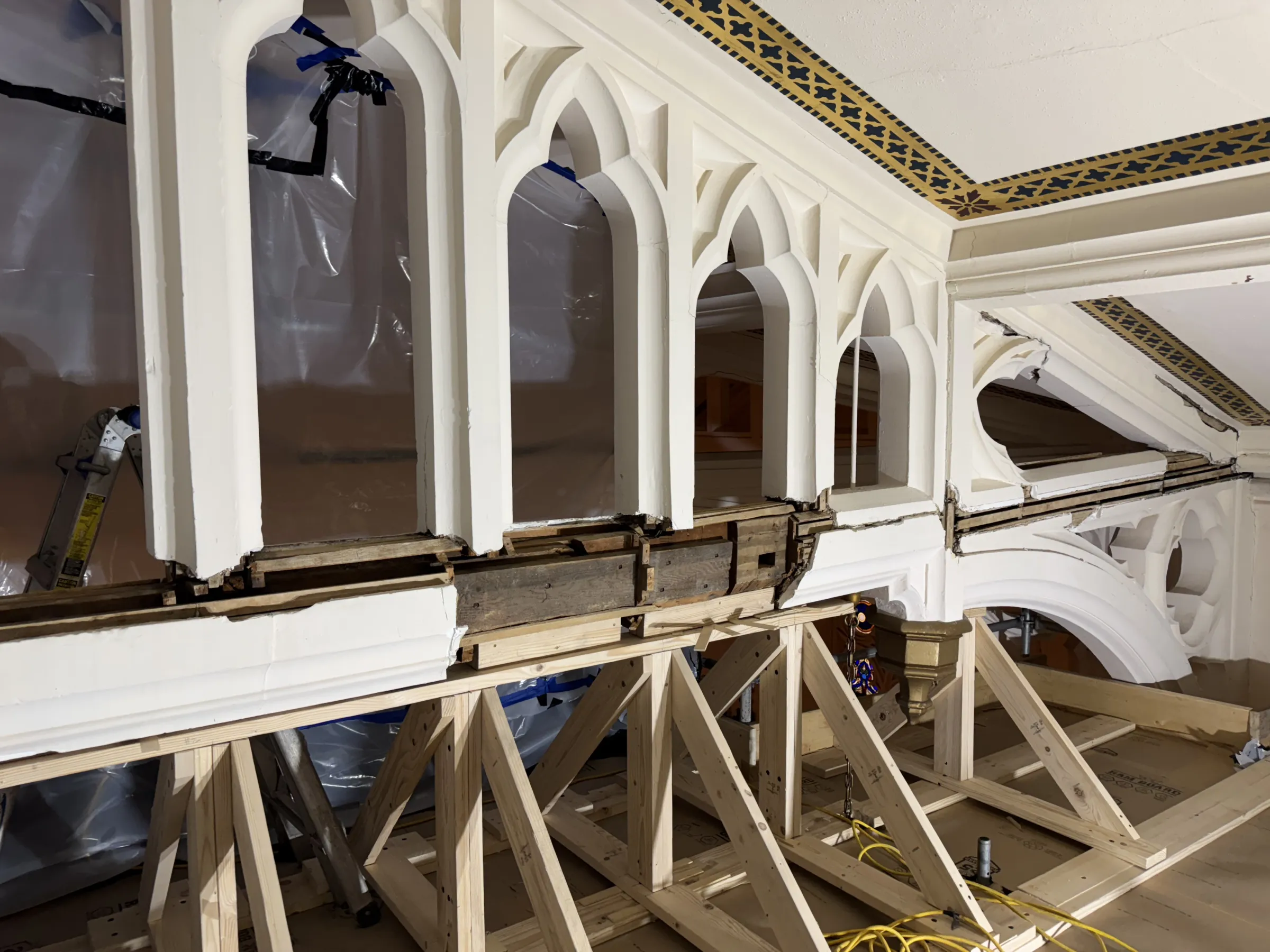
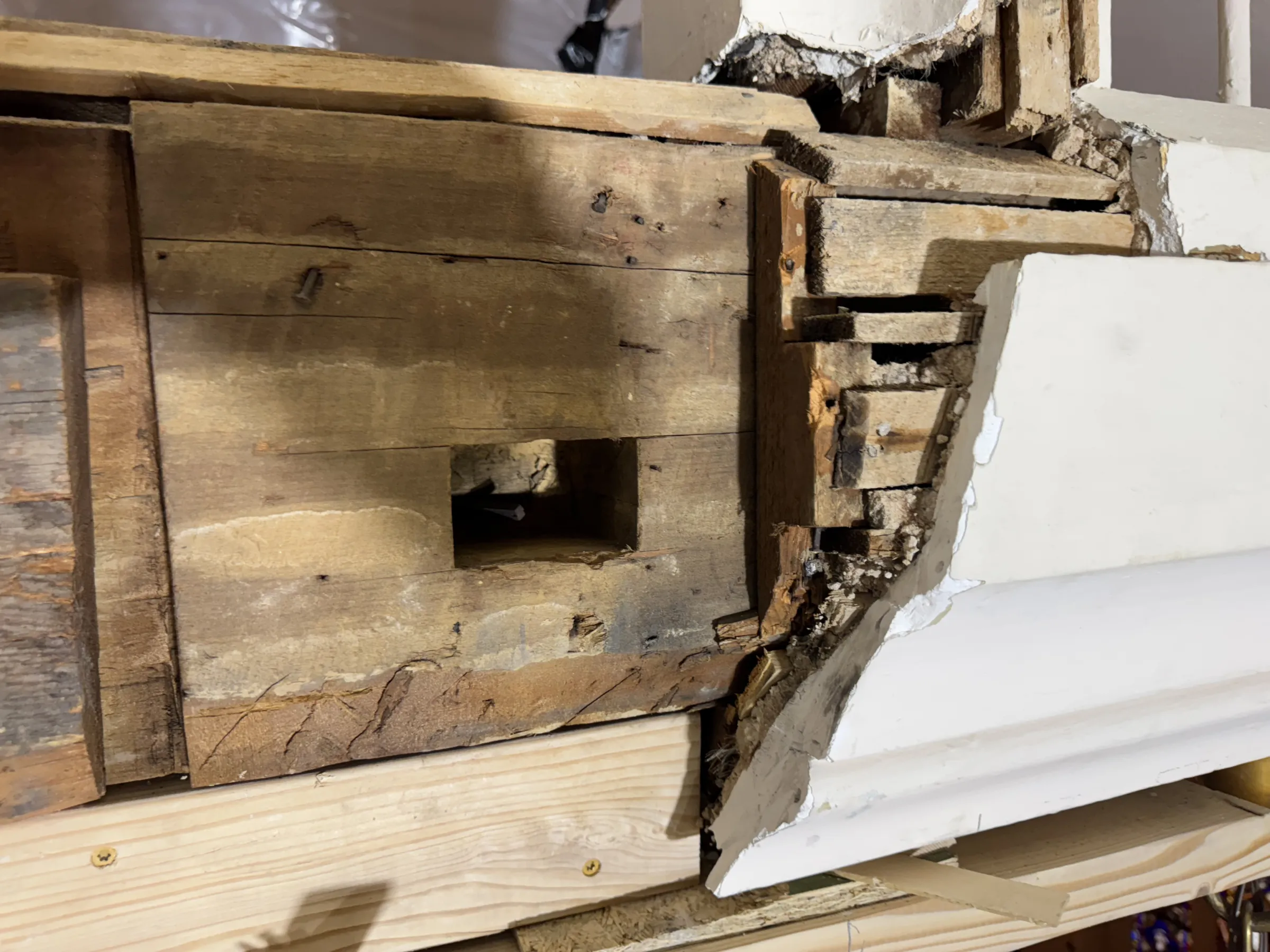
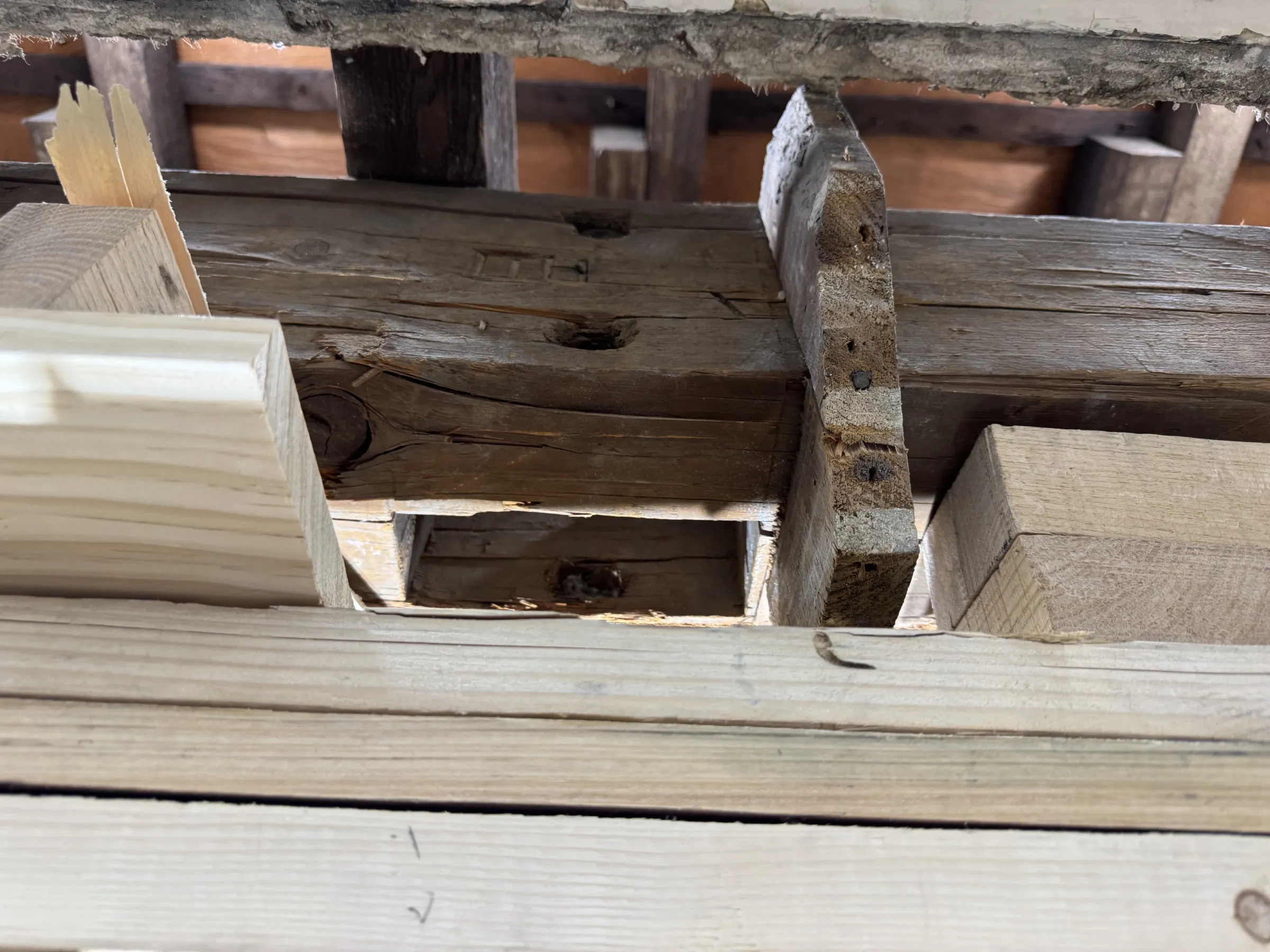
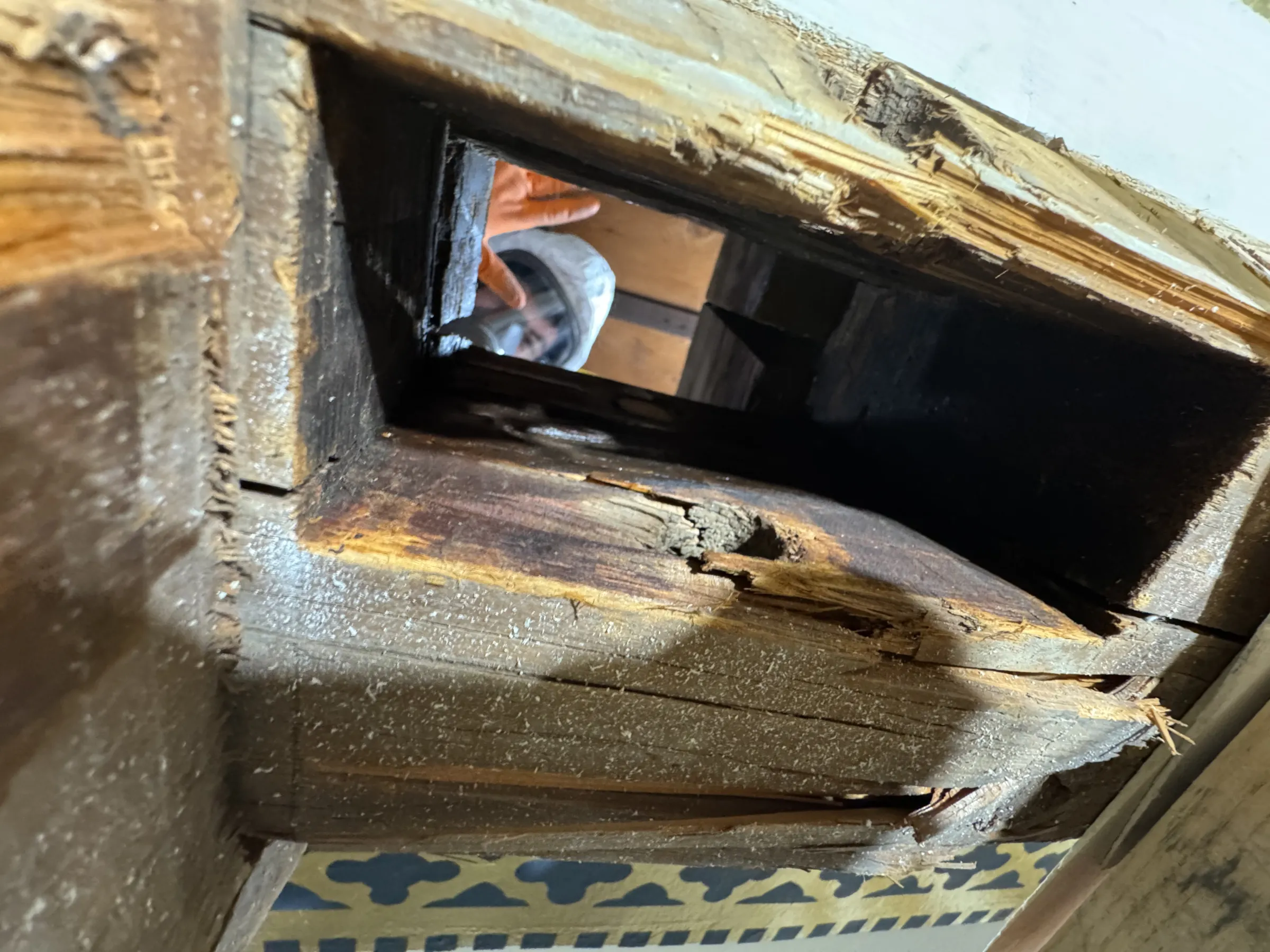
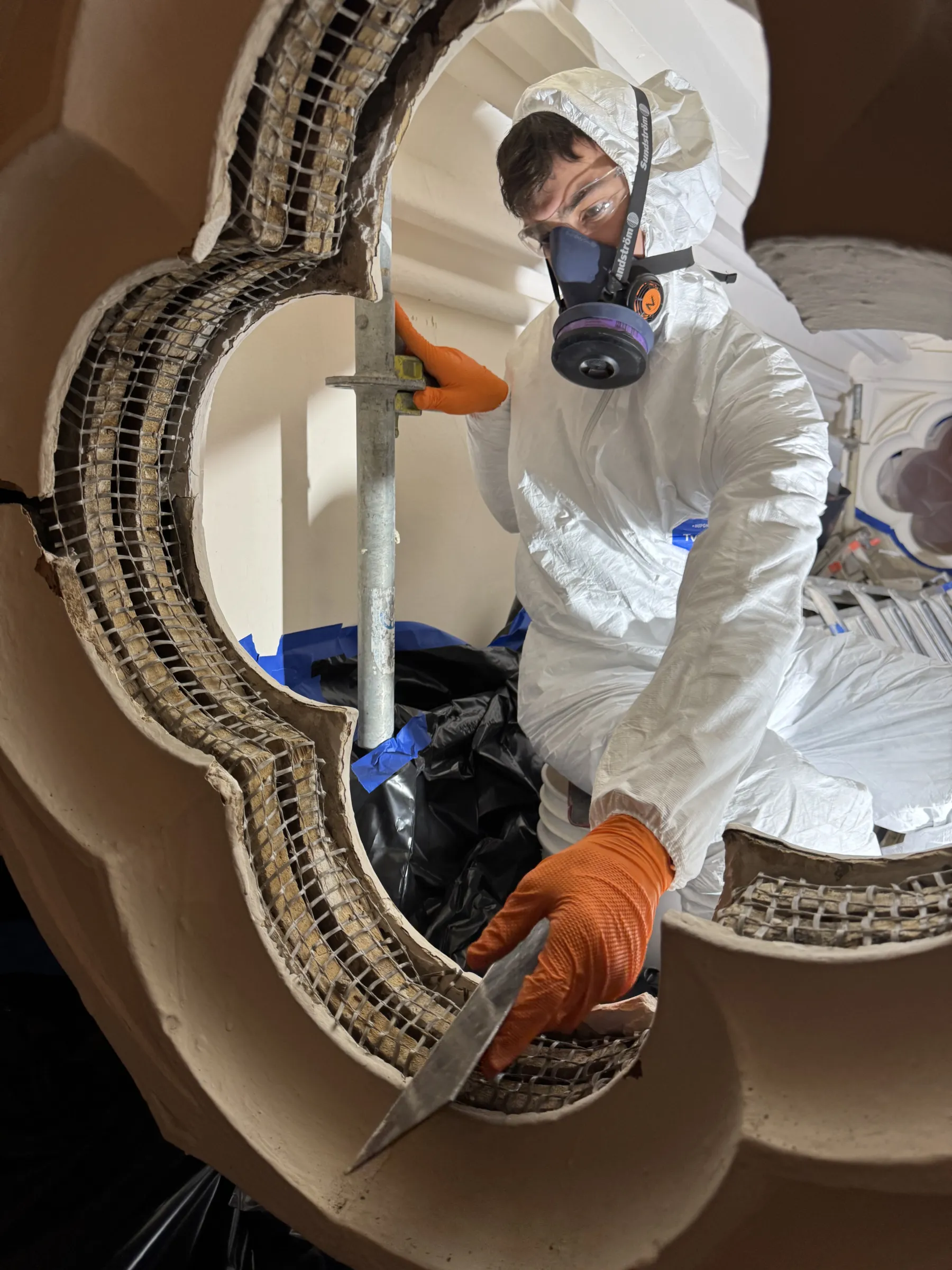
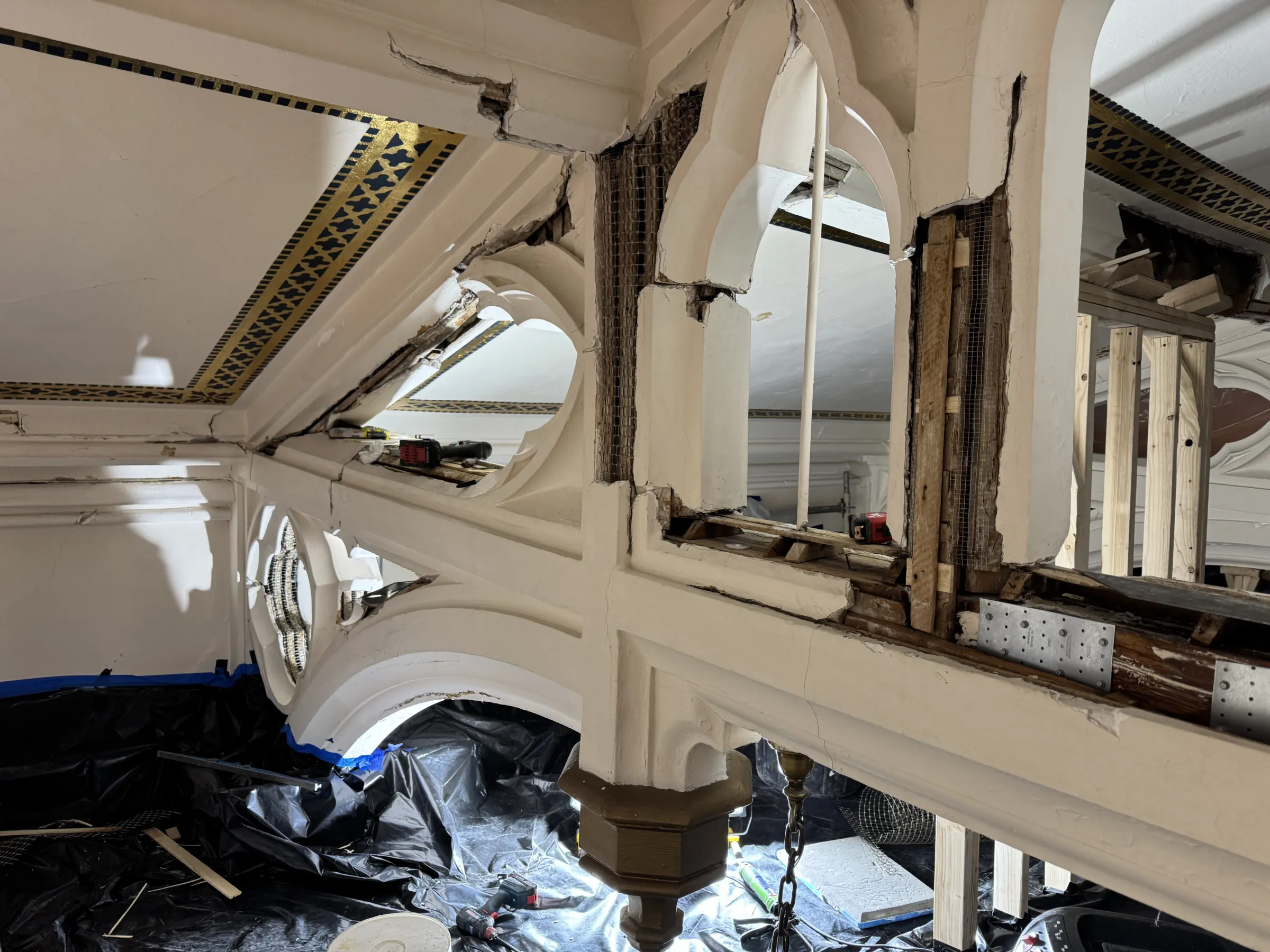
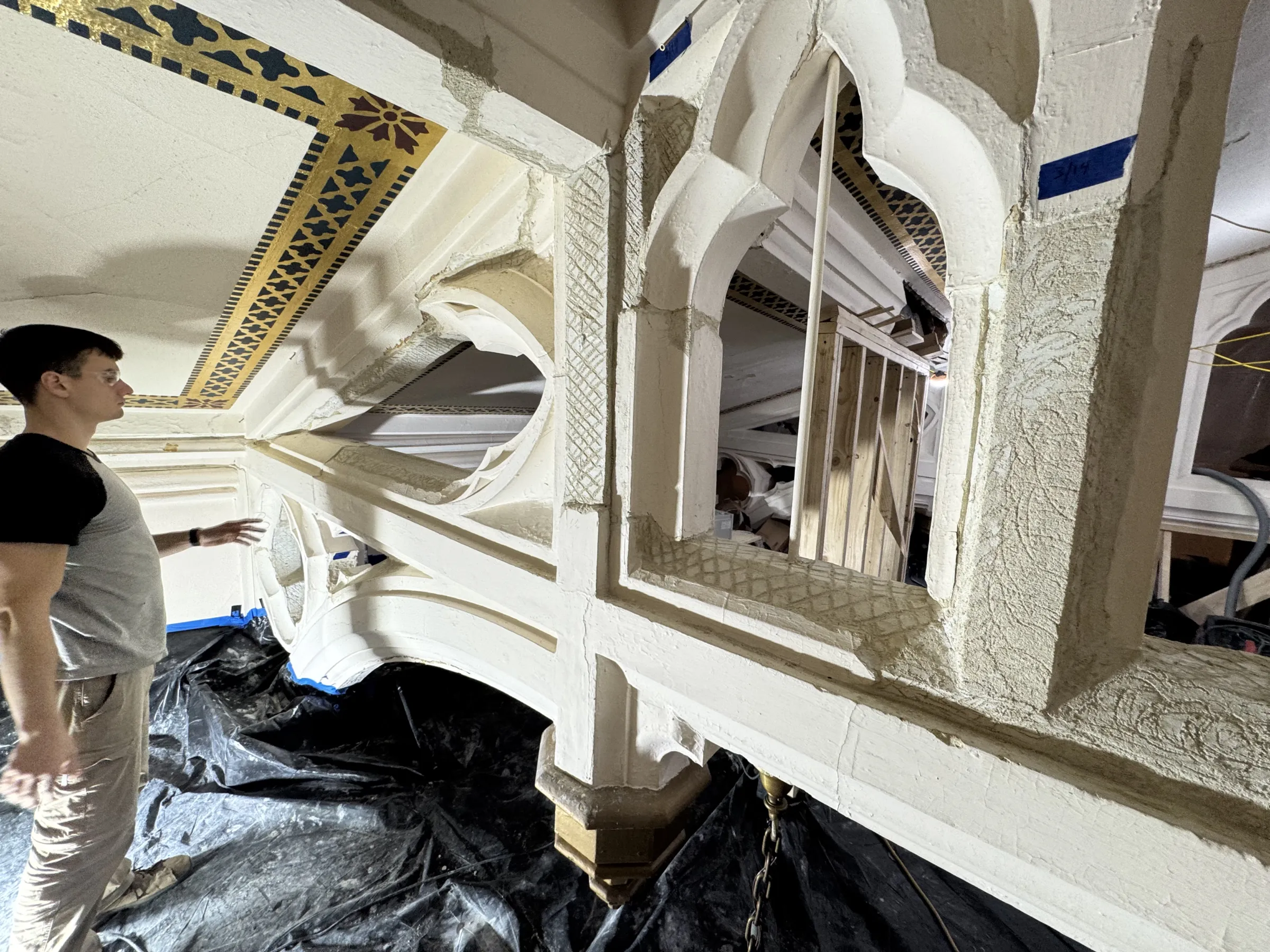
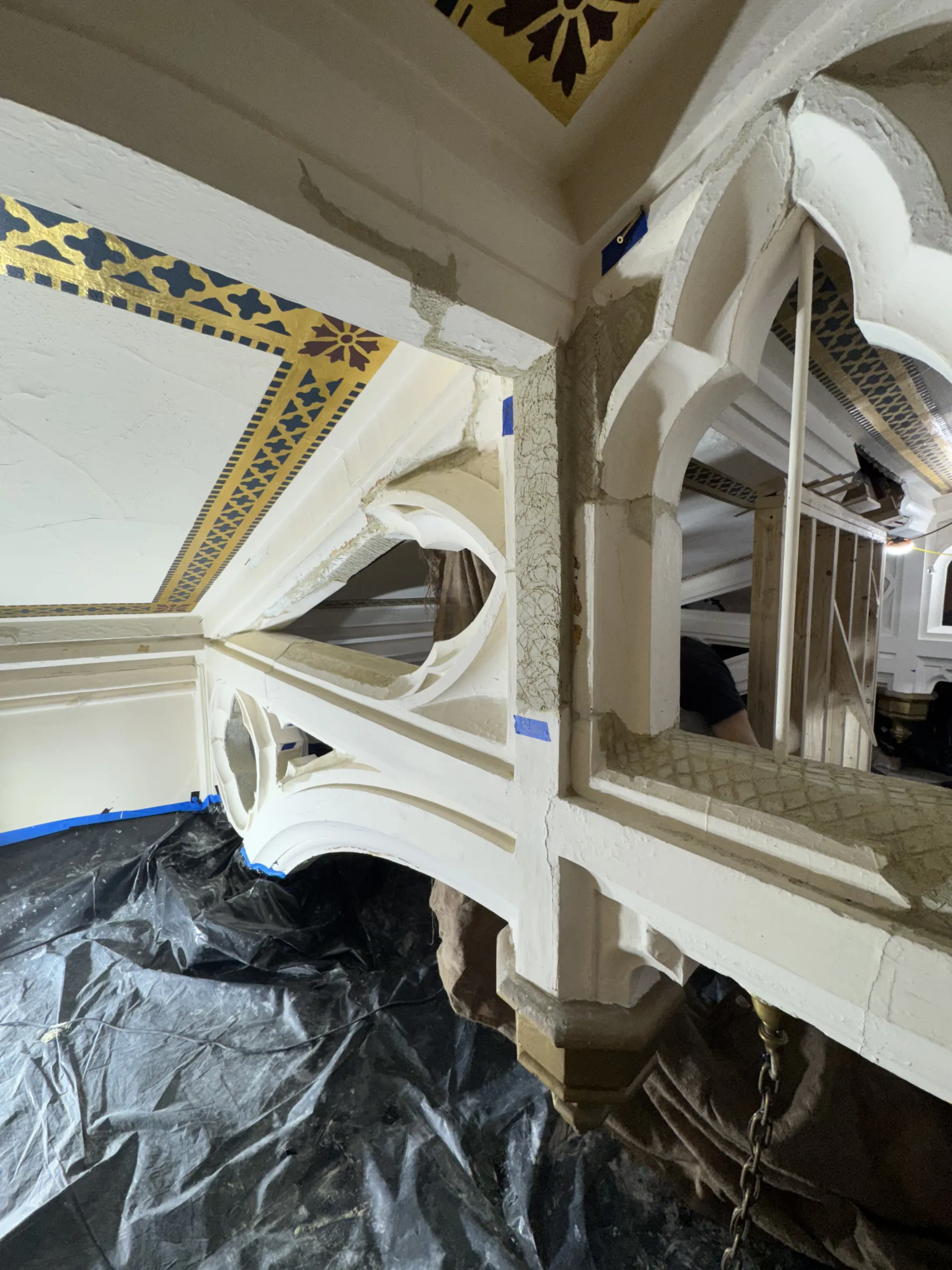
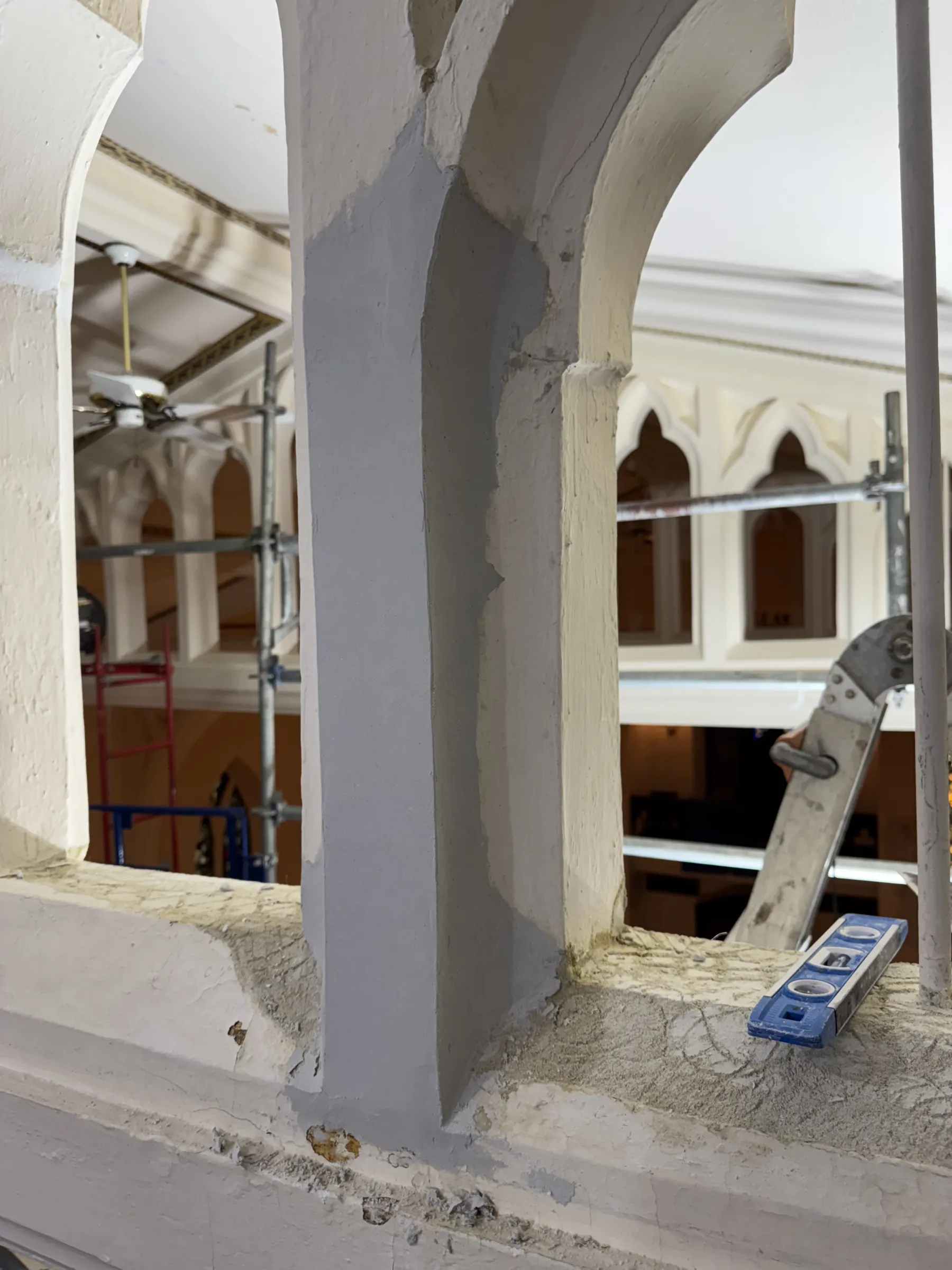
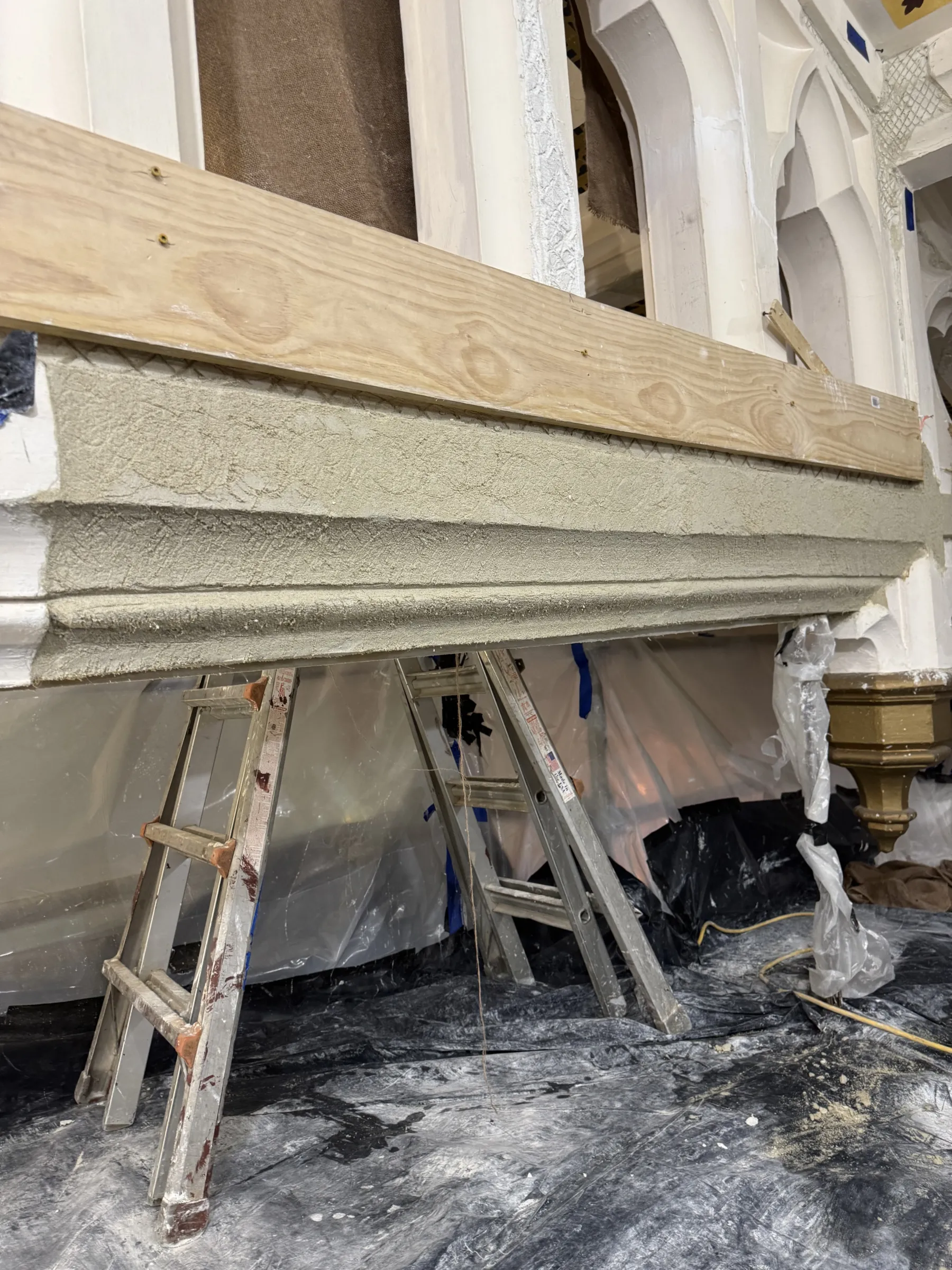
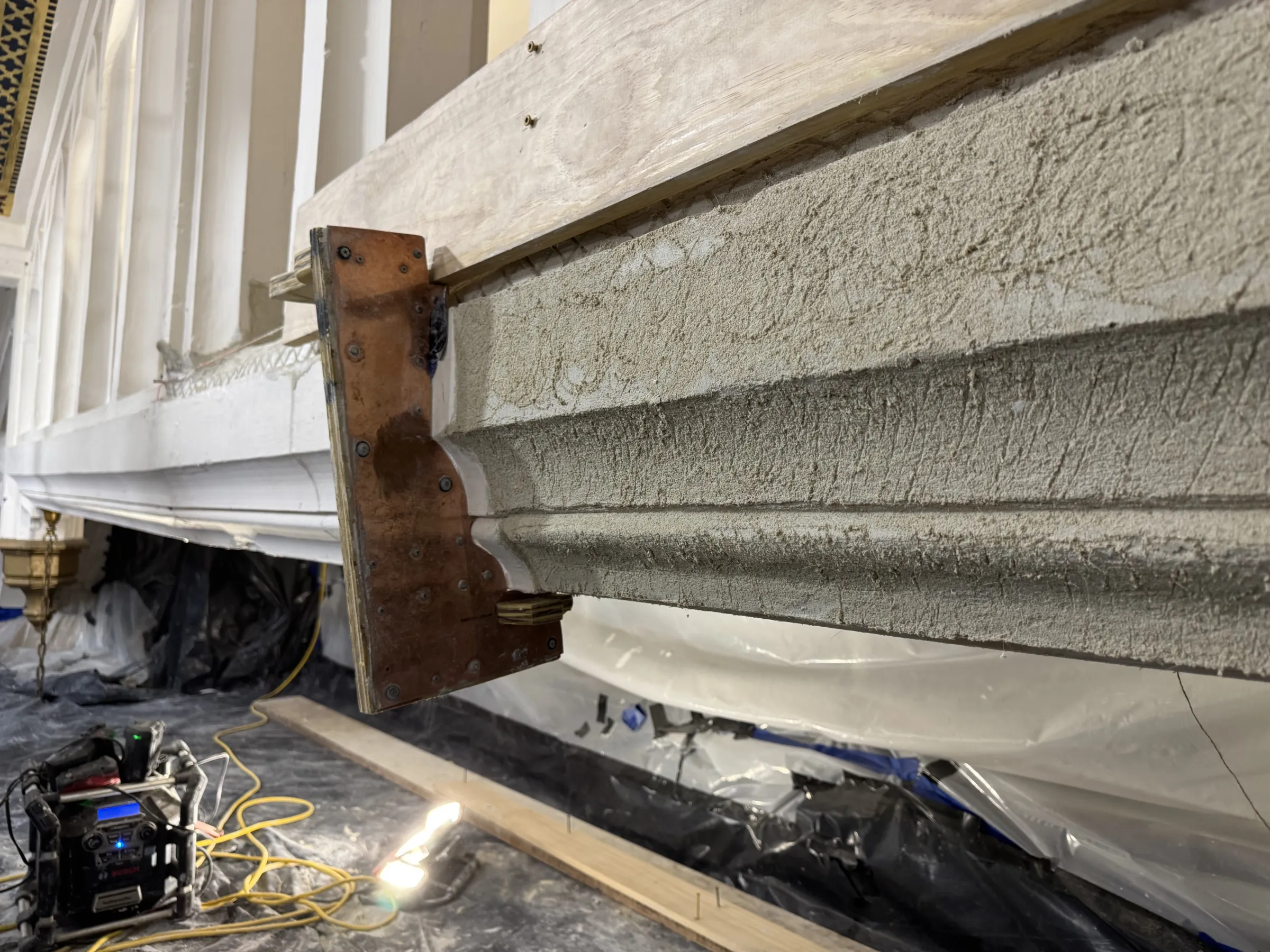
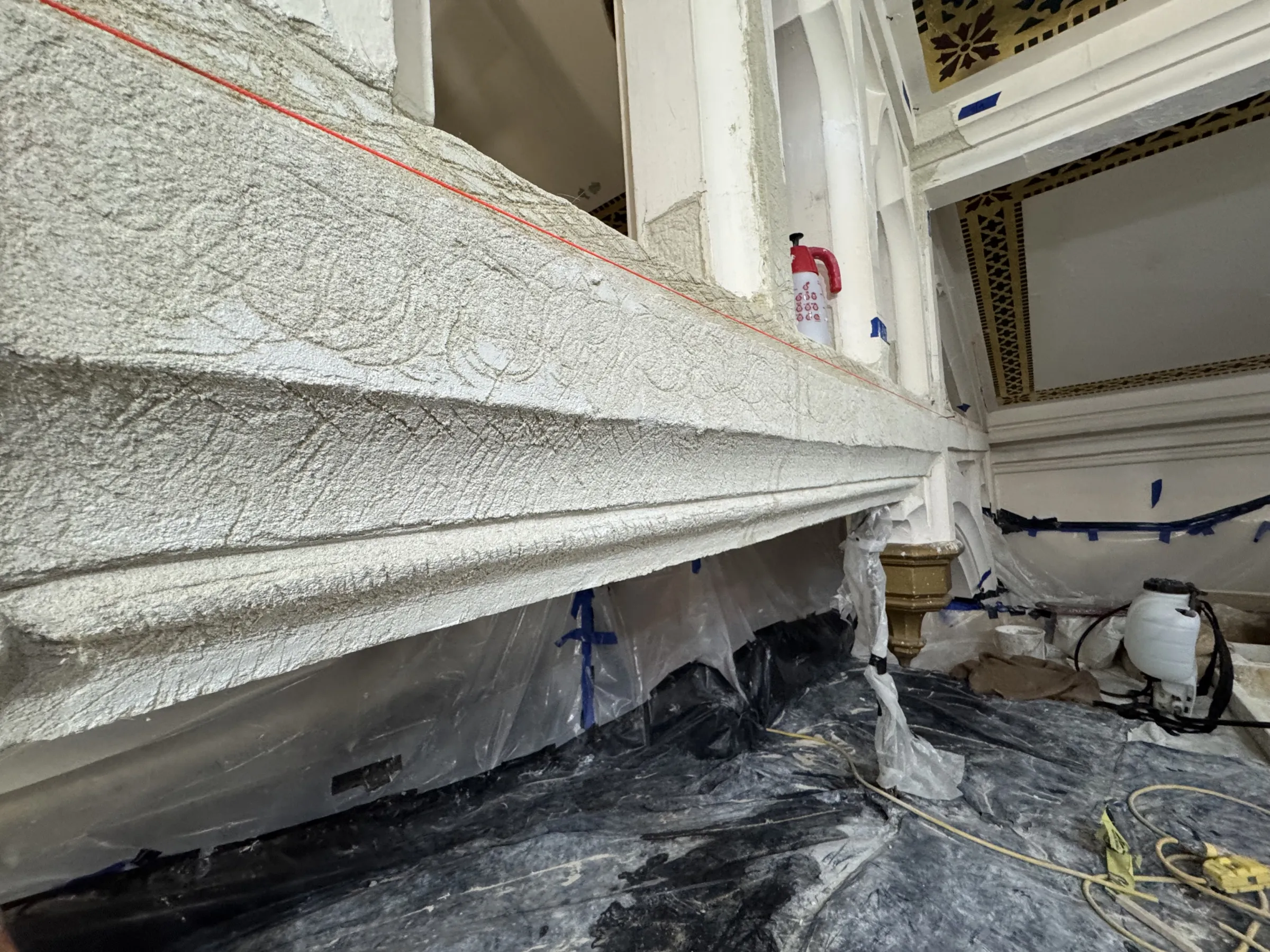
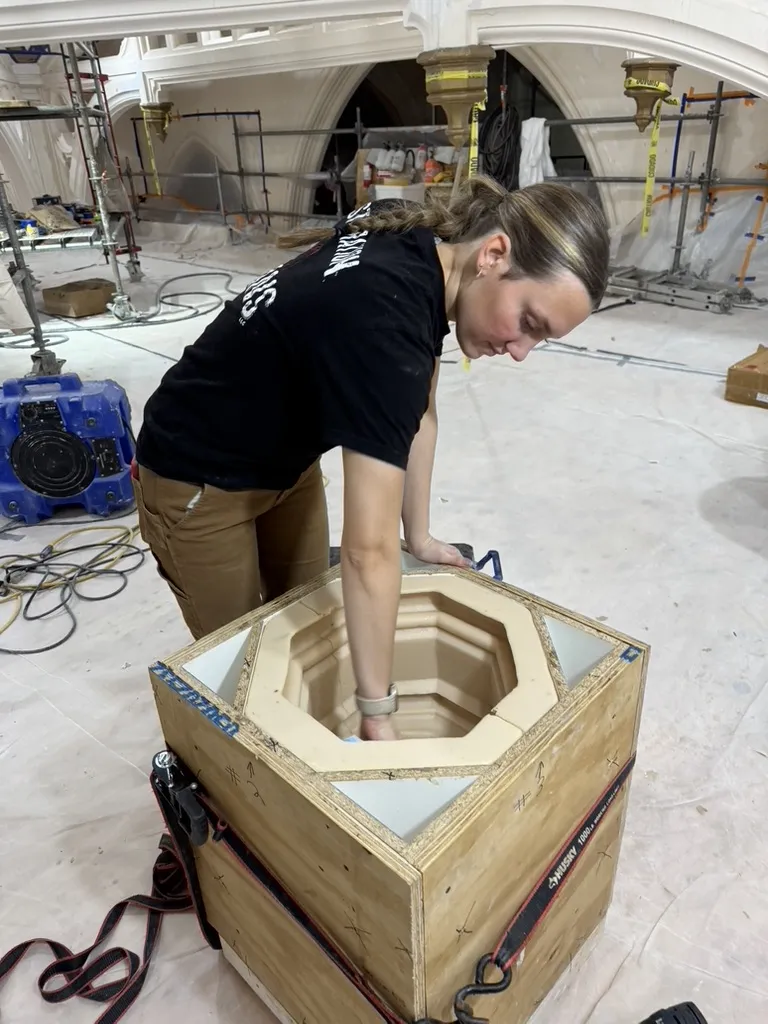
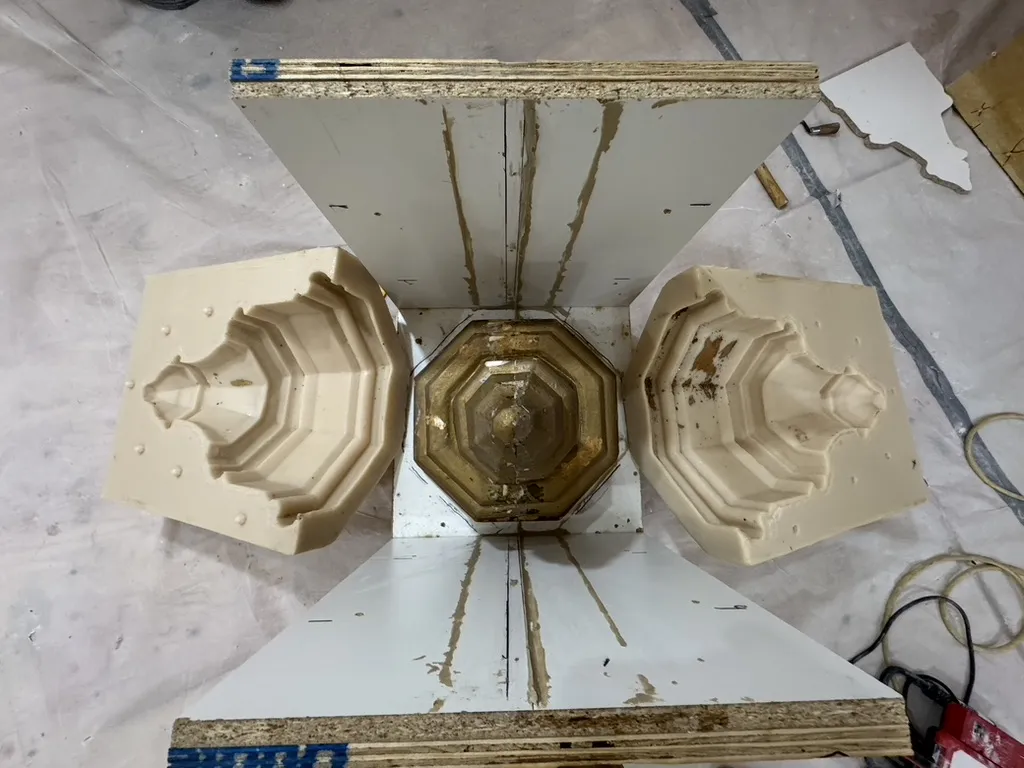
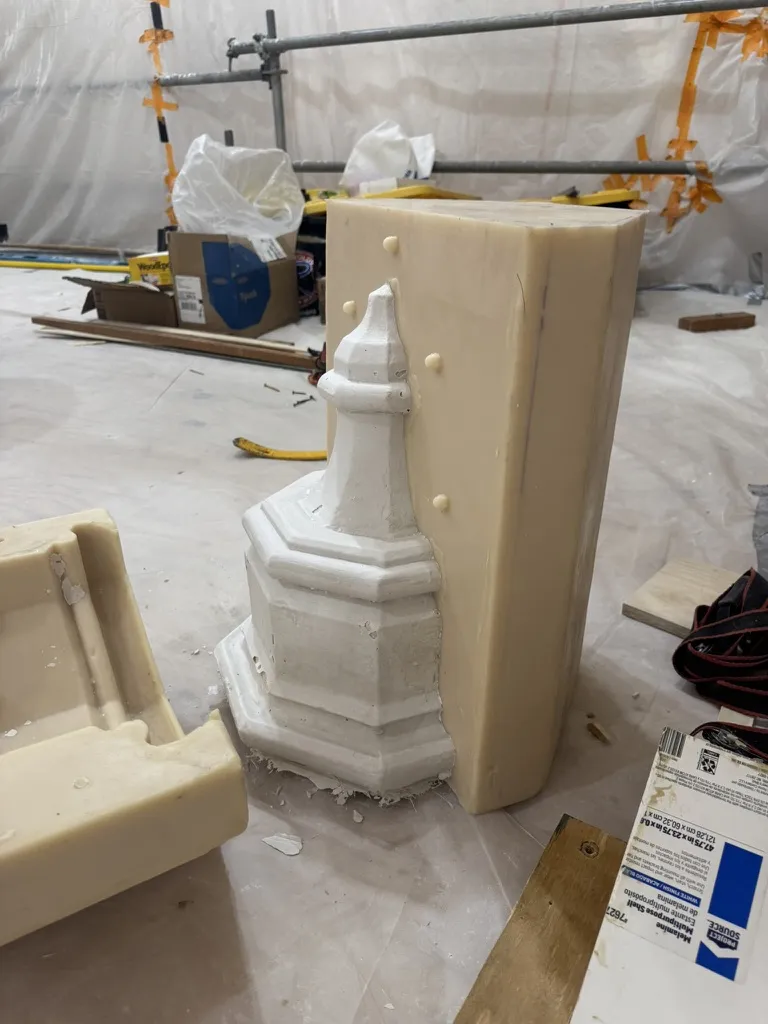
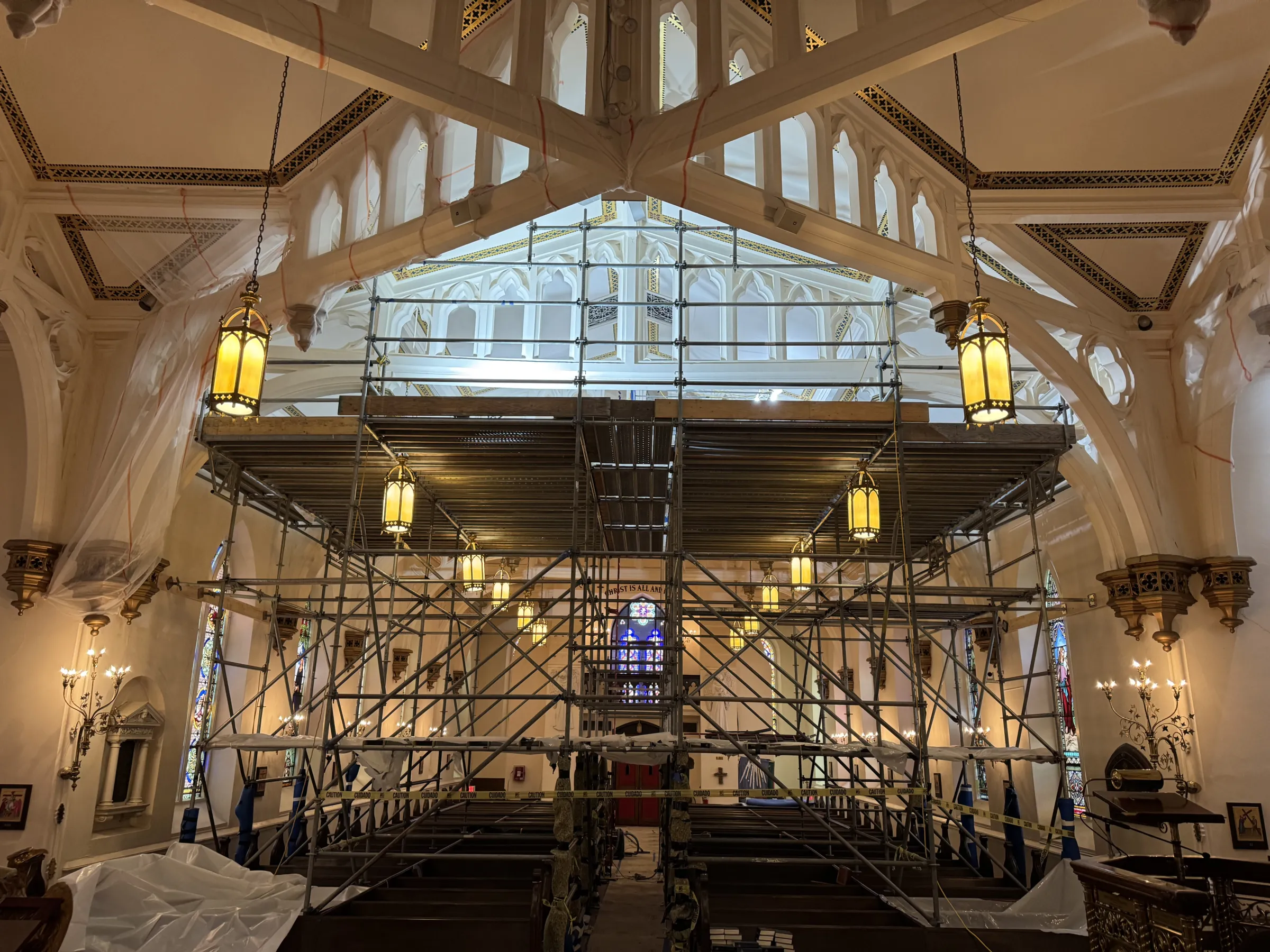
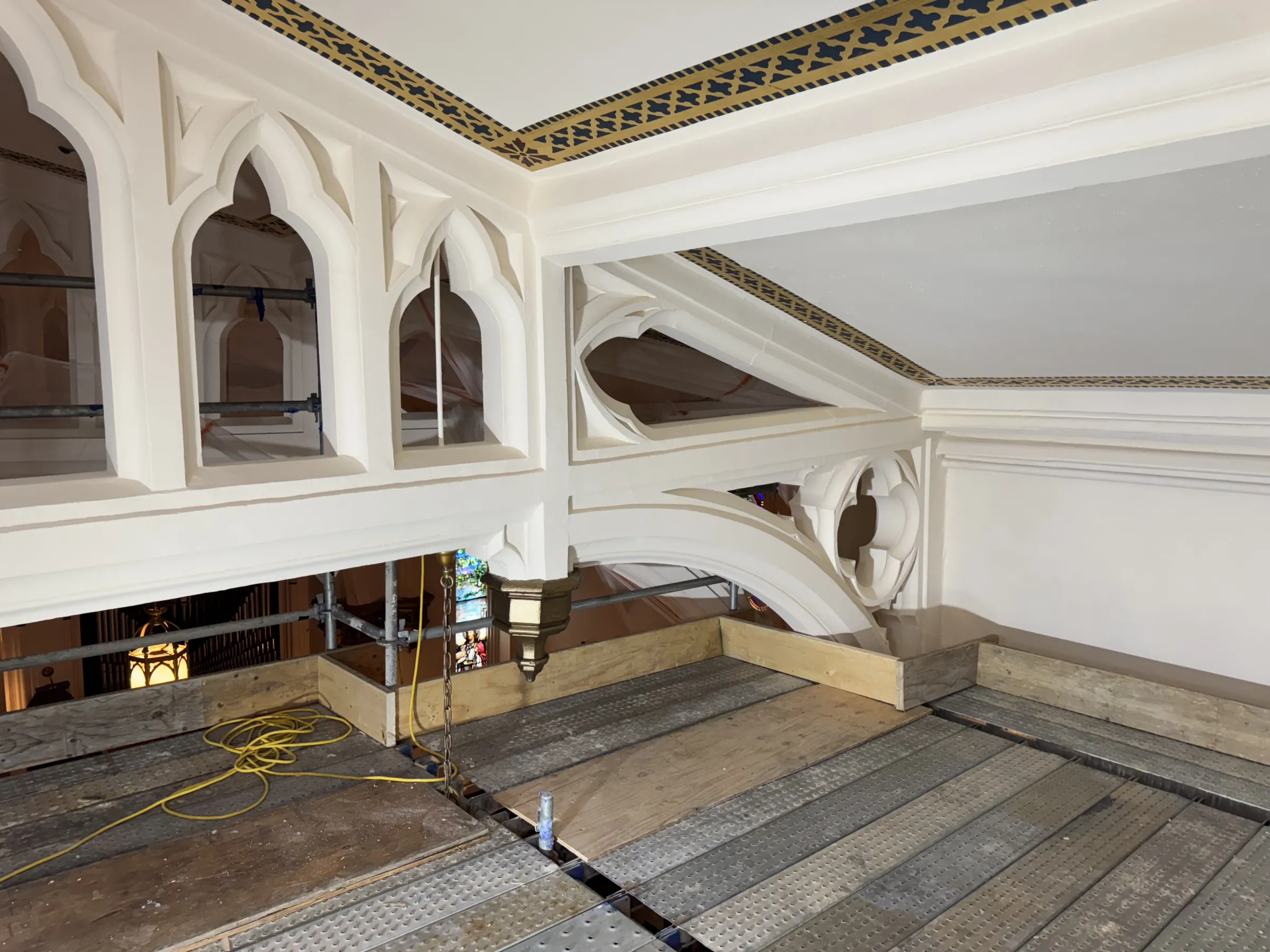
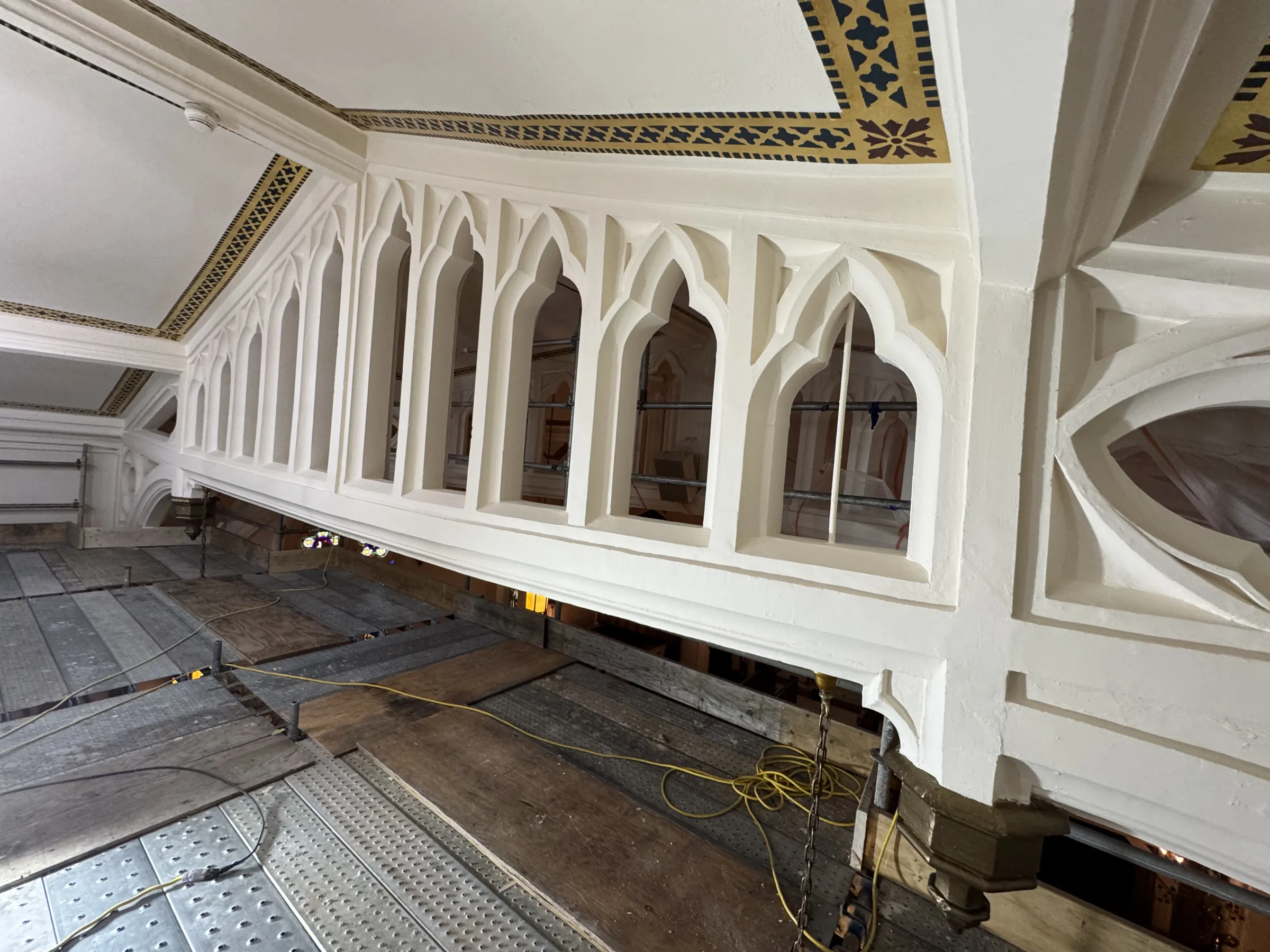
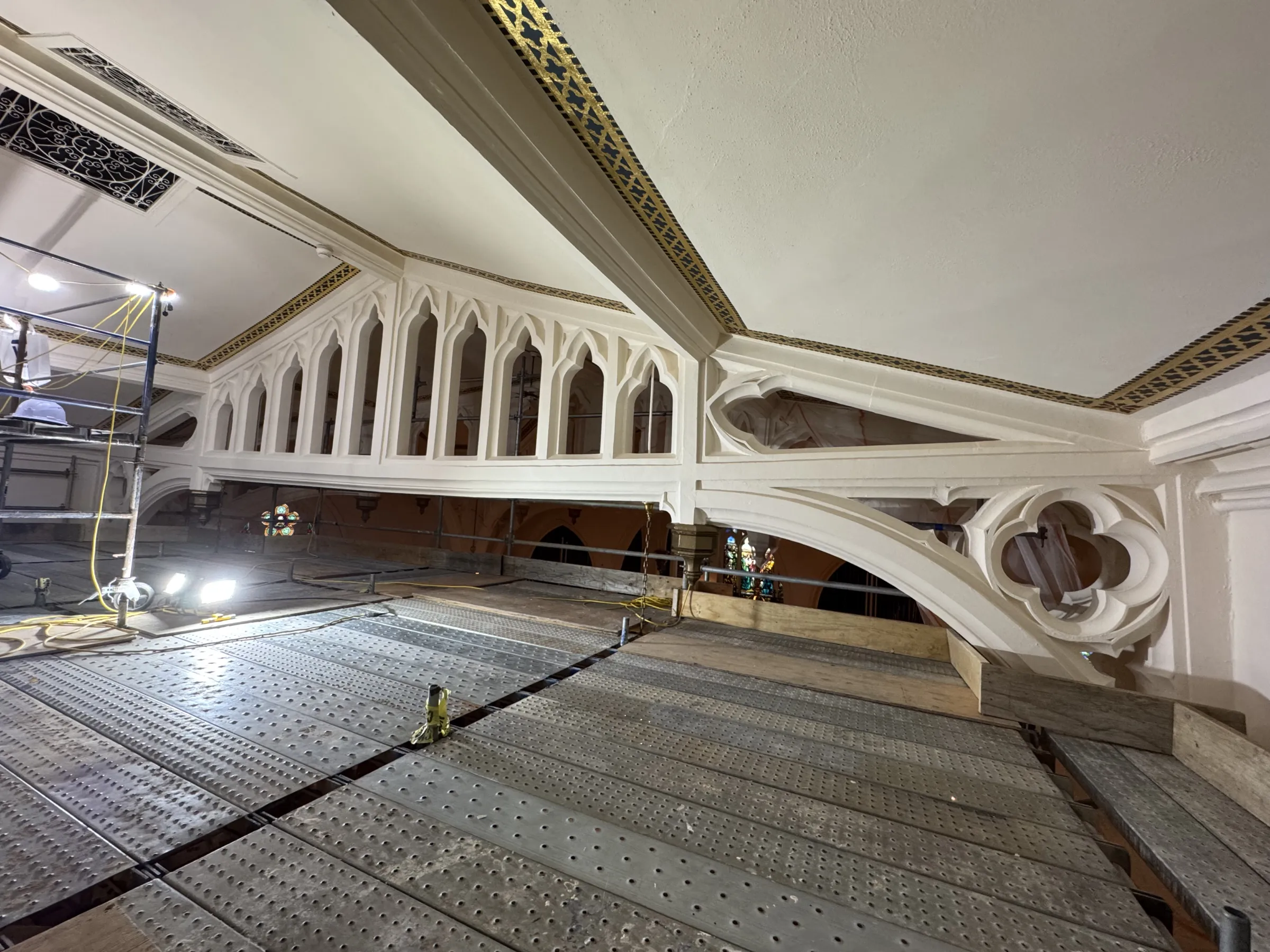
From 2024 through 2026, work shifted to interior restoration, including repairs to ornamental molded plaster and structural timber framing. All stained glass and historic ornamentation were carefully protected while crews worked approximately 35 feet above the nave on engineered scaffolding systems. Traditional materials, including horsehair lime plaster and wood lath, were used to restore decorative plaster elements. During construction, deteriorated timber framing was discovered and reinforced in coordination with a structural engineer using steel plates, angles, and modern fasteners before ornamental plaster was replicated, recast, and finished to seamlessly integrate with the historic fabric.
In spring 2026, the church will be rededicated during a bicentennial celebration, during which Restoration Artisans will also remove a historic copper time capsule concealed within the walls since the 1860’s spire construction.
The Christ Episcopal Church project represents Restoration Artisans’ ongoing commitment to historic preservation through more than a decade of phased restoration work, demonstrating durability, craftsmanship, and respect for the architectural integrity of an evolving historic structure.

Project Statistics
Location: Reading, Pennsylvania
Project Services: Brownstone Conservation, Historic Church, Hydraulic Lime Mortar Repointing
Restoration Artisans blends historic craftsmanship with proven materials and meticulous planning, ensuring your building is restored with strength, accuracy, and long-term stability.
Restoration Gallery
Highlights of the work completed on this historic structure.